
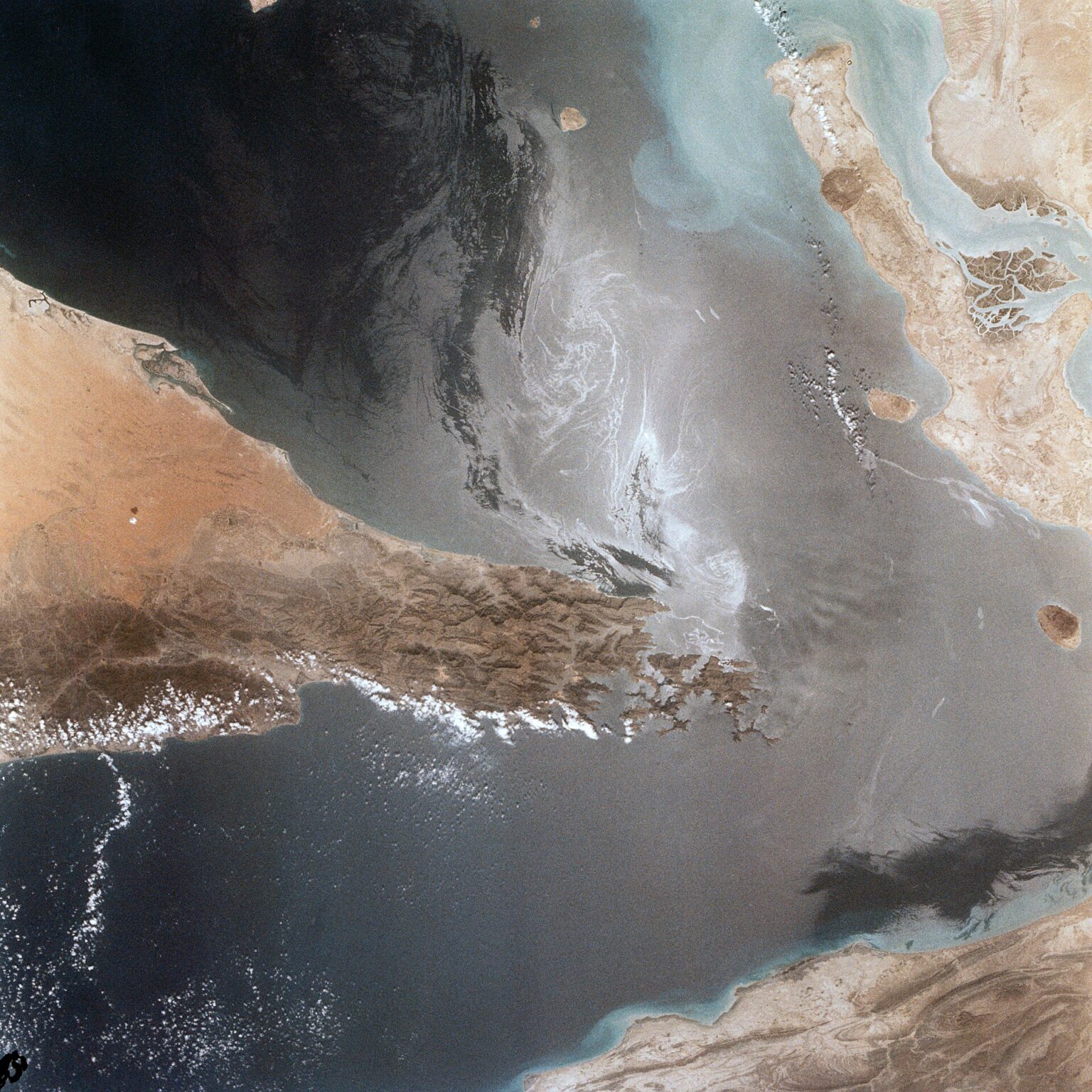

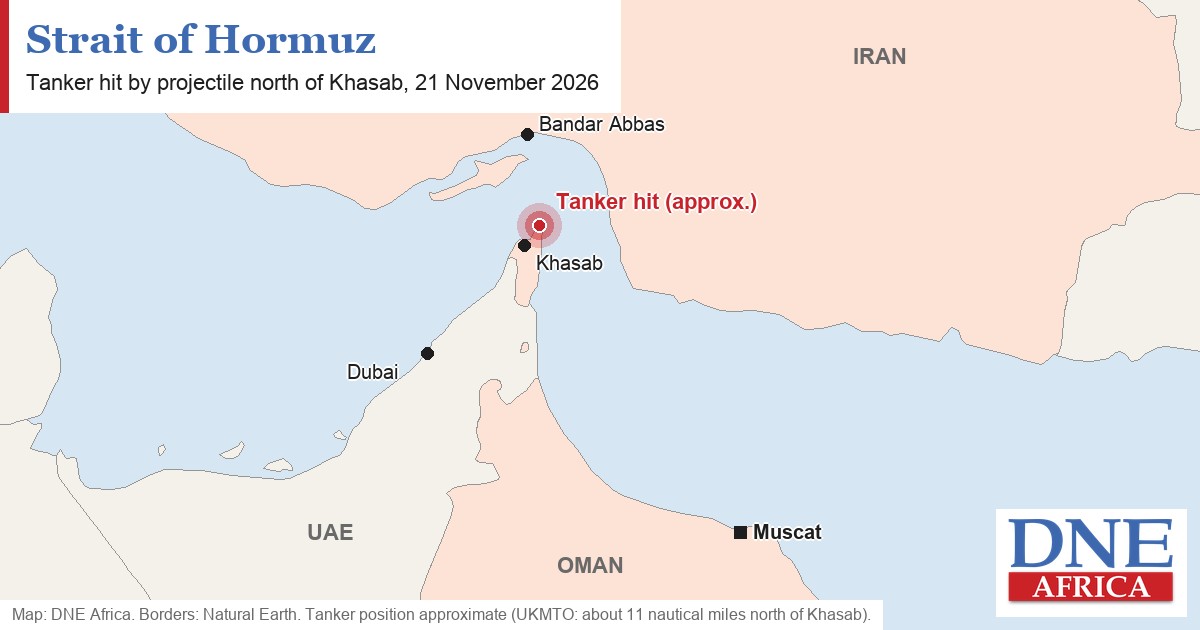
A Hormuz tanker was struck at the stern by an unidentified projectile on Saturday about 11 nautical miles north of Khasab in Oman as it left the Strait of Hormuz, UK Maritime Trade Operations (UKMTO) said.
The attack on the Hormuz tanker came shortly after Iran’s foreign minister, Abbas Araghchi, said a “no war, no peace” standoff with Washington had to end, and a day after the US Treasury imposed new sanctions on people it said moved Iranian oil money. Traffic through the strait, which carried about a fifth of the world’s oil before the war, according to the International Energy Agency, remains well below normal.
What happened to the Hormuz tanker?
An unidentified projectile hit the stern of the vessel as it was leaving the strait, UKMTO, a Royal Navy information centre for merchant shipping, said in an incident notice reported by Iran International at 07:44 GMT. No injuries were reported, and the environmental impact was not known, the agency said. The ship’s name, flag and operator had not been published, and no group had claimed the attack by the time of publication.
The Hormuz tanker incident is the latest in a series. In the week to 18 November, UKMTO recorded six attacks on tankers, four in the Strait of Hormuz and two elsewhere in the Gulf, and 106 incidents in the strait since the war began on 28 February. The Joint Maritime Information Center rates the threat in the strait as “severe”, meaning an attack is highly likely.
How busy is the Strait of Hormuz now?
UKMTO counted 263 transits through the strait in the week to 18 November, down from 308 a week earlier, and said shipping was about 65% below pre-war levels. About half the vessels were energy carriers, and most ships broadcasting their position still used the route through Iranian waters, the agency said. It added that figures for transits facilitated by the US could not be independently verified.
What did Araghchi say about a deal?
Araghchi said on Saturday that a situation of “neither war nor peace” was not desirable and that Iran had only two ways out, war or peace, in remarks carried by Iranian media and relayed by the Houthi-run Al-Masirah channel (translated from Arabic). He said Tehran wanted a “good and honourable” agreement and that the country’s top leadership shared that view.
On Friday evening he said Iran’s enriched uranium would not leave the country and that any reopening of the strait was conditional, according to Asharq (in Arabic). He said a revised “two-day plan” was still on the table: under it, Washington would meet its commitments first and Iran would then reopen the strait and start talks. Tehran’s earlier seven-day plan, floated in September, would have reopened the strait on the sixth day.
Washington shows no sign of easing pressure. The Treasury on Friday sanctioned four Iranian nationals, Mojtaba Arabnejad, Mohammad Javad Bavand, Mohammadhossein Servati and Majid Taj, whom it accused of collecting proceeds from Iranian oil sales abroad. Scott Bessent, the Treasury secretary, wrote on X that Iran “may never see the revenue from the oil it has already sold”. President Donald Trump has said Tehran wants a deal but has not offered terms he would accept, and CBS News reported that the US and Israel were weighing new strikes.
Why does the Hormuz tanker attack matter for Africa?
African fuel importers have been among the hardest hit by the closure. The International Energy Agency this week called the Hormuz crisis the biggest energy shock in history, and it has warned that gains in energy access in Africa face a setback from the 2026 crisis.
Each attack such as the Hormuz tanker strike adds to shipping and insurance risk, and the cost shows up in budgets. DR Congo’s government this week certified $154mn of losses and unpaid margins owed to fuel distributors for the third quarter alone, because it held pump prices steady despite what it called the rise in oil prices caused by the Middle East crisis. Shipping risk has also spread to the Red Sea, where the Houthis this week told shipping firms to leave Jeddah port.
Whether attacks like the Hormuz tanker strike stop depends on talks. US and Qatari officials met in Berlin on Friday to discuss resuming negotiations with Iran but made no progress, Axios reported, according to Asharq.
FAQ
Where was the Hormuz tanker hit?
About 11 nautical miles north of Khasab, on Oman’s Musandam peninsula, as it was leaving the Strait of Hormuz, according to UKMTO.
Was anyone hurt in the Hormuz tanker attack?
UKMTO said no injuries were reported. The environmental impact was not known, and no group had claimed the attack.
How much shipping is using the Strait of Hormuz?
UKMTO said traffic was about 65% below pre-war levels in the week to 18 November, with 263 transits.
What is Iran’s two-day plan?
Araghchi said the US would meet its commitments first, after which Iran would reopen the strait and begin talks. Washington has not accepted it.
Why does the strait matter to Africa?
Higher oil and shipping costs raise fuel import bills and subsidy costs, as in DR Congo, which certified $154mn of fuel losses for one quarter.


