
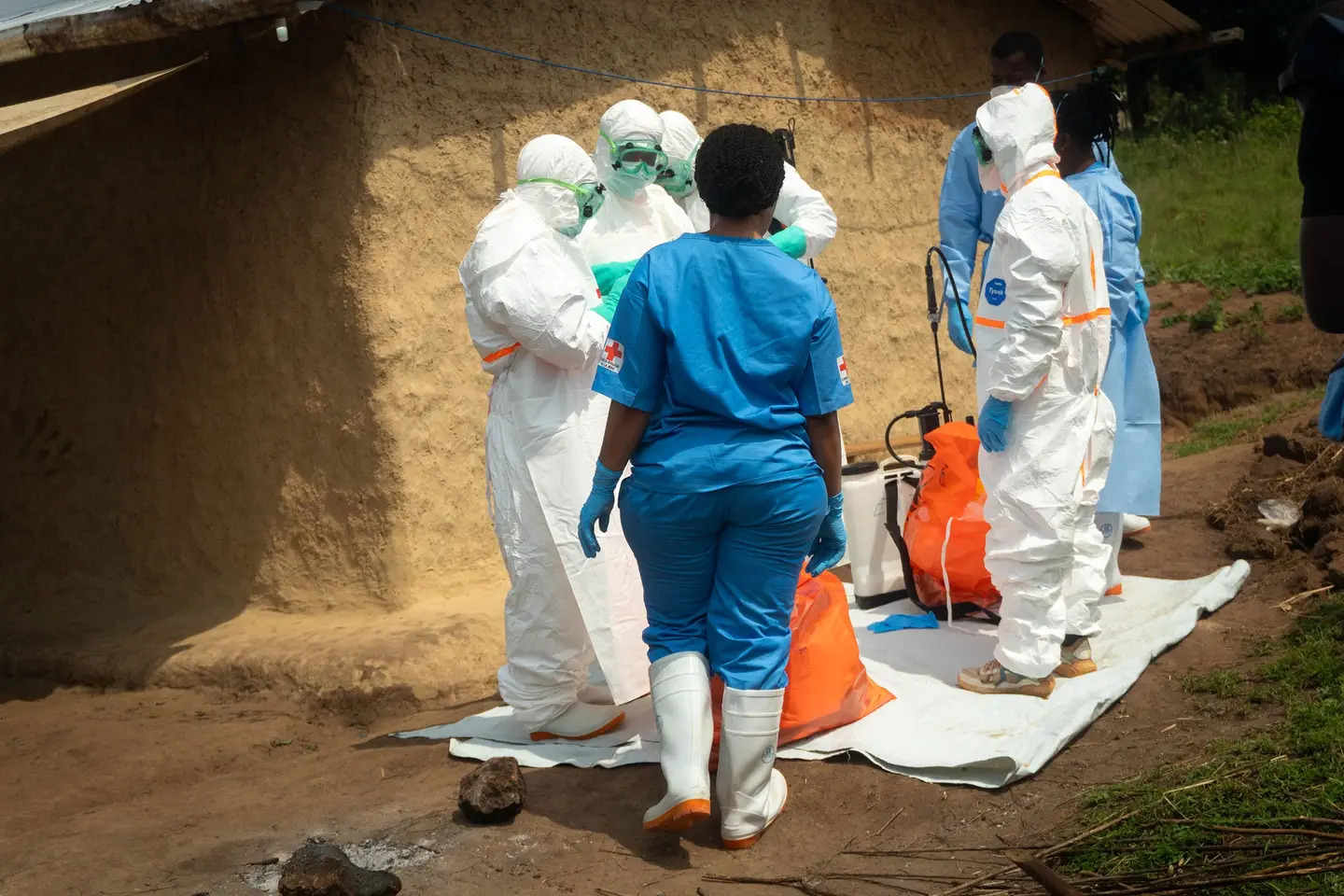

An Ebola response team was driven out of the Nganya neighbourhood of Durba, in north-east Congo’s Haut-Uele province, by more than 50 people armed with stones and machetes, the Congolese news site Actualite.cd reported on Tuesday.
The attack came days after the outbreak reached Durba, and as international health agencies say the Ebola response has stopped fast transmission in the first hotspots of Ituri while the virus keeps spreading elsewhere at 400 to 500 new cases a week.
What happened to the Ebola response team in Durba?
The team, working with the Red Cross, had gone to decontaminate the home of a family that had lost a relative, Actualite.cd reported, citing witnesses. The crowd forced the team to leave and sabotaged its vehicle. First accounts reported no deaths. Quotes from residents and team members were in French.
Residents told the outlet they had never been told what decontamination involved or where patients should be taken. The epidemic had been declared in Durba only three days earlier, and doctors quoted by Actualite.cd said the town’s Ebola treatment centre was still a building site.
Two private health facilities, the Polyclinique Bavière and the Centre Hospitalier Mgr Julien Andavo, were closed by official order, the outlet said. Fourteen infected staff at the polyclinic were being treated where they were, and patients at the second facility were refusing to leave. No official statement on the incident had been published by Tuesday afternoon.
How big is the Ebola outbreak now?
Congo had recorded 11,376 confirmed cases and 5,568 deaths by 14 November, according to the European Centre for Disease Prevention and Control, citing Congolese health ministry data. Haut-Uele accounted for 523 cases, including 223 deaths, in eight of its 13 health zones.
The outbreak, caused by the Bundibugyo strain of the virus, was declared in May. In a joint statement on 15 November, the World Health Organization, Africa CDC and partners said rapid transmission had been halted in Mongbwalu, Nyankunde, Nizi, Rwampara and Butembo, and that new cases in Bunia had halved. They said the outbreak was still spreading across 67 health zones in eight provinces, and that about two-thirds of confirmed deaths occurred in the community rather than in treatment centres.
Children have been hit hard. UNICEF said that by 4 November, 2,959 children had been infected, 28 per cent of confirmed cases, and 1,737 had died. Among children under five, 72 per cent of those infected had died.
Why does community resistance matter for the Ebola response?
Health agencies say reaching affected communities is now the main obstacle. The 15 November statement said access to hard-to-reach communities was key to ending the outbreak, and the WHO has already verified 81 attacks on health facilities in Congo during this epidemic.
Distrust slowed the Ebola response in North Kivu and Ituri in 2018-20, when treatment centres were attacked and safe burials resisted. The Durba account points to the same problem: decisions such as closing clinics and decontaminating homes were taken, residents said, without explaining them to the people affected.
The outbreak is also spreading to new areas. Actualite.cd reported on Tuesday that another doctor had died of Ebola in Isiro, the Haut-Uele provincial capital.
What happens next?
Health officials are expected to open the Durba treatment centre and resume decontamination with community leaders. Our six-month review of the outbreak found case numbers still rising by about 400 a week, and the Ebola response will depend on how quickly teams can work safely in new hotspots such as Durba.
FAQ
Where is Durba?
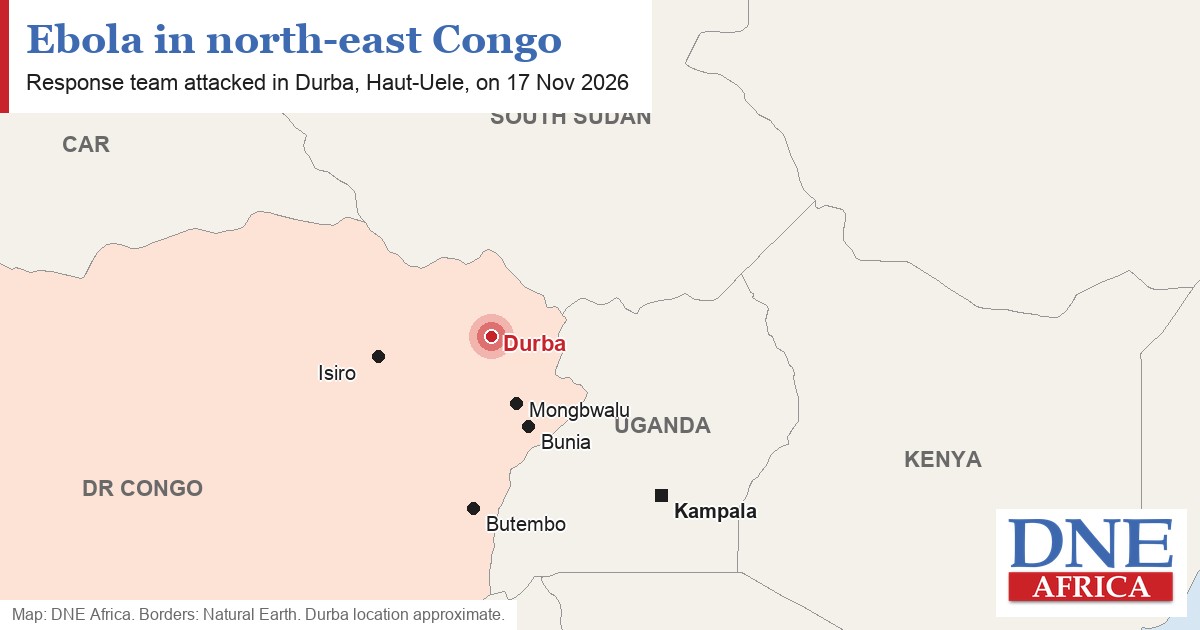
Durba is a gold-mining town in Watsa territory, Haut-Uele province, in north-east Congo near the borders with Uganda and South Sudan.
Was anyone hurt in the attack on the Ebola response team?
Early accounts reported by Actualite.cd said no one was killed. The team’s vehicle was sabotaged and the decontamination was abandoned.
How many people have died in the Ebola outbreak?
Congo had recorded 5,568 deaths among 11,376 confirmed cases by 14 November 2026, according to ECDC, citing Congolese data.
Is the Ebola response making progress?
The WHO and partners said on 15 November that rapid transmission had been halted in several early hotspots in Ituri and North Kivu, but 400 to 500 new cases a week are still being reported.


