
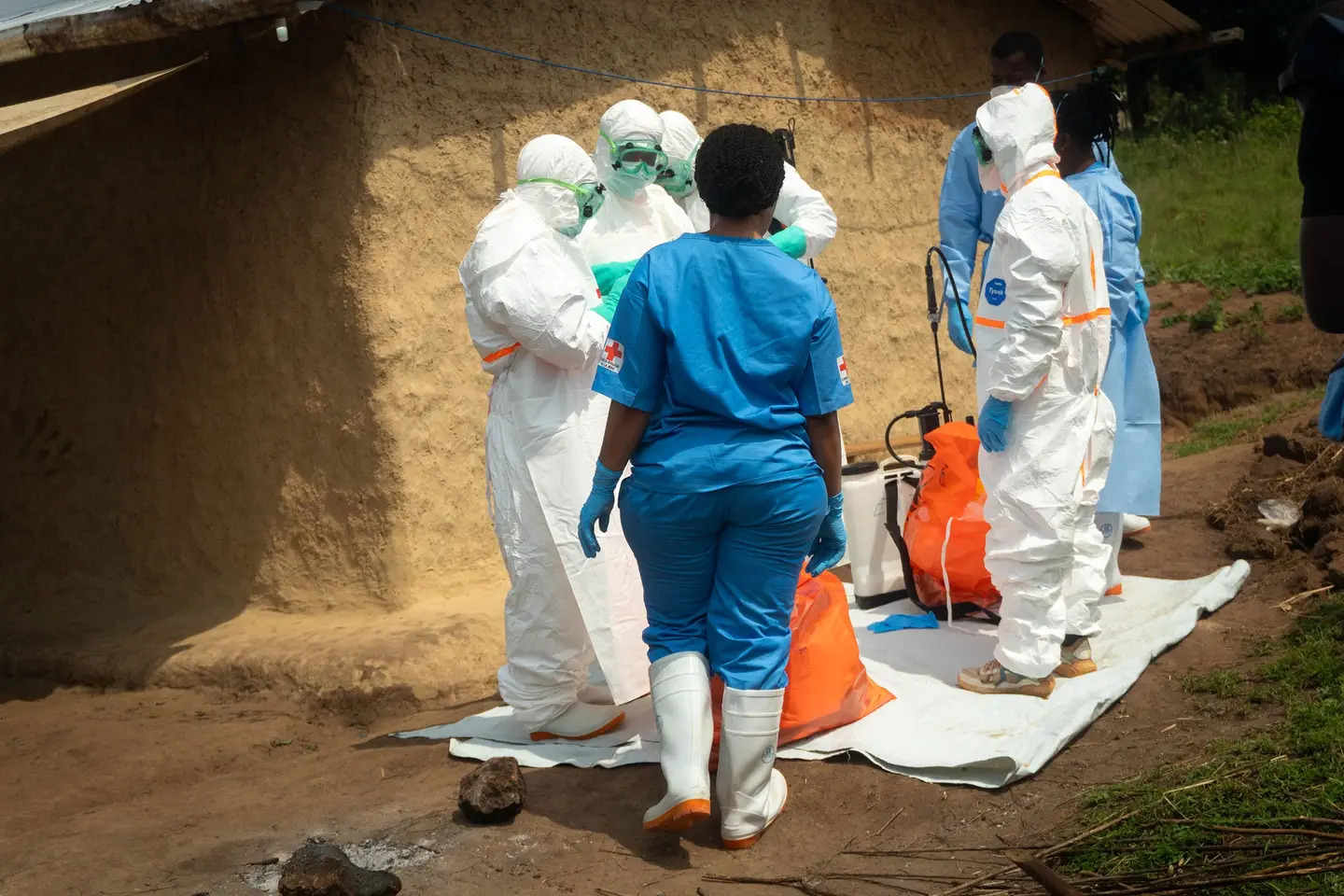

The Congo Ebola outbreak reached six months on 15 November with more than 11,000 cases and about 5,400 deaths, and 400 to 500 new cases still reported each week, according to Africa CDC.
The figures make it the worst Ebola epidemic in the Democratic Republic of Congo’s history. Health agencies say gains in Bunia, the first hotspot, are being offset by spread into rural areas where armed groups make contact tracing dangerous.
How far has the Congo Ebola outbreak spread?
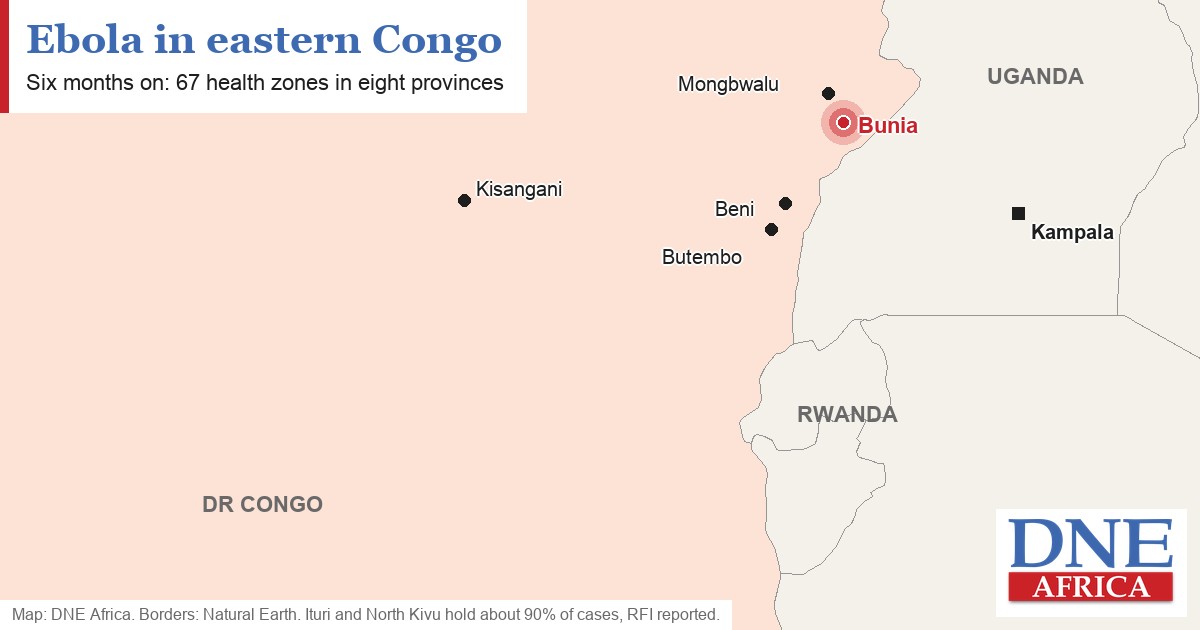
Kinshasa declared the Congo Ebola outbreak on 15 May after cases of the Bundibugyo strain were confirmed in Mongbwalu, in Ituri province. It has since reached 67 health zones in eight provinces, Africa CDC said in a six-month statement issued on Sunday.
RFI reported (in French) 11,200 confirmed cases and more than 5,500 deaths, with about 90% of cases in Ituri and North Kivu. Over the past 21 days the virus has resurfaced in Fataki, Kilo, Drodro and Mahagi in Ituri and in Beni, Butembo and Oicha in North Kivu, RFI said. Counts differ between agencies because they are compiled on different dates.
Uganda, which declared its own outbreak on the same day, has recorded about 20 cases and two deaths, with none since July. Isolated cases linked to Congo have also been reported in Kenya and Nigeria, according to the World Health Organization.
Is the Congo Ebola response working?
In Bunia, where the Congo Ebola response is most advanced, the number of new cases has halved and treatment centres report low occupancy, Africa CDC said. It added that services have been brought closer to affected communities, but that conflict, displacement and humanitarian needs continue to drive transmission.
WHO Director-General Tedros Adhanom Ghebreyesus told member states on 11 November that progress in some places should not be mistaken for control of the epidemic as a whole, Actualite.cd reported. The Congolese outlet put recoveries at nearly 3,000 and said more than 1,000 contacts could not be traced.
Julien Harneis, the UN’s Ebola response coordinator, told RFI that contact tracing rates are much lower on the edges of large towns and in rural areas where the Allied Democratic Forces (ADF) are present, because surveillance staff fear for their safety. He said fighting between the CRP and Codeco militias in Djugu territory was displacing people and slowing the response. Antoine Maillard of the medical charity ALIMA in Bunia told RFI the situation remained worrying.
Is there a vaccine for the Bundibugyo strain?
No licensed vaccine or approved treatment exists for Bundibugyo, unlike the Zaire strain behind earlier Congo epidemics. The Tumaini vaccine trial began in Bunia on 23 October, according to WHO, and a WHO expert group has recommended adding two candidate vaccines developed against Bundibugyo.
Other trials are testing obeldesivir, an oral antiviral given to contacts to prevent illness, and a monoclonal antibody and antiviral combination for patients, RFI reported.
What happens next?
Africa CDC said rapid and flexible funding must be kept up through 2027. Earlier this week Médecins Sans Frontières said some responders had gone unpaid, as DNE Africa reported on Ebola funding, and WHO has verified dozens of attacks on Congo health facilities. Neighbouring South Sudan has been told its Ebola risk is very high.
An outbreak is declared over 42 days after the last patient tests negative twice or is buried. With hundreds of cases still reported each week, the Congo Ebola epidemic is far from that point.
FAQ
How many people have died in the Congo Ebola outbreak?
About 5,400 people have died among more than 11,000 cases, according to Africa CDC’s 15 November statement. RFI put deaths at more than 5,500.
When did the Congo Ebola outbreak start?
Congo declared it on 15 May 2026, after cases were confirmed in Mongbwalu, Ituri province.
Which areas are most affected?
Ituri and North Kivu account for about 90% of cases. The virus is present in 67 health zones across eight provinces.
Why is the outbreak hard to stop?
There is no licensed vaccine for the Bundibugyo strain, and attacks by armed groups such as the ADF limit contact tracing, UN and Africa CDC officials said.


