

African health ministries are the least likely to have trained staff on health and climate change or written climate risks into disaster plans, according to a World Health Organization survey of 146 countries published on 13 November.
The findings matter because the same countries list the heaviest climate-linked health burdens, from malaria and cholera to malnutrition, while most say they have little or no money to act on the plans they have drawn up.
What did the WHO health and climate change survey find for Africa?
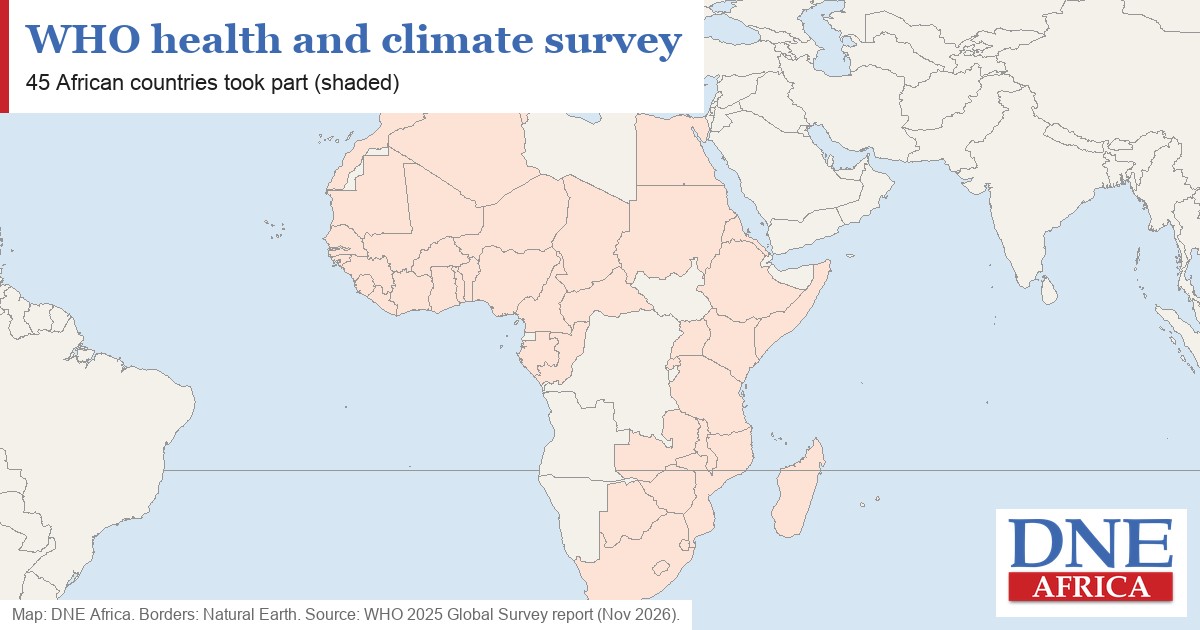
The 2025 WHO Health and Climate Change Global Survey report draws on self-reported data from health authorities in 146 countries, up from 95 in 2021. Forty countries in WHO’s African Region took part, 85% of the region, along with Egypt, Morocco, Somalia, Sudan and Tunisia, which WHO counts in its Eastern Mediterranean Region.
Some 58% of African Region countries said ministry of health staff had received any training on health and climate change in the past two years, the lowest share of any region. The global figure was 64% and the highest, in South-East Asia, was 89%.
Coverage was also thin where training happened. In almost 60% of countries that trained staff, 10% or fewer of ministry personnel had been reached, WHO said. Only 33% of low-income countries reported any training at all.
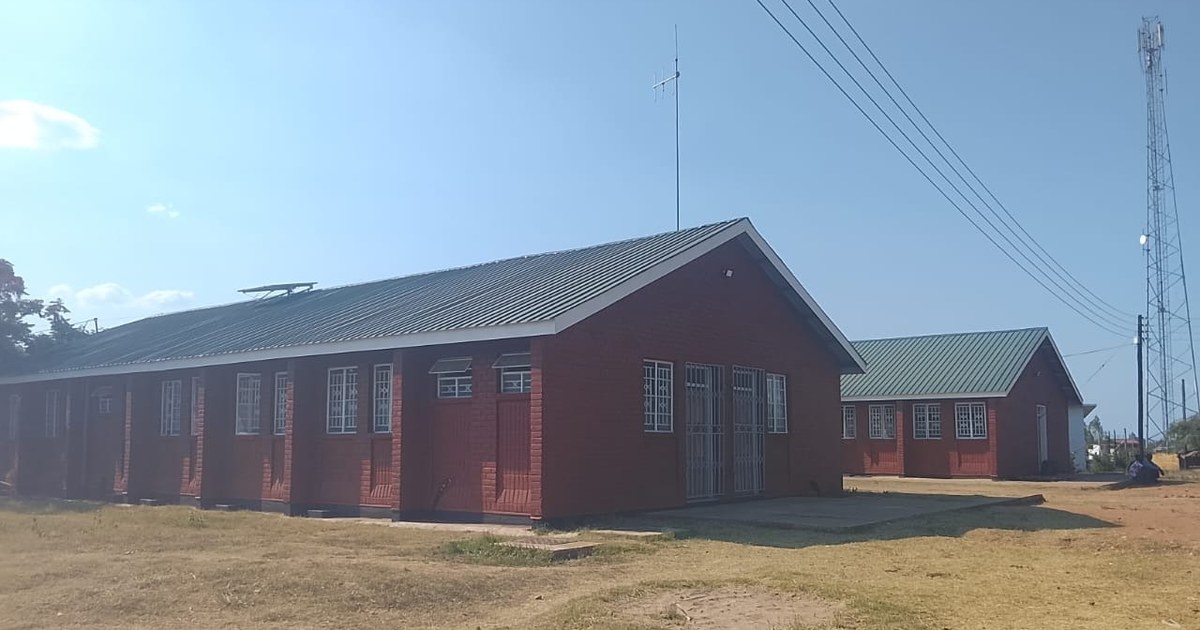
On emergencies, 38% of African Region countries said their ministry of health disaster risk reduction plan included climate-related preparedness, again the lowest regional share, against 46% globally. Only 23% had assessed at least one public health facility for climate resilience, below the global 30%; Europe reported 13%.
Where countries had completed a vulnerability and adaptation assessment since 2020, 58% of those in the African Region said the ministry had formally endorsed it, compared with more than 70% overall.
Which climate health risks do African countries rank highest?
African Region respondents flagged vector-borne diseases such as malaria and dengue most often, at 95%, followed by waterborne diseases at 85%. Noncommunicable diseases and malnutrition were each cited by 80%, heat-related illness by 78% and mental health by 75%.
Malnutrition stands out. Every low-income country in the survey named it a priority, against 16% of high-income countries, WHO said. Earlier research has linked warming to wider malaria transmission, including a study warning that climate change could add over 120mn malaria cases in Africa by 2050.
Why is health and climate change planning not turning into action?
Money is the main constraint. Some 91% of countries named insufficient finance as a barrier to carrying out their national health and climate change strategy, up from 70% in 2021 and 56% in 2018.
Of the countries with a health national adaptation plan, 20% reported no funding and 48% minimal funding; only one said its plan was fully funded. Three-quarters of low-income countries reported minimal funding, and 52% of them had no such plan at all.
Domestic budgets cover little. Only 19% of low-income countries said their government had allocated funds to the ministry of health for climate work in the current budget cycle, against 43% of high-income countries.
External money has grown but unevenly. The share of low- and lower-middle-income countries receiving international funds for health and climate change work rose from 28% in 2021 to 43% in 2025, the report said, yet only 28% of low-income countries had such funding, compared with 50% of lower-middle-income countries. Some 81% of low-income countries said they were seeking international finance.
“Recognition and planning continue to outpace implementation,” Bruce Aylward, WHO assistant director-general, wrote in the foreword.
What happens next?
The survey sets the baseline for tracking the WHO Global Action Plan on Climate Change and Health, adopted by the World Health Assembly in 2025, with mid-term and final reviews to follow. It comes as governments meet at the COP31 climate talks in Antalya, Türkiye, where African ministers have called for adaptation and loss-and-damage support that is mostly grant-based, UNEP said.
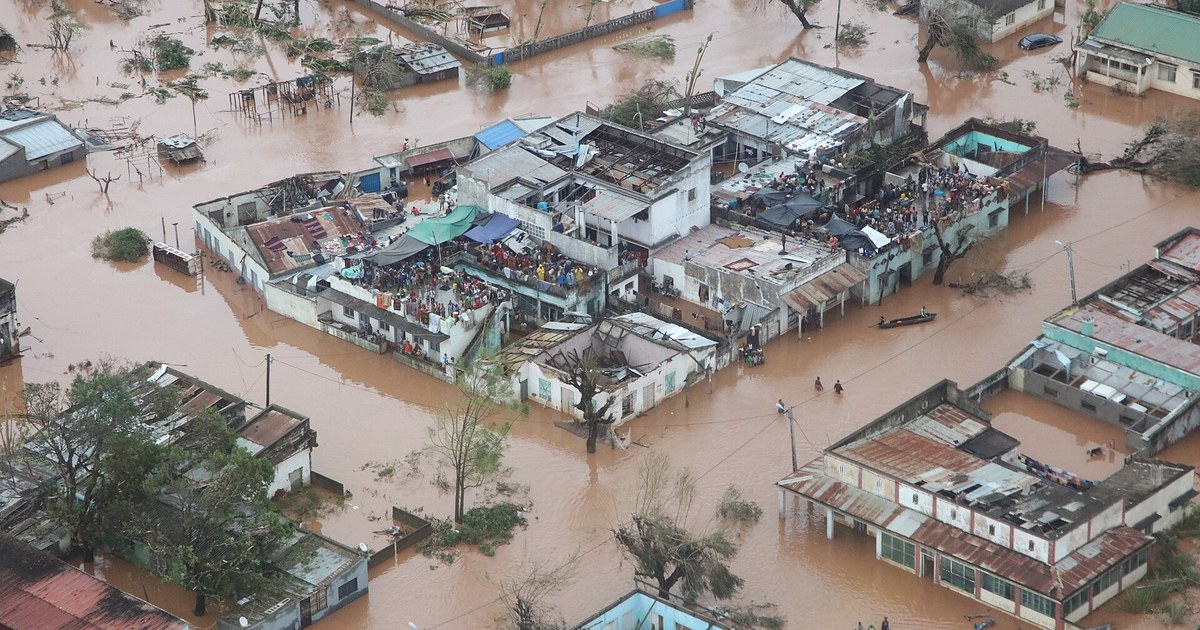
The data are self-reported and were checked against supporting documents, WHO said. Droughts and floods have already been shown to shape climate action across Africa, and cyclones such as Chido in Mozambique show the strain storms place on clinics.
FAQ
What is the WHO health and climate change survey?
It is a voluntary survey of national health authorities, run in 2018, 2021 and 2025, that tracks how countries prepare health systems for climate change and cut health sector emissions. The 2025 round covered 146 countries.
How many African countries took part?
Forty countries in WHO’s African Region responded, 85% of the region. Egypt, Morocco, Somalia, Sudan and Tunisia took part as members of WHO’s Eastern Mediterranean Region.
Where does Africa lag on health and climate change?
The African Region had the lowest share of countries reporting climate training for health ministry staff (58%) and climate-related components in disaster plans (38%), the survey found.
What is the biggest barrier?
Finance. Some 91% of countries cited insufficient funding, and only one country reported a fully funded health national adaptation plan.


