


The Food and Agriculture Organization of the United Nations (FAO) has brought together countries across the Near East and North Africa (NENA) region to strengthen surveillance, reporting and prevention of antimicrobial resistance (AMR), with a focus on practical measures that can be implemented at country and farm levels.
AMR poses a growing threat to agrifood systems, animal and public health, food security and sustainable livestock production, making reliable data, stronger cooperation and preventive action essential, FAO said.
The regional webinar was organized by the FAO Regional Office for the Near East and North Africa in cooperation with FAO headquarters, with technical support from the organization’s global AMR, InFARM and RENO FARM teams.
The discussions focused on two complementary components of FAO’s AMR work: the International FAO Antimicrobial Resistance Monitoring System (InFARM) and the RENO FARM initiative, which seeks to reduce the need for antimicrobials on farms as part of sustainable agrifood systems transformation.
“Strengthening antimicrobial resistance surveillance and prevention requires strong regional engagement, better information sharing and practical support to countries,” said Mohammed Bengoumi, Animal Production Health Officer at FAO’s Regional Office for the Near East and North Africa.
“InFARM and RENO FARM offer important opportunities to strengthen our understanding of AMR while supporting countries in reducing the need for antimicrobials at farm level,” he added.
Turning data into action
The webinar provided countries with technical guidance on InFARM, including enrolment procedures, participation requirements, reporting mechanisms and available technical support.
The system is designed to help countries strengthen AMR surveillance, improve data collection and reporting, and build an evidence base for policymaking and investment.
FAO stressed that reliable AMR data are essential to tracking trends, identifying risks, measuring progress and developing effective policies.
Participants also reviewed the RENO FARM initiative and its Farm 5Gs approach, which promotes practical measures to reduce the need for antimicrobials through improved farm management, animal health, biosecurity and good husbandry practices.
Together, InFARM and RENO FARM address two key aspects of AMR action: strengthening surveillance and reporting while reducing the need for antimicrobials through preventive measures and improved farm-level practices.
“AMR is a global One Health challenge that requires coordinated action across countries and sectors,” said Junxia Song, FAO Deputy Chief Veterinarian and Chief of One Health and Disease Control.
“Strong surveillance and reporting provide the evidence needed to better understand AMR, while prevention at farm level is essential to reducing the need for antimicrobials and protecting animal, human and environmental health,” she added.
Expanding country engagement
The webinar also provided a platform for government officials and technical experts to engage directly with FAO teams working on InFARM and RENO FARM, discuss participation opportunities and identify areas requiring additional technical support.
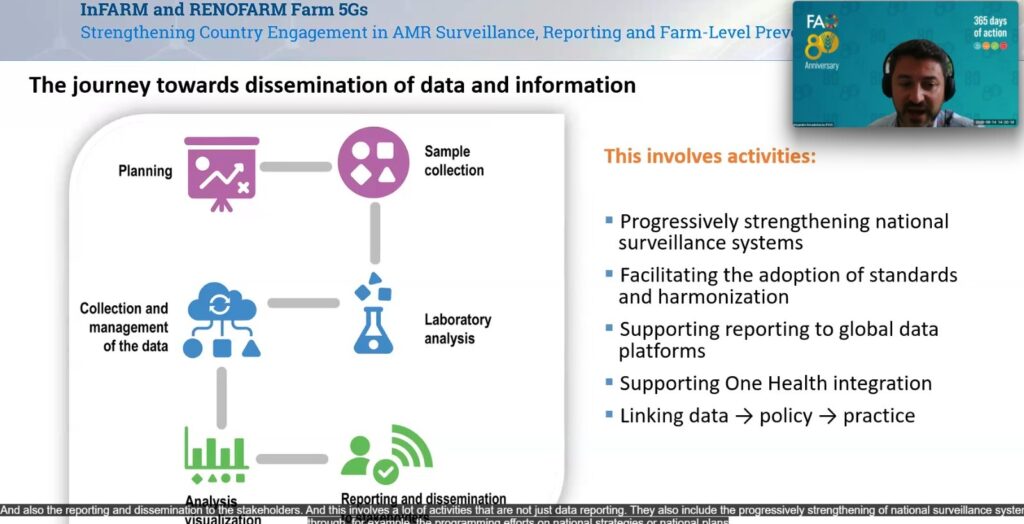
Participants included government counterparts and FAO specialists working in animal health, veterinary services, AMR surveillance, laboratory activities, livestock production and One Health coordination.
The meeting followed a regional AMR virtual meeting held by FAO’s Regional Office for the Near East and North Africa in May 2026, where participating countries called for more practical guidance and direct engagement on FAO tools and initiatives related to AMR surveillance, reporting, prevention and responsible antimicrobial use.
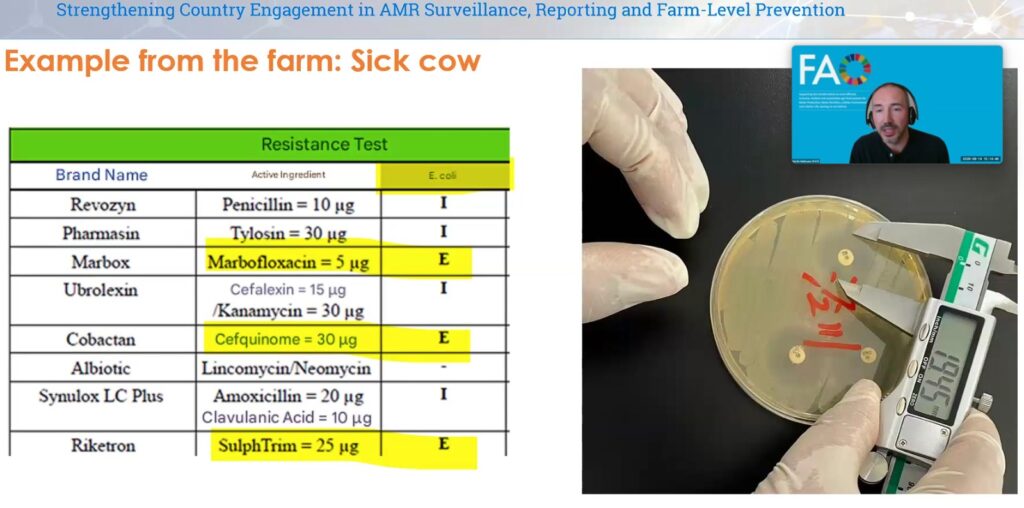
FAO said the latest webinar is expected to increase awareness of InFARM, clarify enrolment and reporting requirements, expand understanding of the Farm 5Gs approach and identify countries interested in follow-up technical support.
The organization said it will continue supporting countries through technical assistance, capacity development, knowledge sharing and regional cooperation to strengthen the response to AMR across the NENA region.


