
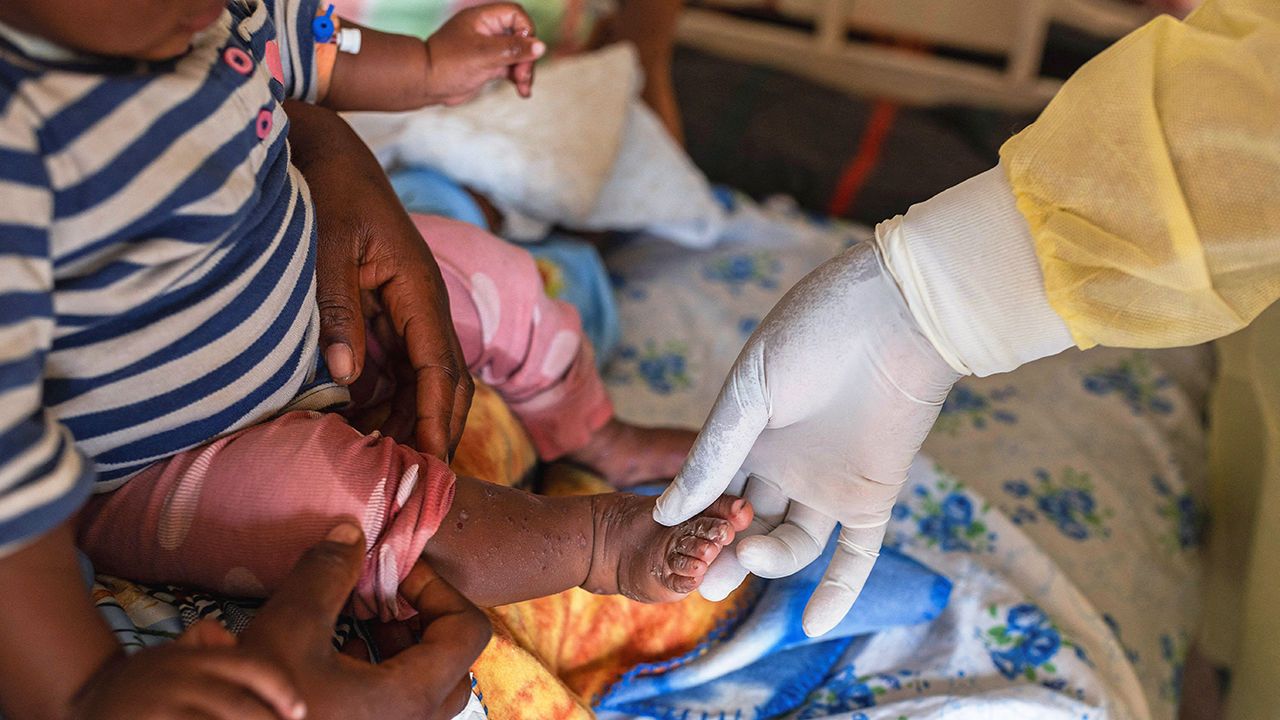

Guinea-Bissau is facing its first reported outbreak of mpox, with UNICEF warning that the country’s fragile disease surveillance system could leave additional cases undetected, particularly among children.
As of Aug. 17, the country had confirmed seven cases of mpox, all involving adults, with no deaths reported, UNICEF noted.
However, 23 of 46 suspected cases were children under the age of 15, raising concerns about the potential impact of the outbreak on younger populations. UNICEF said the planned reopening of schools next month could increase the risk of further transmission.
“This is the first time mpox cases have been reported in Guinea-Bissau, making even a small outbreak a major public health event,” Sandra Martins, UNICEF’s deputy representative in the country, said in a statement.
She said the country’s surveillance system remained “extremely fragile,” raising the possibility that infections could be going undetected.
Mpox is caused by a virus in the same family as smallpox and can spread from animals to humans as well as between people through close physical contact. Symptoms can include fever, muscle aches and characteristic skin lesions, and severe cases can be fatal.
The disease was first identified in humans in 1970 in the Democratic Republic of Congo.
The Africa Centres for Disease Control and Prevention said in January that the continent was no longer facing a public health emergency over mpox, although the disease remains endemic in several African countries.
UNICEF said the emergence of cases in Guinea-Bissau underscored the need to strengthen surveillance and detection systems to prevent the outbreak from spreading, particularly as schools prepare to reopen.


