
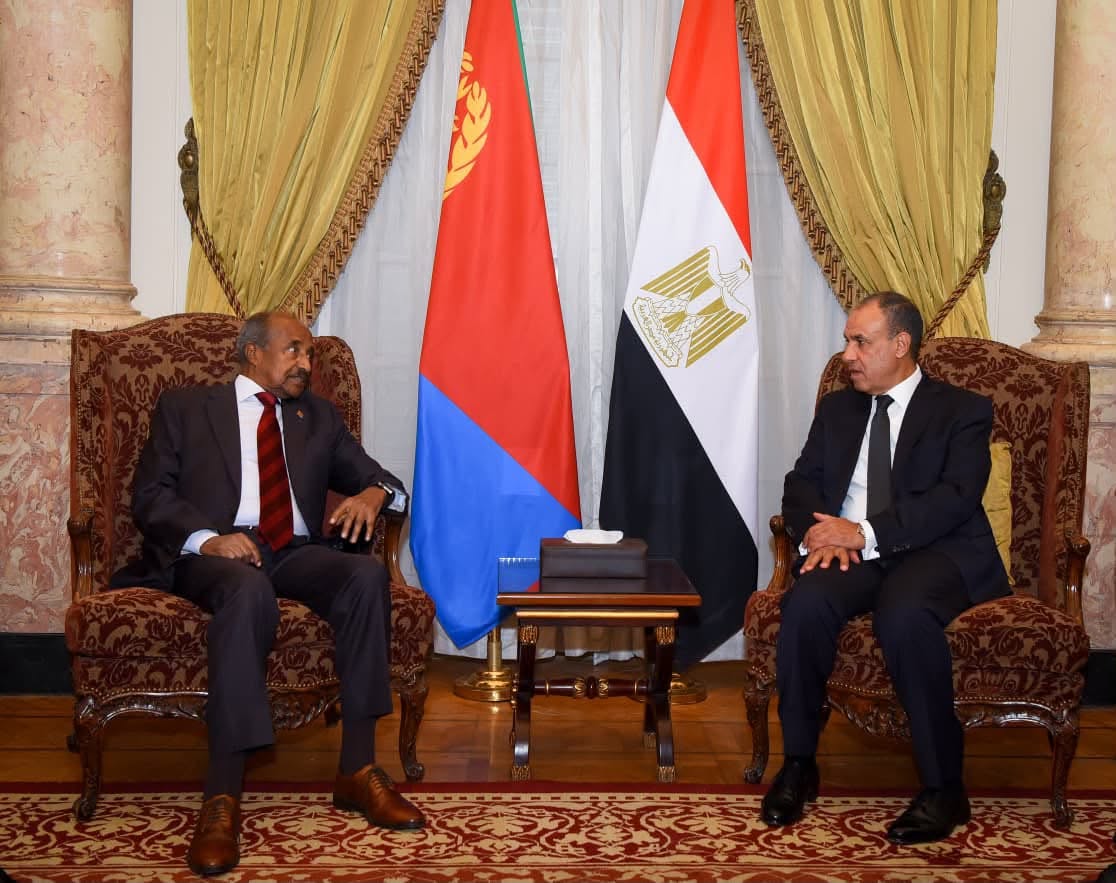

Egypt and Eritrea completely rejected any attempts by non-littoral nations to impose security arrangements or enforce maritime access in the Red Sea.
Why it matters:
Both nations firmly maintain that the administration and security of the Red Sea remain the exclusive responsibility of bordering states. The joint declaration underscores Egypt’s position that stability in the Horn of Africa represents a direct extension of its own national security.
Eritrea-Egypt the big picture:
Egyptian Foreign Minister Badr Abdelatty hosted Eritrean counterpart Osman Saleh on Sunday to coordinate responses to regional crises. The ministers reviewed ongoing developments in Sudan and Somalia, rejecting any unilateral measures that could compromise state sovereignty or undermine regional stability across the Horn of Africa.
By the numbers: Key diplomatic and economic milestones driving the strategic partnership:
- April 2026: An Eritrean presidential economic advisor visited Egypt to lay the groundwork for expanded bilateral ties.
- May 2026: Abdelatty and Egypt’s transport minister led a business delegation to Asmara, activating a maritime transport cooperation agreement.
- Seven priority sectors: Identified for Egyptian private sector investment, including mining, infrastructure, maritime transport, pharmaceuticals, fisheries, port connectivity and upgrading, and housing.
What they’re saying: Foreign Ministry spokesperson Tamim Khalaf noted that Abdelatty praised the outcomes of Eritrean President Isaias Afwerki’s recent visit. Abdelatty stressed Egypt’s full support for Asmara’s sovereignty and emphasised the “importance of supporting national state institutions and maintaining the sovereignty and territorial integrity of countries in the region.”
Between the lines: Egypt’s comprehensive diplomatic push to integrate its private sector into the Eritrean market extends beyond security into tangible infrastructure. By targeting joint investments in Eritrean port upgrades and maritime connectivity, Cairo is cementing physical and economic ties along the critical maritime corridor.
What’s next: The Egyptian Agency of Partnership for Development will organise technical training courses aimed at capacity building. These programmes are designed to respond directly to the immediate developmental needs and priorities of the Eritrean government to further boost trade exchange.
The bottom line: Amid ongoing regional coordination, both nations are solidifying a strategic partnership to exclude foreign maritime enforcement in the Red Sea while aggressively expanding bilateral infrastructure and economic integration.


