
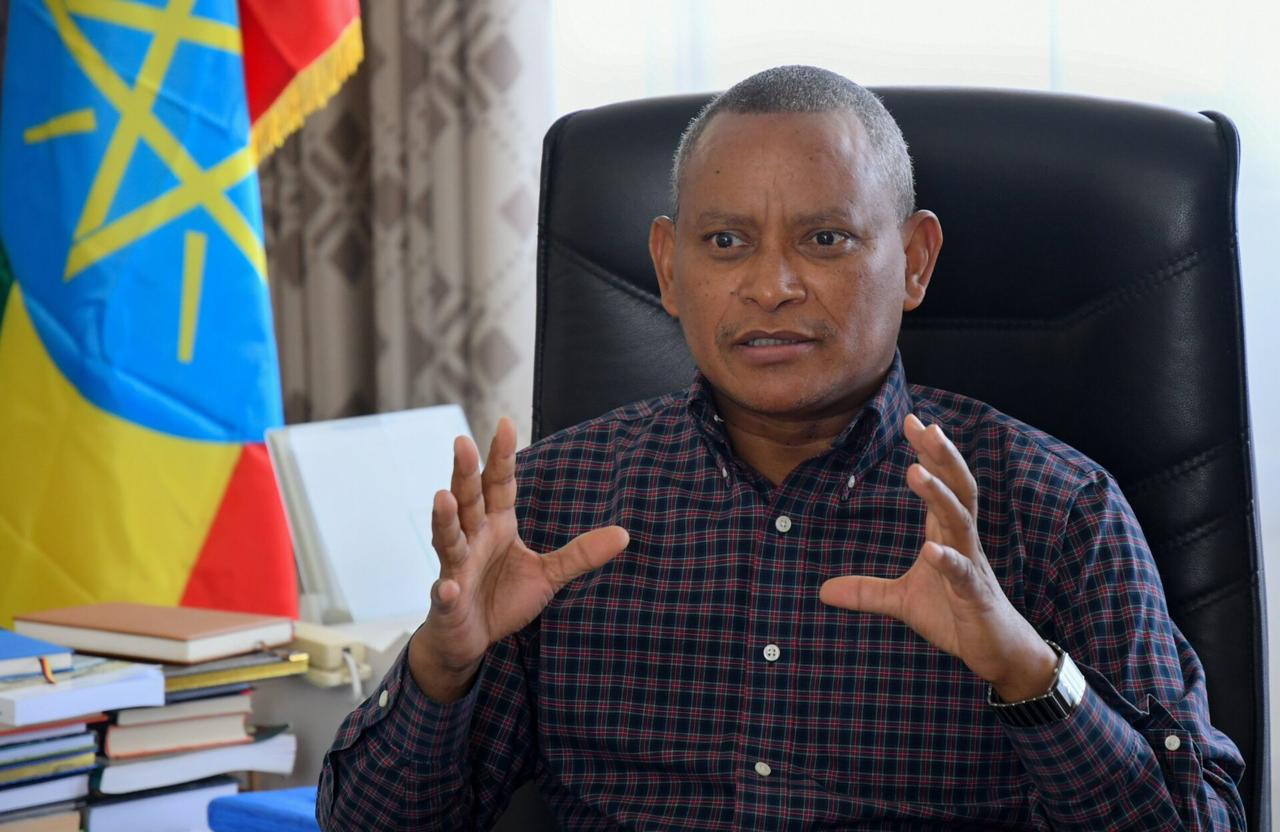

Debretsion Gebremichael has been sworn in as president of Ethiopia’s Tigray region, marking a bold political comeback that challenges the federal government’s authority and threatens to upend the fragile post-war settlement.
The move, led by the Tigray People’s Liberation Front, reinstates Debretsion—one of the central figures of the pre-war administration—as the region’s leader through a council structure that predates the conflict. His appointment effectively sidelines the federally backed interim administration headed by Tadesse Worede.
Debretsion’s return to power places him at the center of a renewed political confrontation with Addis Ababa, where the government of Prime Minister Abiy Ahmed has yet to formally respond to the development.
The TPLF has framed the decision as a corrective step, arguing that the recent extension of the interim administration’s mandate violated the terms of the Pretoria Agreement. However, federal authorities maintain that the extension was lawful, setting the stage for a constitutional and political standoff.
Debretsion’s swearing-in is widely seen as a high-risk move that could reshape the balance of power in Tigray. Supporters view it as a restoration of regional autonomy, while critics warn it may undermine the peace process that ended a devastating two-year war.
International actors are closely monitoring the situation. The European Union has expressed concern that unilateral political steps could reignite conflict, while the United States is reportedly engaging in quiet diplomacy to prevent escalation.
Complicating matters further are reports of regional involvement, including signals of support from Eritrea, a development likely to heighten tensions with Ethiopia’s federal authorities.
On the ground, heightened security measures in Mekelle and reports of increased military activity underscore the sensitivity of the moment.
With Debretsion now asserting leadership, the focus shifts to how both his administration and the federal government navigate the standoff—one that could determine whether Tigray moves toward political stabilization or slips back into conflict.


