
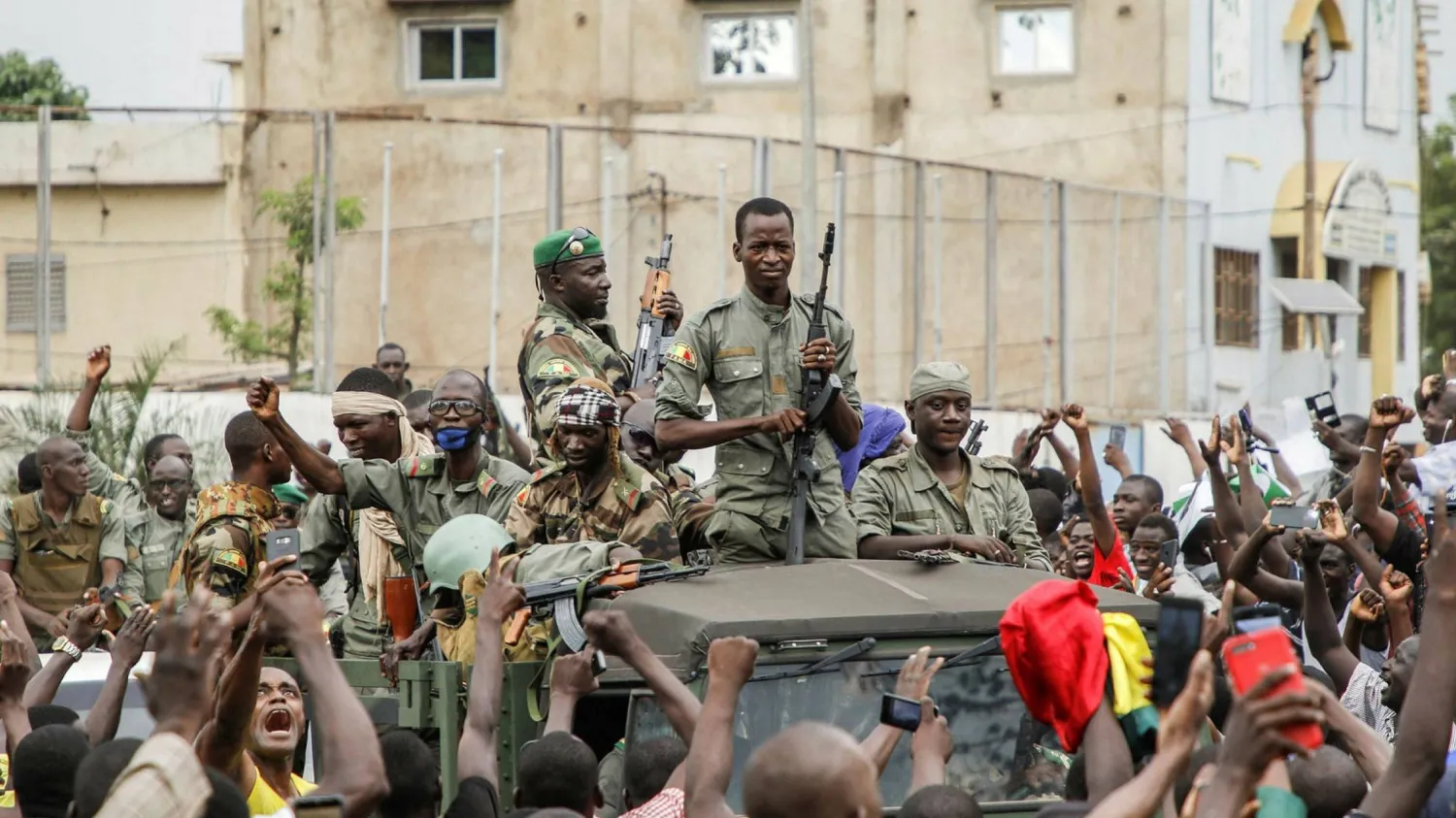

The Malian transitional government has announced the successful restoration of security across the capital, breaking a strategic blockade intended to paralyze the city. In a significant televised address, authorities confirmed that all international borders and city entrances are secure, while simultaneously revealing a “shocking” internal security breach involving active and former military personnel.
Ending the Fuel Crisis
The capital received a massive economic lifeline on Friday as a convoy of over 800 fuel trucks entered Bamako through the southern gate under heavy military escort. This strategic delivery aimed to neutralize a blockade attempted by the Group for the Support of Islam and Muslims (JNIM), which had sought to choke vital supply lines and trigger a domestic energy collapse.
The arrival of the fuel, imported to mitigate chronic shortages, is being framed by the military council as a decisive operational victory against insurgent efforts to isolate the central government.
Infiltration and Internal Betrayal
The stabilization of the capital comes amid disturbing revelations regarding the Saturday attacks that targeted seven strategic locations in the city. Government investigations have led to the arrest of several Malian soldiers, both serving and discharged, accused of planning and facilitating the assaults.
Official reports indicate that these “insider” elements provided logistical support and access to militants from the Permanent Strategic Framework (CSP/Azawad) and JNIM. The most high-profile target of this coordination was the residence of Defense Minister Sadio Camara, who was killed in the recent violence. Security agencies are currently pursuing several other fugitives believed to be part of the same cell.
The Push for the North
On the northern front, the government maintained a defiant tone, asserting that the Malian Armed Forces (FAMa) are making steady tactical gains. Officials described the total reclamation of northern territories currently held by separatist and jihadist groups as “merely a matter of time.”
The current security landscape in Mali has grown increasingly volatile following the withdrawal of the UN peacekeeping mission (MINUSMA). The military council has since ramped up large-scale operations with the help of international partners to secure border regions. However, these offensives have triggered a wave of “retaliatory strikes” reaching the heart of Bamako, as armed groups attempt to prove their ability to penetrate even the most fortified government sectors.
With the capital now under “total control,” the government faces the dual challenge of rooting out internal dissent within the ranks while sustaining a multi-front war against entrenched insurgencies in the Sahel.


