
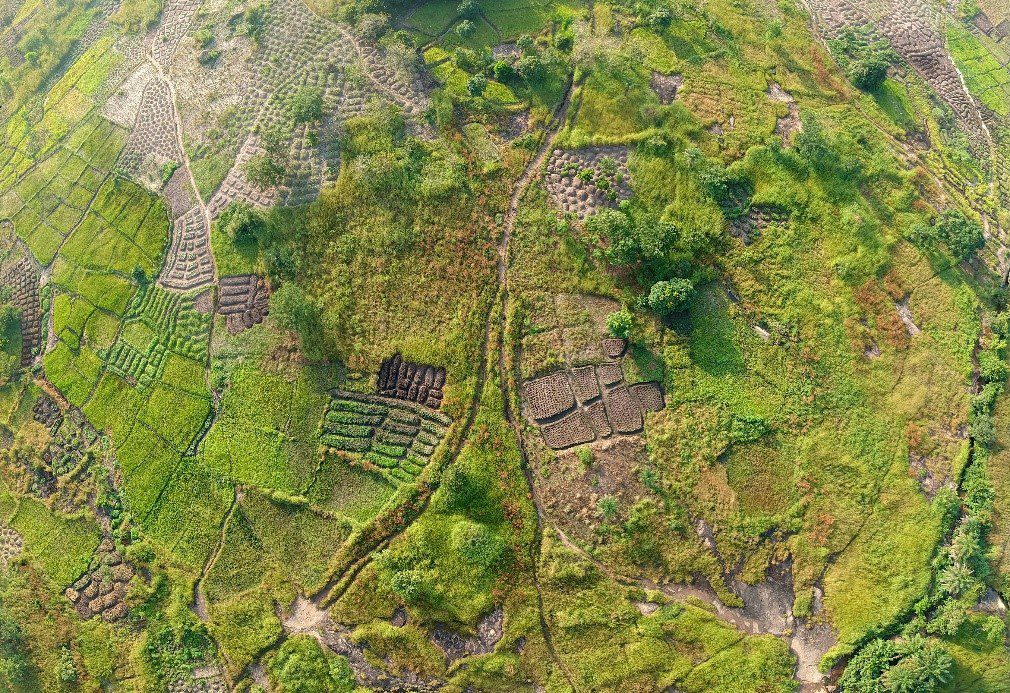

A new study says Africa can better protect its crops and improve food security by combining traditional farming knowledge with modern technology.
The research, published in CABI Agriculture and Bioscience, introduces a strategy called “One Plant Health.” The approach focuses on bringing together farmers, scientists, and policymakers to tackle plant diseases and build stronger agricultural systems.
The study was led by Dr Gilbert Nchongboh Chofong from the Julius Kühn-Institut, along with an international team of researchers.
At the heart of the idea is a simple message: solutions work better when different types of knowledge are combined.
African farmers have long used traditional methods to protect crops. These include selecting strong seeds, mixing crops in the same field, and identifying plants that can survive pests and disease. These practices are based on deep, long-term knowledge of local land and climate.
Modern science offers new tools that can strengthen these efforts. Researchers now use genetic testing to develop crops that can better resist diseases. Technologies such as drones and satellite images help track crop health, rainfall, and soil conditions in real time.
The study argues that combining these two approaches can lead to better results than using either one alone.
“A synergy is created when we combine indigenous knowledge with modern technologies,” said Chofong. “This can help improve disease control, support sustainable farming, and make food systems more resilient across Africa.”
The need for new solutions is becoming more urgent.
Climate change is increasing the spread of plant diseases and pests. Changing temperatures and rainfall patterns are making it harder for farmers to predict growing conditions. At the same time, new plant viruses are emerging, threatening key crops across the continent.
The researchers say that by combining local knowledge with scientific tools, farmers can respond more quickly and effectively to these changes.
For example, farmers may already know which crop varieties perform well in dry conditions, while satellite data can show where drought is likely to worsen. Together, this information can guide better decisions in the field.
The “One Plant Health” approach is not limited to agriculture.
The study highlights how the same strategy can help address wider environmental challenges such as deforestation, soil damage, water shortages, and pollution.
Healthy plants depend on healthy ecosystems. By improving how land and resources are managed, countries can support both agriculture and the environment.
A key part of the strategy is cooperation between different groups.
The researchers stress that farmers, scientists, local communities, and governments must work together. Each group plays an important role.
Farmers bring practical experience and local knowledge. Scientists provide research and technology. Policymakers can create laws and programs to support sustainable farming.
Without this shared effort, the study says it will be difficult to manage plant diseases and improve food systems.
The study also calls for more attention to plant health within the broader idea of “One Health.”
This concept links human health, animal health, and environmental health. However, plant health is often overlooked, even though it directly affects food supply and livelihoods.
The researchers argue that including plant health in this framework will help countries better understand how crop diseases can affect nutrition, economies, and ecosystems.
Overall, the study presents a clear path forward.
By combining traditional practices with modern science, and by encouraging cooperation across sectors, African countries can better protect their crops and strengthen food security.
As climate challenges grow, the researchers say that solutions must be both innovative and grounded in local knowledge.
In the end, the future of farming in Africa may depend on how well these two worlds—traditional wisdom and modern technology—are brought together.


