
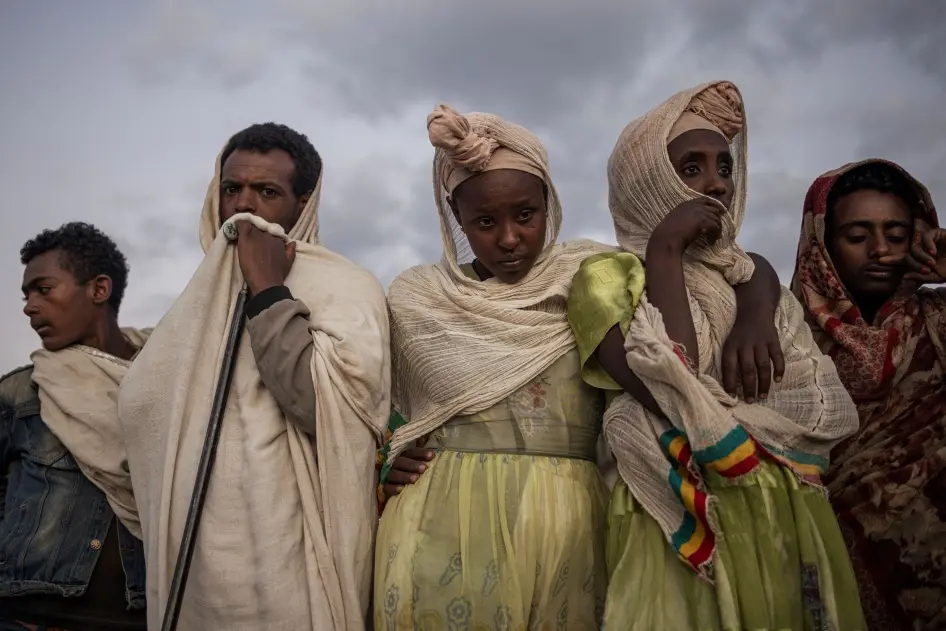

The Amhara Fano National Movement is demanding the African Union formally investigate an ongoing genocide perpetrated by the Ethiopian government.
Why it matters
- Existential Threat: The Fano leadership alleges a systematic campaign of “indiscriminate killing, bombardment, and terrorisation” specifically targeting the Amhara people.
- Institutional Failure: By labeling the conflict as a genocide, the movement is challenging the African Union (AU) to uphold its Constitutive Act and move beyond “superficial projects” in Addis Ababa.
- Regional Fallout: The report claims the genocide is being used as a smoke screen for “provocative acts” against Eritrea and Somalia, threatening to pull the entire Horn of Africa into a wider conflagration.
The Big Picture: What is happening in Amhara?
The genocidal war in Ethiopia is entering its third year, with the Fano movement alleging that Prime Minister Abiy Ahmed has shifted from conventional warfare to a policy of total destruction. The movement reports that the federal government, having lost control over most Amhara territory, is now employing “sex violence as a weapon of war” and targeted drone strikes against non-combatants. This internal collapse is being masked by diplomatic “diversionary tactics” aimed at neighbouring states to deflect domestic pressure.
By the Numbers: How the Amhara genocide scales
| Metric | Statistic / Data Point |
| Duration of Genocide | Approaching 3 years (commenced 2023) |
| Recent Casualties | 100+ civilians killed in one week (Feb 2026) |
| Geographic Proximity | Atrocities occurring 70–80 km from AU Headquarters |
| Impacted Demographics | Millions (m) of women and children intentionally victimised |
| Infrastructure Status | Total breakdown of health and education systems |
Between the Lines: Who is driving the crisis?
The Fano’s appeal highlights a growing “unholy alliance” between the Ethiopian regime and foreign actors, specifically regarding the destabilisation of Sudan. The letter suggests that Ethiopian territories are being used as training facilities for Sudanese insurgents in exchange for “personal and financial gain” for the regime. This suggests the genocide in Amhara is not merely an internal ethnic conflict, but a component of a larger, state-sponsored effort to commodify regional instability.
What to watch: How the AU responds
- Fact-Finding Mission: The primary demand is for an independent commission to verify the genocide claims without government interference.
- Transitional Government: Watch for increased international pressure on Abiy Ahmed to withdraw federal forces and support an “inclusive democratic transitional government.”
- Humanitarian Access: Whether international organisations can bypass federal blockades to reach the Amhara region as food insecurity and health system collapses intensify.
Between the Lines
The timing of this letter is a calculated move to force the AU to choose between state sovereignty and human rights. By addressing President João Lourenço and the AUC Chairperson Mahmoud Ali Youssouf directly during the summit, the Fano leadership is effectively lobbying for the AU to stop engaging with “expelled” former members and instead recognise the “forces that actually control” the territory. The Fano’s insistence on a “democratic transitional government” signals they no longer view the current regime as a viable partner for peace.


