
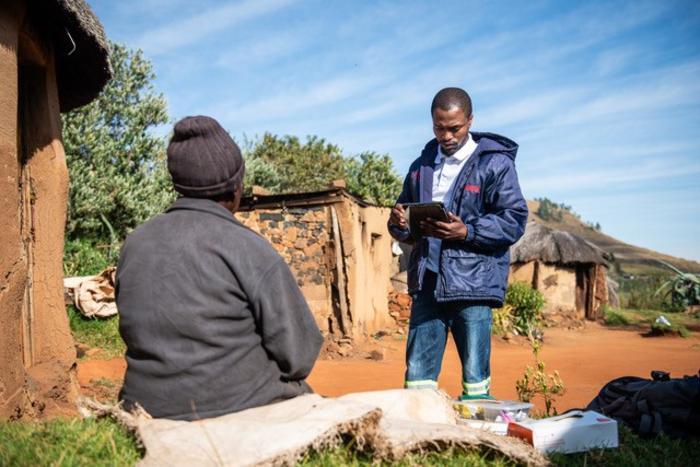

A new study from the southern African country of Lesotho suggests that trained community members, supported by a simple tablet-based app, can help people control high blood pressure more effectively than traditional clinic-based care. Researchers say the findings could reshape how chronic diseases are managed in remote regions where access to doctors and healthcare facilities remains limited.
High blood pressure—also known as hypertension—is one of the leading causes of heart attacks, strokes, and premature death worldwide. Yet in many low- and middle-income countries, large numbers of people live with the condition undiagnosed or untreated. Distance from clinics, shortages of trained health professionals, and the cost and inconvenience of regular visits often prevent people from receiving timely care. These barriers are particularly acute in rural and mountainous countries like Lesotho.
Bringing healthcare closer to communities
For many residents of remote villages, traveling to a health center can take hours and require money they may not have. As a result, routine check-ups are often delayed or skipped entirely. Researchers wanted to explore whether trained local residents could help bridge this gap by providing basic monitoring and treatment support within their communities.
The study, led by the University of Basel in Switzerland in collaboration with the non-profit organization SolidarMed and health authorities in Lesotho, trained 103 community health workers over a short period. Equipped with a digital app on tablet devices, these workers screened villagers for high blood pressure and provided follow-up care under clear medical guidelines.
Screening thousands of people
Over five months, the trained workers tested more than 6,600 people in their villages. They identified over 1,200 individuals with high blood pressure, including more than 500 whose levels required medical attention. About half of those diagnosed began treatment supervised locally by the trained workers, who followed standardized protocols supported by the app.
For comparison, another group of patients continued to receive standard care through healthcare facilities, allowing researchers to assess whether the community-based model produced better outcomes.
Technology guiding safe treatment
The tablet app played a central role in the program. It provided step-by-step clinical guidance, helping community workers adjust medication doses based on blood pressure readings and symptoms. It also scheduled follow-up checks and ensured treatments stayed consistent with medical recommendations.
This digital support allowed non-specialists to deliver structured care safely while remaining connected to professional oversight.
Better results with local care
Overall, patients treated within their communities achieved better blood pressure control than those relying on conventional clinic visits. Researchers found no meaningful increase in side effects or complications, indicating that the community-led model was just as safe as traditional care.
Experts believe convenience was a major factor. When treatment is available close to home, patients are more likely to attend check-ups regularly, take medications consistently, and stay engaged in long-term care.
Implications for global health
Even modest reductions in blood pressure can significantly lower the risk of stroke, heart disease, and related complications. Expanding community-based care could therefore have substantial public health benefits, especially in regions with limited medical infrastructure.
The approach could also reduce pressure on hospitals and clinics, allowing healthcare professionals to focus on more complex cases while routine monitoring happens locally.
Researchers suggest the model could potentially be adapted for other chronic conditions such as diabetes or heart disease, where ongoing monitoring is essential but access to clinics is often difficult.
Looking ahead
The study forms part of a broader international research initiative focused on improving chronic disease care in underserved regions. Scientists are now assessing the cost-effectiveness of the approach to determine whether it can be scaled up sustainably.
Public health experts increasingly see community health workers, supported by digital tools, as a practical solution for improving access to care worldwide. With proper training, supervision, and simple technology, local residents can play a vital role in strengthening health systems and improving outcomes for millions of people.
As chronic diseases continue to rise globally, especially in low-resource settings, innovative approaches like this may prove essential in making healthcare more accessible, equitable, and effective.


