
By using this site, you agree to the Privacy Policy and Terms of Use.
Accept
DNE Africa
  • Home
  • Politics
    Nigeria, Egypt, South Africa Lead Africa’s Equity Markets, says AfDB
    Business

    Nigeria, Egypt, South Africa Lead Africa’s Equity Markets: AfDB

    By Ahmed Emam 4 Min Read
    EXCLUSIVE: IOM Highlights Risks Along Horn of Africa-Arabian Migration Route
    InsiderPoliticsWorld

    EXCLUSIVE: IOM Highlights Risks Along Horn of Africa-Arabian Migration Route

    By Ahmed Emam June 5, 2026
    Dozens of Orthodox Christians Reportedly Killed in Fresh Violence in Ethiopia’s Arsi Zone
    Politics

    Dozens of Orthodox Christians Reportedly Killed in Fresh Violence in Ethiopia’s Arsi Zone

    By Taha Sakr June 3, 2026
  • Business
    Cheick-Oumar Sylla, Director for North Africa and the Horn of Africa at IFC
    Business

    IFC eyes over $2.2bn investments in North Africa this year

    The International Finance Corporation (IFC) plans to inject more than $2.2bn in…

    By DNE Africa 2 Min Read
    africa
    BusinessScience
    Pandemic Financial Worries Slowed Digital Finance Adoption in Africa
    climate shocks vulnerability
    BusinessScience
    Climate Change Could Deepen Food Crisis in East Africa by 2050
    WhatsApp Image 2026 02 02 at 4.01.57 PM
    BusinessHealth
    Takeda hosts regional summit in Cairo to improve care for rare hereditary angioedema
    omega 1 130922 cakuo
    BusinessScienceTechnology
    Heat and Dust Are Cutting Solar Power Output Across Sub-Saharan Africa, Study Finds
  • Culture
  • Opinion
  • Technology
  • World
  • My Bookmarks
Reading: Community Health Workers and Digital Tools Improve Blood Pressure Control in Rural Africa
Sign In
  • Join US
DNE AfricaDNE Africa
Font ResizerAa
  • Home
  • Politics
  • Business
  • Culture
  • Opinion
  • Technology
  • World
  • My Bookmarks
Search
  • Home
  • Politics
  • Business
  • Culture
  • Opinion
  • Technology
  • World
  • My Bookmarks
Have an existing account? Sign In
Follow US
© Foxiz News Network. Ruby Design Company. All Rights Reserved.
Low Res SolidarMed Lesotho

Community Health Workers and Digital Tools Improve Blood Pressure Control in Rural Africa

Mohammed El-Said
Last updated: February 14, 2026 2:43 pm
By Mohammed El-Said 5 Min Read
Share
SHARE

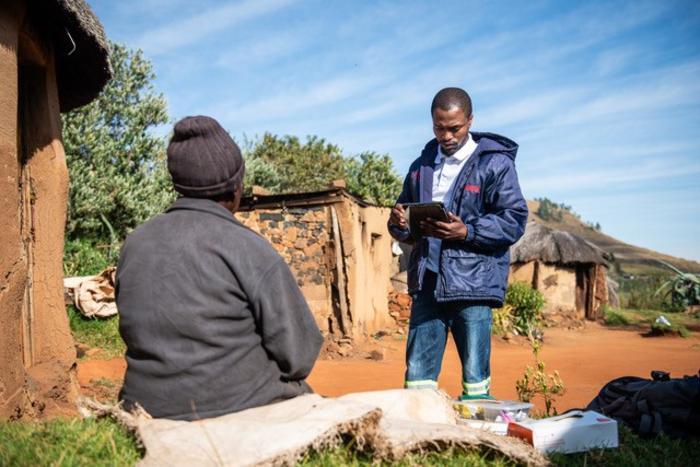
A new study from the southern African country of Lesotho suggests that trained community members, supported by a simple tablet-based app, can help people control high blood pressure more effectively than traditional clinic-based care. Researchers say the findings could reshape how chronic diseases are managed in remote regions where access to doctors and healthcare facilities remains limited.

Contents
Bringing healthcare closer to communitiesScreening thousands of peopleTechnology guiding safe treatmentBetter results with local careImplications for global healthLooking ahead

High blood pressure—also known as hypertension—is one of the leading causes of heart attacks, strokes, and premature death worldwide. Yet in many low- and middle-income countries, large numbers of people live with the condition undiagnosed or untreated. Distance from clinics, shortages of trained health professionals, and the cost and inconvenience of regular visits often prevent people from receiving timely care. These barriers are particularly acute in rural and mountainous countries like Lesotho.

Bringing healthcare closer to communities

For many residents of remote villages, traveling to a health center can take hours and require money they may not have. As a result, routine check-ups are often delayed or skipped entirely. Researchers wanted to explore whether trained local residents could help bridge this gap by providing basic monitoring and treatment support within their communities.

The study, led by the University of Basel in Switzerland in collaboration with the non-profit organization SolidarMed and health authorities in Lesotho, trained 103 community health workers over a short period. Equipped with a digital app on tablet devices, these workers screened villagers for high blood pressure and provided follow-up care under clear medical guidelines.

Screening thousands of people

Over five months, the trained workers tested more than 6,600 people in their villages. They identified over 1,200 individuals with high blood pressure, including more than 500 whose levels required medical attention. About half of those diagnosed began treatment supervised locally by the trained workers, who followed standardized protocols supported by the app.

For comparison, another group of patients continued to receive standard care through healthcare facilities, allowing researchers to assess whether the community-based model produced better outcomes.

Technology guiding safe treatment

The tablet app played a central role in the program. It provided step-by-step clinical guidance, helping community workers adjust medication doses based on blood pressure readings and symptoms. It also scheduled follow-up checks and ensured treatments stayed consistent with medical recommendations.

This digital support allowed non-specialists to deliver structured care safely while remaining connected to professional oversight.

Better results with local care

Overall, patients treated within their communities achieved better blood pressure control than those relying on conventional clinic visits. Researchers found no meaningful increase in side effects or complications, indicating that the community-led model was just as safe as traditional care.

Experts believe convenience was a major factor. When treatment is available close to home, patients are more likely to attend check-ups regularly, take medications consistently, and stay engaged in long-term care.

Implications for global health

Even modest reductions in blood pressure can significantly lower the risk of stroke, heart disease, and related complications. Expanding community-based care could therefore have substantial public health benefits, especially in regions with limited medical infrastructure.

The approach could also reduce pressure on hospitals and clinics, allowing healthcare professionals to focus on more complex cases while routine monitoring happens locally.

Researchers suggest the model could potentially be adapted for other chronic conditions such as diabetes or heart disease, where ongoing monitoring is essential but access to clinics is often difficult.

Looking ahead

The study forms part of a broader international research initiative focused on improving chronic disease care in underserved regions. Scientists are now assessing the cost-effectiveness of the approach to determine whether it can be scaled up sustainably.

Public health experts increasingly see community health workers, supported by digital tools, as a practical solution for improving access to care worldwide. With proper training, supervision, and simple technology, local residents can play a vital role in strengthening health systems and improving outcomes for millions of people.

As chronic diseases continue to rise globally, especially in low-resource settings, innovative approaches like this may prove essential in making healthcare more accessible, equitable, and effective.


You Might Also Like

EXCLUSIVE: IOM Highlights Risks Along Horn of Africa-Arabian Migration Route

South Africa to meet fiscal goals despite Iran war pressures

Ethiopia elections open amid heavy fighting in Amhara region

Amhara Fano Rejects Ethiopia Election Legitimacy, Cites War and Civilian Fear

Ancient Lake Mud Shows 2012 Rwenzori Fire Was Unprecedented for 12,000 Years

TAGGED:AfricaHealthHealthcareRural
Share This Article
Facebook Twitter Pinterest Whatsapp Whatsapp LinkedIn Reddit Telegram Email Copy Link

You Might Also Like

Egypt's Senghor University secures Romanian tech funding to train future African leaders
Culture

Egypt’s Senghor University secures Romanian tech funding to train future African leaders

By DNE Africa 5 Min Read
Ayanda Holo, President of BRICS AFRICA CHANNEL
opinionPolitics

Africa Is No Longer a Promise. It Is a System Taking Shape

By Ayanda Holo 8 Min Read
UAE, OPEC, and Somaliland- A Question of Timing, Not Direction Bashe Awil Omar
opinionPolitics

UAE, OPEC, and Somaliland: A Question of Timing, Not Direction

By Bashe Awil Omar 5 Min Read

More Popular from DNE AFRICA

Ad imageAd image
Politics

Chad: 23 Soldiers Killed in Boko Haram Assault on Military Base in Western Region

At least 23 Chadian soldiers have been killed and 26 others injured following a deadly attack…

By Taha Sakr
Politics

Bamako Under Siege: Armed Groups Establish Checkpoints Around Malian Capital as Northern Bases Fall

 Mali’s ruling military council is facing a multi-front existential crisis as Al-Qaeda-linked militants established strategic checkpoints…

By Taha Sakr
Politics

Mali Cites Internal Betrayal as Rebels Seize Strategic Northern Base

The Malian military transition is facing its most severe crisis in a decade as the government…

By Taha Sakr
Politics

Mali Breaks Bamako Blockade, Arrests Soldiers for Collusion in Deadly Attacks

The Malian transitional government has announced the successful restoration of security across the capital, breaking a…

By Taha Sakr
DNE Africa

News by Africans, For Africans

Categories

  • The Escapist
  • Entertainment
  • Business

Quick Links

  • Advertise with us
  • Newsletters
  • Complaint
  • Deal

DNE Africa.All Rights Reserved.

Welcome Back!

Sign in to your account

Username or Email Address
Password

Lost your password?