
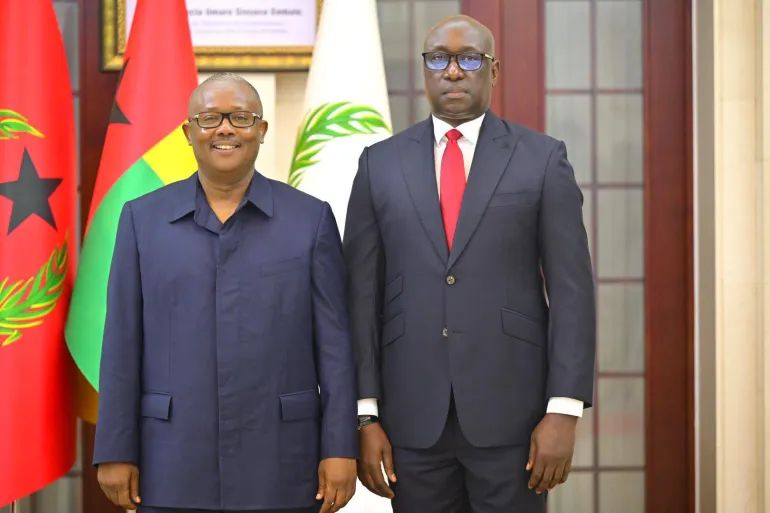

Guinea-Bissau’s President Umaro Sissoco Embaló has dismissed Prime Minister Rui Duarte de Barros, replacing him with Braima Camará just months before the country heads to the polls for a presidential election set for 30 November.
The reshuffle, announced in a presidential decree on Thursday, comes amid deepening political tensions over the legitimacy of Embaló’s mandate. Barros, who took office in December 2023, is succeeded by Camará, a prominent political figure and former coordinator of the opposition MADEM G-15 party.
The move is widely seen as part of political maneuvering ahead of a heated electoral contest, with the opposition accusing Embaló of overstaying his constitutional term. While Guinea-Bissau’s constitution limits presidential terms to five years, opposition leaders argue that Embaló’s mandate expired on 27 February. However, the Supreme Court ruled that his tenure could continue until 4 September, pending elections.
The dispute has fueled months of political standoff, prompting the Economic Community of West African States (ECOWAS) to send a mediation mission in March. The mission withdrew abruptly after alleging threats of expulsion by the authorities.
Guinea-Bissau, a small West African nation of around 2 million people, has faced chronic instability since gaining independence from Portugal in 1973, enduring multiple coups and persistent power struggles.


