
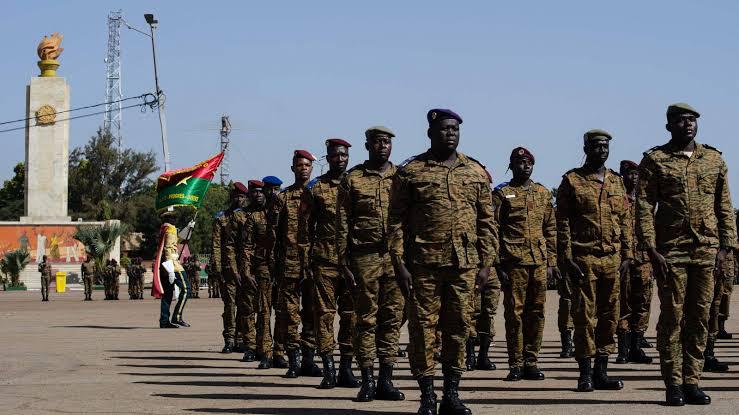

Authorities in Burkina Faso have released four civilians who were forcibly conscripted and deployed to combat zones as punishment for their public criticism of the country’s military-led government, according to a report by Agence France-Presse (AFP). The move has reignited debate over freedom of expression and the use of state power under the current transitional regime.
Among those freed was prominent journalist and author Kalifara Seré, who had spent several months embedded in military operations against jihadist groups in northern Burkina Faso. Seré, a respected voice in the country’s civil society, had been outspoken in his criticism of the junta’s policies, particularly its handling of the worsening security crisis and restrictions on civil liberties.
The journalist and the three other civilians were reportedly detained without formal charges and sent to frontline positions against their will. Human rights groups have described such measures as a clear attempt to intimidate and silence critics, warning that they mark a troubling escalation in authoritarian practices.
Since coming to power in a 2022 coup, Burkina Faso’s military junta, led by Captain Ibrahim Traoré, has introduced a range of controversial policies under the banner of “total mobilization” against terrorism. This has included the recruitment of tens of thousands of civilian Volunteers for the Defense of the Homeland (VDP), and in some cases, the forced enlistment of individuals critical of the regime.
The recent releases followed mounting pressure from both local activists and international watchdogs, who decried the use of frontline deployment as a tool of repression. The UN Human Rights Office and several West African civil society networks had called on Burkina Faso to respect the rights of its citizens and uphold the rule of law, especially in the context of counterterrorism efforts.
Burkina Faso continues to face one of the most severe security crises in Africa’s Sahel region, with nearly half the country affected by violence from Islamist militant groups affiliated with al-Qaeda and the Islamic State. More than 2 million people have been displaced, and large swathes of territory remain outside government control.
Despite these challenges, critics argue that the junta’s repressive tactics—including the suspension of media outlets, the dissolution of opposition parties, and now, the forced conscription of dissenters—undermine national unity and erode the very foundations of the democratic transition the regime claims to support.
As the country prepares for a possible return to civilian rule by 2026, according to a transitional charter, calls are growing for greater accountability, transparency, and respect for civil rights. The treatment of journalists and civil society figures like Kalifara Seré will be seen as a litmus test for the junta’s willingness to engage in inclusive dialogue and political reform.
For now, the release of the four civilians has been cautiously welcomed by rights groups, but many warn that Burkina Faso remains at a dangerous crossroads—where the fight against extremism must not come at the cost of human dignity and democratic freedoms.


