
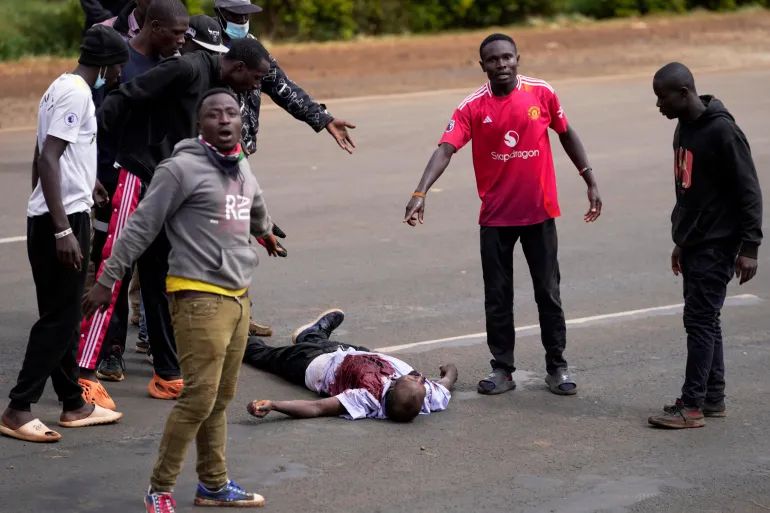

At least 31 people were killed and more than 100 injured during widespread anti-government protests in Kenya this week, in a major escalation of public unrest against the administration of President William Ruto. The demonstrations, held on July 7 to mark the anniversary of the 1990 “Saba Saba” pro-democracy movement, turned violent as security forces clashed with thousands of protesters across multiple cities.
The Kenya National Commission on Human Rights (KNCHR), an independent body, reported the casualties on Tuesday, confirming 31 deaths, 107 injuries, two cases of enforced disappearance, and the arrest of over 500 individuals. The commission condemned what it described as “gross and disproportionate use of force” and urged accountability for human rights violations committed by both security agencies and protest organizers.
The protests were primarily led by young Kenyans, many from urban centers, who have grown increasingly frustrated with soaring inflation, youth unemployment, and what they perceive as an out-of-touch political elite. Protesters marched through the streets of Nairobi, Kisumu, Mombasa, and Eldoret, chanting slogans such as “Ruto One Term” and demanding an end to what they describe as a worsening cost-of-living crisis and police brutality.
Security forces responded with force, deploying tear gas, water cannons, and rubber bullets in several areas. In some incidents, live ammunition was reportedly used to disperse crowds. Human rights groups and local media have circulated graphic images showing injured protesters and mourners burying victims of the clashes.
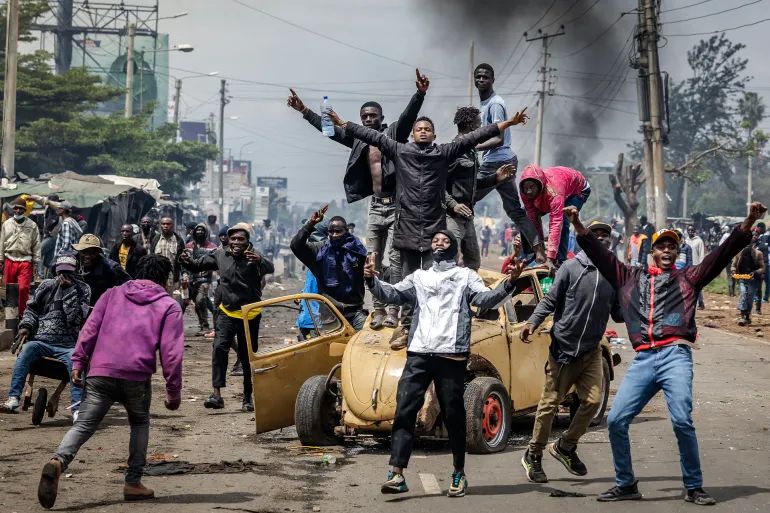
The government has stood by its security response. Interior Minister Kipchumba Murkomen, in a statement to local media, dismissed the protests as an “orchestrated attempt to destabilize the country,” labeling them a “criminal uprising disguised as a civil movement.” He added that authorities had filed terrorism-related charges against 37 individuals arrested during the protests.
Tensions had already been high in recent weeks following the death of popular blogger Albert Ojuang, who died in police custody under unclear circumstances. His case sparked a youth-led protest movement that culminated in mass demonstrations on June 25, which left 19 people dead, according to official figures. His death has become a rallying point for what is now being described as a generational uprising.
Kenyan newspapers have reported that at least 140 people have been killed in protest-related violence since 2023. Several outlets, including The Star and Daily Nation, have drawn comparisons between the current crackdown and the tactics of now-defunct security units known for extrajudicial killings. President Ruto had pledged to disband such units during his campaign, but critics say little has changed on the ground.
Despite growing discontent, President Ruto retains a firm parliamentary majority, insulating him from any immediate political fallout. His administration has sought to counter the unrest through promises of social programs, job creation schemes, and infrastructure investments, but many Kenyans remain unconvinced.
The protests mark a significant test for Ruto’s leadership just two years before the next general elections in 2027. While the opposition remains fragmented, the rise of youth-led political mobilization—driven by economic frustrations and amplified by social media—has introduced a new dynamic into Kenya’s political landscape.
With tensions unlikely to ease in the short term, all eyes are now on the government’s next move—and whether it will choose dialogue or further repression as it navigates a moment of growing national discontent.


