
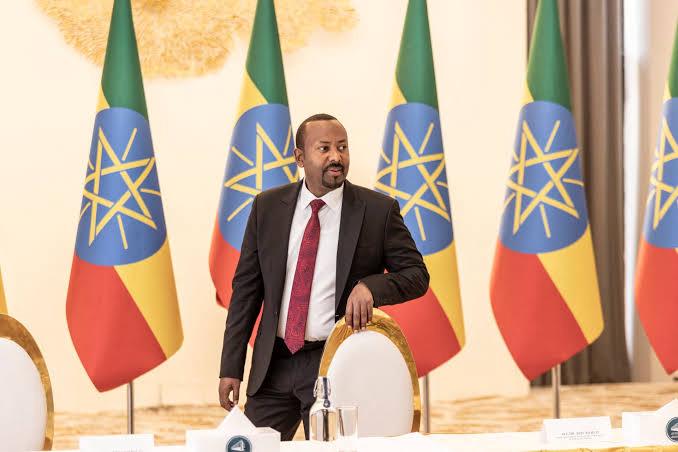

Ethiopian Prime Minister Abiy Ahmed announced that his government will officially inaugurate the Grand Ethiopian Renaissance Dam (GERD) in September, following the conclusion of the rainy season. The announcement came during a parliamentary session in Addis Ababa, where the prime minister responded to lawmakers’ questions on various national issues.
In his remarks, Ahmed emphasized that GERD will not harm the interests of Egypt or Sudan, stressing that the project should be viewed as a platform for regional cooperation rather than a source of tension or conflict. “We will extend an official invitation to our brothers in Egypt and Sudan to join us for the inauguration ceremony once the rains have subsided in September,” the prime minister said, speaking from the floor of Parliament. His comments were carried by Ethiopia’s official news agency.
The Grand Ethiopian Renaissance Dam, which has been under construction for over a decade, remains one of the most controversial infrastructure projects on the African continent. While Ethiopia views the dam as a cornerstone of its development strategy and a source of vital hydropower for domestic and regional use, Egypt and Sudan have repeatedly expressed concern over its potential impact on downstream water flows and regional water security.
Egypt Reaffirms Its Red Lines on Nile Waters
The announcement coincides with renewed assertions by the Egyptian government that the Nile water issue remains a matter of existential national security. In recent televised remarks, Egypt’s Minister of Foreign Affairs, Emigration, and Egyptian Expatriates Affairs, Badr Abdelatty, reiterated that Egypt will not accept any compromise over its historical share of Nile water under any circumstances.
Speaking to anchor Lamees El Hadidi on her current affairs programme Kelma Akhira on ON TV, Minister Abdelatty said: “Water is Egypt’s primary and only existential threat. Our water security is a red line.”
He added that Egypt’s annual water needs exceed 90 billion cubic meters, while it currently receives only 55.5 billion cubic meters from the Nile. “This deficit already places significant strain on our water management and infrastructure. Any further reduction in our share would be unacceptable,” he warned.
Abdelatty also emphasized the need for confidence in the state and its institutions, assuring the public that Egypt is pursuing all necessary diplomatic and legal channels to safeguard its rights.
A Stalled Negotiation Process
Efforts to resolve the GERD dispute through tripartite negotiations between Egypt, Sudan, and Ethiopia have stalled repeatedly over the past decade. Talks held under the auspices of the African Union and various international mediators have failed to yield a binding legal agreement on dam operations and water-sharing mechanisms.
Despite earlier optimism in 2024 about potential breakthroughs, Egypt has stated publicly that the negotiations have reached a dead end, accusing Ethiopia of unilateral actions and a lack of political will to reach a fair and balanced agreement.
As Ethiopia prepares for the formal inauguration of the dam in September, the region watches closely. Whether the ceremony ushers in a new chapter of cooperation—or hardens entrenched positions—remains to be seen.


