
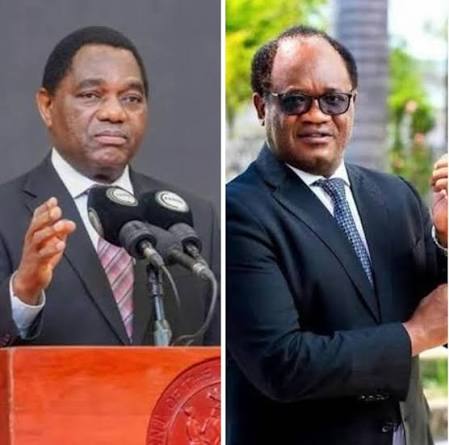

Zambians will vote on Thursday in a closely watched presidential and parliamentary election that will test public support for President Hakainde Hichilema’s economic recovery agenda in one of Africa’s largest copper-producing nations.
Hichilema, 64, is seeking a second five-year term after overseeing a broad economic reform program since taking office in 2021, when he defeated incumbent Edgar Lungu following Zambia’s sovereign debt default during the COVID-19 pandemic. Under his administration, the country has restructured more than $12 billion in external debt, curbed inflation and stabilized the kwacha currency.
The election comes at a pivotal moment for the southern African nation, which holds some of the world’s most sought-after copper reserves, a key mineral used in electric vehicles, renewable energy technologies and power infrastructure. Zambia aims to increase annual copper production to 3 million metric tons by 2031, more than triple current levels, as it seeks to position itself as a major supplier in the global energy transition.
Hichilema’s main challenger is Brian Mundubile, leader of the opposition Tonse Alliance, who has campaigned on concerns over the high cost of living and argued that the benefits of economic reforms have yet to reach many ordinary citizens. Despite improvements in macroeconomic indicators, households continue to face pressure from food and energy prices, a key issue during the campaign.
The vote is also being closely watched by investors, who are looking for policy continuity in the mining sector and clarity on Zambia’s future relationship with the International Monetary Fund (IMF) after the expiration of its previous support programme. Notably, copper accounts for about 70% of Zambia’s export earnings and remains the backbone of the economy.
Analysts say the election has effectively become a referendum on Hichilema’s first term. Supporters credit him with restoring international confidence, attracting investment and advancing debt restructuring, while critics accuse his government of becoming increasingly intolerant of dissent and failing to translate economic gains into widespread improvements in living standards.
More than 8 million registered voters are expected to cast ballots in the election, which will determine the presidency, members of parliament and local government representatives. Under Zambia’s electoral system, a presidential candidate must secure more than 50% of the vote to avoid a runoff.
The outcome is expected to shape the future of one of Africa’s most strategically important mining economies at a time when competition among global powers for access to critical minerals is intensifying. Zambia has sought to attract investment from a range of international partners while maintaining a neutral stance in geopolitical competition over mineral resources.


