
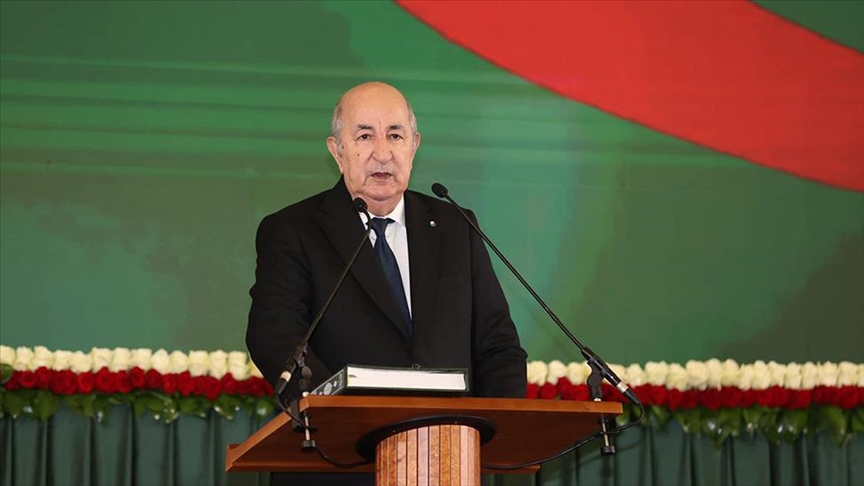

Algerian President Abdelmadjid Tebboune has delivered a powerful condemnation of France, highlighting the enduring consequences of the colonial rule that gripped Algeria for over a century. In a speech delivered to Algeria’s Parliament on Sunday, Tebboune outlined not only the achievements of his first presidential term but also his strategic vision for the future, particularly addressing his stance on French-Algerian relations. His comments come at a time of heightened tensions between the two countries, particularly following a series of controversial incidents earlier this year.
The historical context of Tebboune’s remarks cannot be overstated. The French invasion of Algeria in 1830 marked the beginning of a brutal and protracted colonial occupation that lasted until Algeria’s hard-won independence in 1962. For more than 130 years, Algeria’s indigenous population endured systematic violence, forced assimilation, and exploitation under French colonial rule. By the mid-1800s, estimates suggest that over 800,000 Algerians had perished as a result of direct military action, disease, and famine caused by the French occupation. This period of history has been characterized by many scholars and activists as a genocide, as it involved not just violent repression but also the forced displacement of entire communities and the deliberate destruction of Algerian culture and society.
Tebboune’s remarks reflect the deep scars of this colonial past, which continue to shape relations between Algeria and France to this day. In his speech, Tebboune declared that Algeria was not seeking material compensation from France for the atrocities committed during this period, but rather a simple acknowledgment of the immense suffering and loss endured by the Algerian people.
“We do not seek financial compensation for the crimes committed against us during the French colonial period,” said Tebboune. “What we seek is acknowledgment of the truth. The number of Algerian martyrs throughout the 132 years of colonization is 5.6 million, and no amount of money can compensate for the loss of even one martyr who fought for our country’s freedom. Our struggle was not just for land or wealth but for our dignity and our sovereignty.”
The toll of colonialism on Algeria is not merely a historical issue for the country but remains a key point of contention in diplomatic relations. The French government’s reluctance to fully confront and apologize for its colonial actions has been a source of recurring diplomatic strain. This was especially evident in the lead-up to Tebboune’s speech, which followed a particularly intense political crisis with France. In 2024, both countries experienced a diplomatic fallout, with Algeria recalling its ambassador from Paris in protest against French intelligence accusations of “hostile acts” allegedly carried out on Algerian soil.
As part of his historical critique, Tebboune also singled out General Thomas Robert Bugeaud, a French military officer who served as the governor-general of Algeria from 1841 to 1847. Bugeaud’s tenure was marked by extreme brutality, including the use of scorched earth tactics against Algerian civilians, and his policies are widely regarded as emblematic of the genocidal nature of French colonialism in Algeria. Tebboune called Bugeaud’s actions “genocidal” and emphasized that such figures should be held accountable for their role in the colonial atrocities.
In addition to his condemnation of historical crimes, Tebboune made a direct demand for the return of Algerian cultural artifacts that were taken by French authorities during the colonial period. One of the most symbolic of these items is the 500 skulls of Algerian resistance fighters, which were taken to France during the 19th century. These skulls are currently housed in the Musée de l’Homme in Paris, and their return has been a longstanding demand of the Algerian government. Tebboune reiterated that France must take responsibility for these stolen artifacts, which serve as a poignant reminder of the colonial violence inflicted upon Algeria.
Despite the ongoing tensions with France, Tebboune also sought to reassure his own people about the stability and progress of his administration. Domestically, he highlighted his efforts to foster a more inclusive political environment, announcing plans for a national dialogue with political parties early in 2025. This dialogue, he explained, would aim to reinforce Algeria’s sovereignty and unity, laying the groundwork for new laws that would govern political organizations and activities within the country. Tebboune’s commitment to domestic stability and reform was also evident in his sweeping electoral victory earlier in September, when he secured an overwhelming 94.65% of the vote, representing over 5.3 million Algerians. This landslide victory signaled a clear mandate for his leadership, one which he plans to build upon in his second term.
Internationally, Algeria has been steadily enhancing its position within the African continent and on the global stage. Under Tebboune’s leadership, the country has made significant strides in forging stronger ties with its African neighbors and advocating for the interests of the African continent within multilateral forums. In particular, Tebboune has called for greater solidarity among African nations in addressing common challenges, including economic development, security, and the fight against terrorism.
The broader implications of Tebboune’s speech and his critique of France extend beyond the immediate political context. His comments represent a broader call for the recognition of Algeria’s painful history and the importance of confronting colonial legacies head-on. As Algeria continues to build on its post-independence identity, the country’s demand for historical justice remains a central pillar of its foreign policy and national discourse.
Tebboune’s recent remarks are a reflection of the complex and often contentious nature of Algeria’s relationship with its former colonial power, France. While the two nations continue to face difficulties in reconciling their past, Tebboune’s calls for acknowledgment, reparations, and the return of cultural artifacts are indicative of Algeria’s determination to secure justice for the countless lives lost during its long struggle for independence. Moving forward, it remains to be seen how France will respond to these demands, and whether a genuine process of reconciliation between the two nations can be achieved.


