

South Africa is facing growing domestic and international pressure to suspend coal exports to Israel, as public outrage intensifies over Pretoria’s trade ties with Tel Aviv during the ongoing war on Gaza.
According to parliamentary records, South Africa exported a total of 23.75 million tons of coal worth 8.66 billion rand ($492 million) to Israel between 2004 and 2009. More recent trade data shows a sharp increase in shipments, with coal exports rising by 17% in 2024 to reach 1.6 million tons, valued at around $178 million, according to the UN Comtrade database.
Civil society groups, labor unions, and pro-Palestine activists argue that these exports undermine South Africa’s political stance at the International Court of Justice (ICJ), where Pretoria has accused Israel of committing genocide in Gaza. Since October 2023, the war has claimed the lives of more than 63,000 Palestinians and left 159,000 injured, including hundreds of journalists.
Energy fueling Israel’s war machine
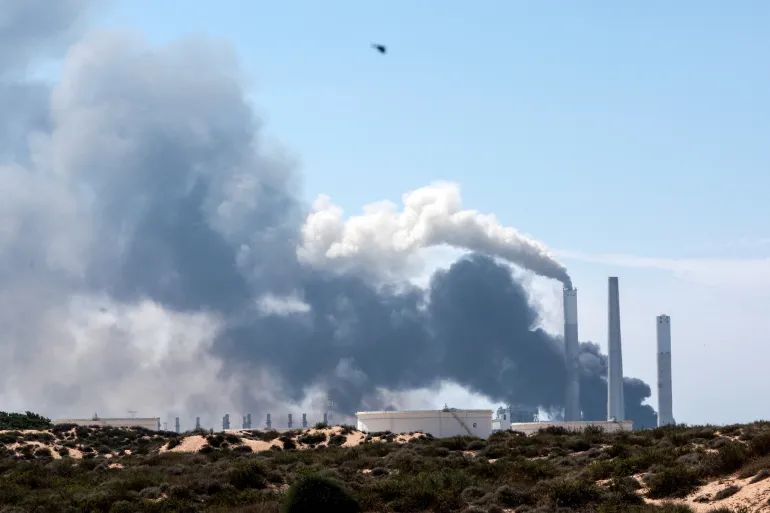
Reports by the UN and watchdog organizations link South African coal directly to Israel’s energy infrastructure. Israel generates 17.5% of its electricity from imported coal, primarily at the Rotenberg power plant in Ashkelon and the Orot Rabin plant in Hadera. Critics argue this electricity sustains both civilian and military infrastructure, including illegal settlements in the West Bank and East Jerusalem.
A UN report by Francesca Albanese, the Special Rapporteur on Palestine, warned that global energy corporations are complicit in fueling Israel’s military operations. The Swiss-based multinational Glencore has been identified as a key actor, facilitating multiple shipments of South African coal to Israel since the Gaza war escalated. The company controls vast mining assets in Mpumalanga and has joint ventures with politically connected firms, including African Rainbow Minerals, linked to the family of President Cyril Ramaphosa.
Protests and labor opposition
Since 2024, protests have erupted in Cape Town, Durban, Pretoria, and Johannesburg, with demonstrators carrying placards reading “No South African coal to Israel” and “Glencore fuels genocide.” Activists have compared the campaign to the anti-apartheid boycott movement of the 1980s.
Trade unions have joined the chorus of criticism. The General Industries Workers’ Union declared it “unacceptable” for a state pursuing genocide charges at the ICJ to simultaneously supply Israel with coal. Think tanks such as the Media Review Network described the exports as “morally shocking,” while energy justice advocates argued that South Africa’s neoliberal economic model prioritizes profit over social justice.
Legal and economic dilemmas
Despite the growing pressure, the South African government has hesitated to impose a unilateral ban. Officials warn that restricting coal exports to Israel without a UN mandate could expose the country to legal disputes under World Trade Organization rules and potential economic sanctions.
Analysts also highlight the domestic cost. The coal industry employs hundreds of thousands and contributes billions to South Africa’s GDP, making it a politically sensitive sector at a time when the country is struggling with unemployment and slow economic growth.
International context
Globally, momentum against Israel’s energy imports is building. In 2024, Colombia suspended coal exports to Israel under a presidential decree, citing the ICJ’s orders. By mid-2025, 13 countries, including Turkey, Malaysia, Bolivia, and South Africa itself, had endorsed the “Hague Group” declaration, pledging coordinated measures to restrict military and dual-use exports to Israel.
For Pretoria, the dilemma lies in reconciling its moral leadership on the global stage with the economic realities at home. With activists promising to escalate protests and unions threatening industrial action, pressure on the government to align its trade policy with its political stance on Palestine is only expected to intensify.


