
By using this site, you agree to the Privacy Policy and Terms of Use.
Accept
DNE Africa
  • Home
  • Politics
    embryo fossil found in 1
    Science

    250-Million-Year-Old Fossil Egg Solves Mystery of Early Mammal Relatives

    By Mohammed El-Said 5 Min Read
    Somalia condemns Israeli diplomatic appointment to breakaway Somaliland
    Politics

    Somalia condemns Israeli diplomatic appointment to breakaway Somaliland

    By DNE Africa April 16, 2026
    elephant genomes revea 1
    Science

    Africa’s Elephants Are Losing Genetic Diversity as Habitats Shrink, Study Finds

    By Mohammed El-Said April 16, 2026
  • Business
    Mahmoud Mohieldin: Africa’s share of global FDI does not exceed 6%
    Business

    Mahmoud Mohieldin: Africa’s share of global FDI does not exceed 6%

    Dr Mahmoud Mohieldin, Chair of the African Advisory Council to the G-FAFS,…

    By DNE Africa 2 Min Read
    climate shocks vulnerability
    BusinessScience
    Climate Change Could Deepen Food Crisis in East Africa by 2050
    WhatsApp Image 2026 02 02 at 4.01.57 PM
    BusinessHealth
    Takeda hosts regional summit in Cairo to improve care for rare hereditary angioedema
    omega 1 130922 cakuo
    BusinessScienceTechnology
    Heat and Dust Are Cutting Solar Power Output Across Sub-Saharan Africa, Study Finds
    Double-Edged Sword- Backbase Reveals How AI is Redefining Trust in African Banking
    Business
    Beyond the Chatbot: Backbase Report Charts Africa’s AI-Driven Financial Revolution
  • Culture
  • Opinion
  • Technology
  • World
  • My Bookmarks
Reading: Simple scientific summaries written by AI help people understand research and trust scientists
Sign In
  • Join US
DNE AfricaDNE Africa
Font ResizerAa
  • Home
  • Politics
  • Business
  • Culture
  • Opinion
  • Technology
  • World
  • My Bookmarks
Search
  • Home
  • Politics
  • Business
  • Culture
  • Opinion
  • Technology
  • World
  • My Bookmarks
Have an existing account? Sign In
Follow US
© Foxiz News Network. Ruby Design Company. All Rights Reserved.
Simple scientific summaries written by AI help people understand research and trust scientists

Simple scientific summaries written by AI help people understand research and trust scientists

Mohamed Samir
Last updated: November 1, 2024 12:20 pm
By Mohamed Samir 5 Min Read
Share
Smoothing out the scientific complexity can help with comprehension. kislev/iStock via Getty Images Plus
SHARE

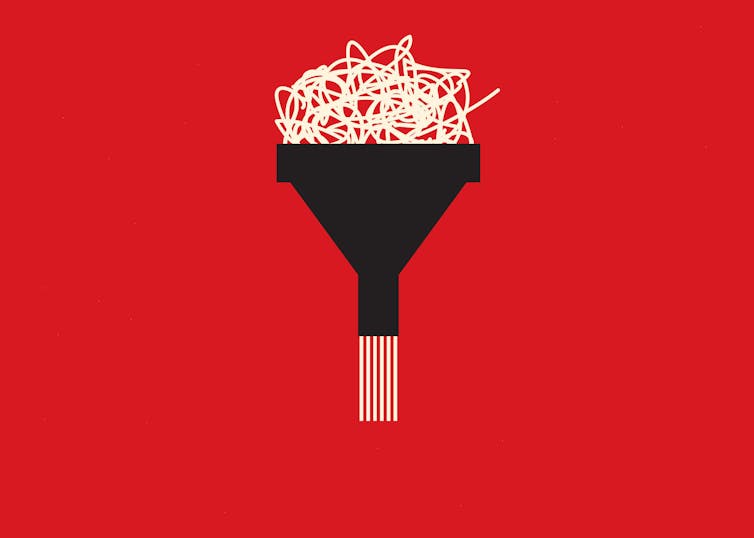
Artificial intelligence-generated summaries of scientific papers make complex information more understandable for the public compared with human-written summaries, according to my recent paper published in PNAS Nexus. AI-generated summaries not only improved public comprehension of science but also enhanced how people perceived scientists.

Contents
Why it mattersWhat still isn’t known

I used a popular large language model, GPT-4 by OpenAI, to create simple summaries of scientific papers; this kind of text is often called a significance statement. The AI-generated summaries used simpler language – they were easier to read according to a readability index and used more common words, like “job” instead of “occupation” – than summaries written by the researchers who had done the work.

In one experiment, I found that readers of the AI-generated statements had a better understanding of the science, and they provided more detailed, accurate summaries of the content than readers of the human-written statements.

I also investigated what effects the simpler summaries might have on people’s perceptions of the scientists who performed the research. In this experiment, participants rated the scientists whose work was described in the simpler texts as more credible and trustworthy than the scientists whose work was described in the more complex texts.

In both experiments, participants did not know who wrote each summary. The simpler texts were always AI-generated, and the complex texts were always human-generated. When I asked participants who they believed wrote each summary, they ironically thought the more complex ones were written by AI and simpler ones were written by humans.

closeup of a stack of open magazines
It can feel like you need a Ph.D. to understand science research published in a journal. R.Tsubin/Moment via Getty Images

Why it matters

Have you ever read about a scientific discovery and felt like it was written in a foreign language? If you’re like most Americans, new scientific information is probably hard to understand – especially if you try to tackle a science article in a research journal.

In an era where scientific literacy is crucial for informed decision-making, the abilities to communicate and grasp complex ideas are more important than ever. Trust in science has been declining for years, and one contributing factor may be the challenge of understanding scientific jargon.

This research points to a potential solution: using AI to simplify science communication. By making scientific content more approachable, this work demonstrates that AI-generated summaries may help to restore trust in scientists and, in turn, encourage greater public engagement with scientific issues. The question of trust is particularly important, as people often rely on science in their daily lives, from eating habits to medical choices.

What still isn’t known

As AI continues to evolve, its role in science communication may expand, especially if using generative AI becomes more commonplace or sanctioned by journals. Indeed, the academic publishing field is still establishing norms regarding the use of AI. By simplifying scientific writing, AI could contribute to more engagement with complex issues.

While the benefits of AI-generated science communication are perhaps clear, ethical considerations must also be considered. There is some risk that relying on AI to simplify scientific content may remove nuance, potentially leading to misunderstandings or oversimplifications. There’s always the chance of errors, too, if no one pays close attention.

Additionally, transparency is critical. Readers should be informed when AI is used to generate summaries to avoid potential biases.

Simple science descriptions are preferable to and more beneficial than complex ones, and AI tools can help. But scientists could also achieve the same goals by working harder to minimize jargon and communicate clearly – no AI necessary.

David Markowitz, Associate Professor of Communication, Michigan State University

This article is republished from The Conversation under a Creative Commons license. Read the original article.


You Might Also Like

250-Million-Year-Old Fossil Egg Solves Mystery of Early Mammal Relatives

Africa’s Elephants Are Losing Genetic Diversity as Habitats Shrink, Study Finds

Blending Traditional Knowledge and Modern Science Could Help Africa Fight Crop Diseases

Wastewater Plants in South Africa May Be Spreading Antibiotic Resistance

Climate Change Expands Cassava Farming in Africa—but Also Spreads Deadly Crop Disease

TAGGED:AIArtificial IntelligenceScience
Share This Article
Facebook Twitter Pinterest Whatsapp Whatsapp LinkedIn Reddit Telegram Email Copy Link

You Might Also Like

blood science vega
HealthScience

Simple Blood Test Could Transform Cancer Diagnosis for Children in Africa

By Mohammed El-Said 5 Min Read
Low Res Talan Moult 3
Science

New African Mushroom Discovery May Solve Mystery of ‘Magic Mushroom’ Origins

By Mohammed El-Said 6 Min Read
africa
BusinessScience

Pandemic Financial Worries Slowed Digital Finance Adoption in Africa

By Mohammed El-Said 5 Min Read

More Popular from DNE AFRICA

Ad imageAd image
Politics

Sudan warns Ethiopia against “hostile” drone incursions into its territory

The Sudanese government on Monday warned Ethiopia of the consequences of "hostile acts" following what it…

By DNE Africa
Politics

Jawar Mohammed Exposes Ethiopian Airlines Alleged Transport of Sudan’s RSF Forces to Assosa

Prominent activist Jawar Mohammed is accusing Ethiopian Airlines of using civilian aircraft to transport Sudan's Rapid…

By DNE Africa
Science

Rethinking the Green Revolution: What Tanzanian Farmers Are Teaching Development Planners

In a rural village in Tanzania, farming decisions are rarely simple calculations about seeds, fertilizer, or…

By Mohammed El-Said
opinionPolitics

Khartoum’s Reckoning: The Decisive Defeat of the RSF and the Sudanese Army’s Historic Victory

History rarely announces its turning points with trumpets. More often, it whispers through collapsing supply lines,…

By Abdiwahab Sheikh Abdisamad
DNE Africa

News by Africans, For Africans

Categories

  • The Escapist
  • Entertainment
  • Business

Quick Links

  • Advertise with us
  • Newsletters
  • Complaint
  • Deal

DNE Africa.All Rights Reserved.

Welcome Back!

Sign in to your account

Username or Email Address
Password

Lost your password?