

A new study has found that a simple blood test could help doctors diagnose a fast-growing cancer much more quickly in parts of Africa, where delays in testing often cost lives.
The research, published in Nature Medicine, was led by scientists from University of Oxford and Muhimbili University of Health and Allied Sciences (MUHAS) in Tanzania.
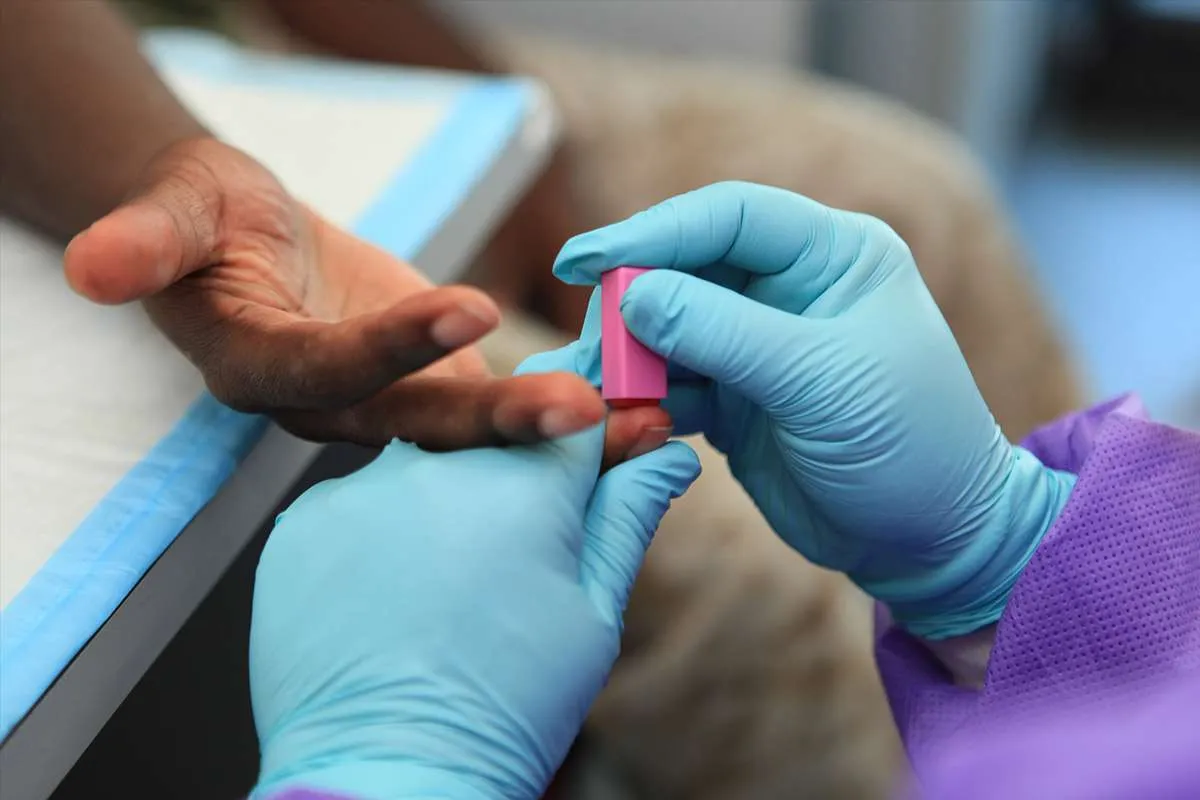
The test uses a method known as a “liquid biopsy,” which allows doctors to detect cancer using a small blood sample instead of taking tissue from the body.
The study focused on Burkitt lymphoma, a fast-growing cancer that mainly affects children in sub-Saharan Africa. Although the disease is aggressive, it can often be cured if treated early, with survival rates above 90%.
However, many patients in the region are diagnosed too late.
Traditional diagnostic methods require trained specialists and laboratory equipment that are often not available in low-resource settings. As a result, many children either go undiagnosed or receive treatment too late, and survival rates in some areas can fall below 50%.
“There is an urgent need for new diagnostic methods that are practical and effective in the under-resourced settings where Burkitt lymphoma is most common,” said Professor Anna Schuh, a molecular diagnostics expert at Oxford and lead author of the study.
“This is a highly treatable cancer, yet too many children and young adults are not diagnosed in time,” she added. “Liquid biopsy tests have enormous potential to transform diagnosis in sub-Saharan Africa and significantly improve outcomes.”
Liquid biopsies work by detecting tiny fragments of DNA that cancer cells release into the bloodstream. By analyzing this DNA, doctors can identify the specific genetic changes linked to Burkitt lymphoma and distinguish it from other diseases.
In this study, researchers from Oxford worked closely with teams in Tanzania and Uganda, including hospitals and national laboratories, to develop and test the new approach.
The team evaluated the blood test in children and young adults who showed signs of lymphoma across four hospitals in the two countries. They compared the results with those from standard tissue-based tests.
The results were promising.
The liquid biopsy test showed an overall accuracy of 98% in distinguishing Burkitt lymphoma from other conditions. Among patients who were confirmed to have the disease through traditional testing, the blood test correctly identified more than 86%.
Just as importantly, the test was much faster.
On average, the liquid biopsy provided a diagnosis more than 40 days earlier than traditional tissue biopsy methods. This speed can make a critical difference for patients with Burkitt lymphoma, which can progress rapidly if not treated.
Clara Chamba, head of haematology at MUHAS and one of the study authors, said the test had an immediate impact in clinical settings.
“Introducing liquid biopsy into our multidisciplinary meetings transformed how quickly we could start treating our patients,” she said.
“With liquid biopsy, 93% of cases were diagnosed within the first week of sample collection, compared to just 40% when we relied on tissue biopsy alone. For a cancer that progresses as quickly as Burkitt lymphoma, that time can be life-saving.”
The researchers say that while more work is needed before the test can be widely used, the findings show strong potential for improving cancer care in low-resource settings.
The test could be especially useful in areas where access to traditional biopsy services is limited or delayed.
By shortening diagnosis times and improving accuracy, the approach could help ensure that more patients begin treatment early—when the chances of survival are highest.
Professor Bruno Sunguya, deputy vice chancellor for research and consultancy at MUHAS, said the study also highlights the growing role of African institutions in leading advanced medical research.
“The successful implementation and analytical work conducted in Tanzania and Uganda demonstrates that precision medicine research can and should be led from within low- and middle-income countries,” he said.
He added that the technology could be applied to other types of cancer in the future.
“Beyond lymphoma, this work opens new opportunities to apply genomic and liquid biopsy technologies to strengthen cancer diagnosis and improve outcomes more broadly across the region,” Sunguya said.
As researchers continue to refine the test, the study offers hope that a simple blood sample could soon help save thousands of lives by making cancer diagnosis faster, easier, and more accessible across Africa.


