

Africa needs to overhaul its regulatory, financial and market systems to turn agricultural innovation into commercially viable businesses and higher incomes for smallholder farmers, Cameroonian agriculture advocate Matchouo Fossi Émile Christian, director of The African Farming Foundation (TAFF), told DNE Africa.
Africa’s main challenge is no longer generating agricultural innovations but taking them from research and pilot projects to farmers and businesses at scale, Christian argued in an exclusive statement.
“Africa does not have an innovation deficit; it has a scale-up deficit,” Christian said.
On biotechnology, Christian called for science-based, risk-proportionate and predictable regulatory frameworks, along with greater harmonization across regional markets to reduce unnecessary delays in moving technologies from laboratories into commercial use.
African countries should also strengthen local research capacity, technology transfer, intellectual property systems and private-sector participation so biotechnology can create jobs, businesses and value addition alongside productivity gains, he affirmed.
Rice investment
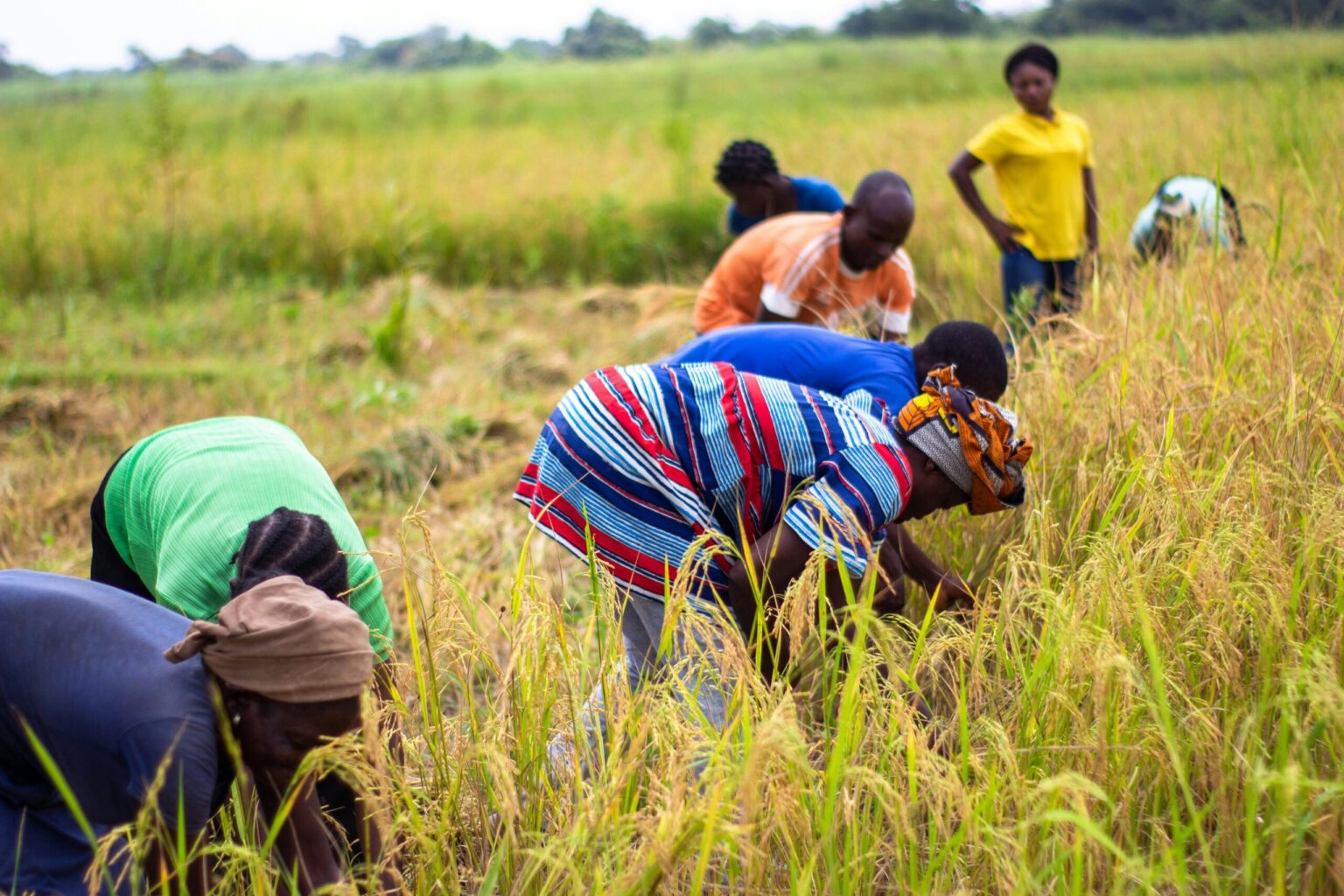
Christian urged policymakers and investors to measure the more than $1.54 billion in rice investment commitments in West Africa by their impact at farm level rather than by the amount of capital announced.
The pathway, he noted, should link improved and locally adapted seeds with irrigation, mechanization, agricultural extension, post-harvest infrastructure, processing and reliable markets.
Smallholder farmers should be integrated into commercially viable value chains rather than treated simply as recipients of new technologies, Christian stressed.
He also highlighted mechanization-as-a-service models, which allow farmers to access machinery through rural service providers rather than having to purchase expensive equipment themselves.
Productivity, production costs, farm-gate prices, value addition and net farm income should be the key measures of success, Christian noted.
Climate resilience
Christian warned that distributing climate-resilient crop varieties alone would have limited impact unless farmers also have access to timely information, appropriate farming practices, finance and markets.
He advocated a “technology-plus-knowledge” approach combining improved varieties with extension services, farmer field schools, climate information, digital advisory tools and locally adapted production practices.
Delivery systems should prioritize farmers in drought-prone and underserved areas instead of concentrating new technologies in locations where distribution is easier, Christian urged.
Youth entrepreneurship
Africa also needs to move beyond youth programs focused primarily on training and create mechanisms that enable young people to build investable and scalable agrifood businesses, Christian maintained.
He called for dedicated youth agrifood financing, credit guarantees, patient capital, innovation grants, rural incubation and acceleration programs, as well as stronger links between young entrepreneurs and buyers, processors, cooperatives, financial institutions and regional markets.
Particular attention should be given to young innovators outside major urban technology hubs, with stronger innovation ecosystems in rural areas and secondary cities, he added.
Christian outlined a broader priority for Africa’s agricultural transformation: closing the gaps between research and markets, technology and adoption, investment and farm-level impact, and youth innovation and enterprise growth.
“Africa’s agricultural transformation will become truly inclusive when innovation is converted into productive assets, profitable businesses, decent rural employment and higher incomes for smallholder farmers,” Christian said.


