
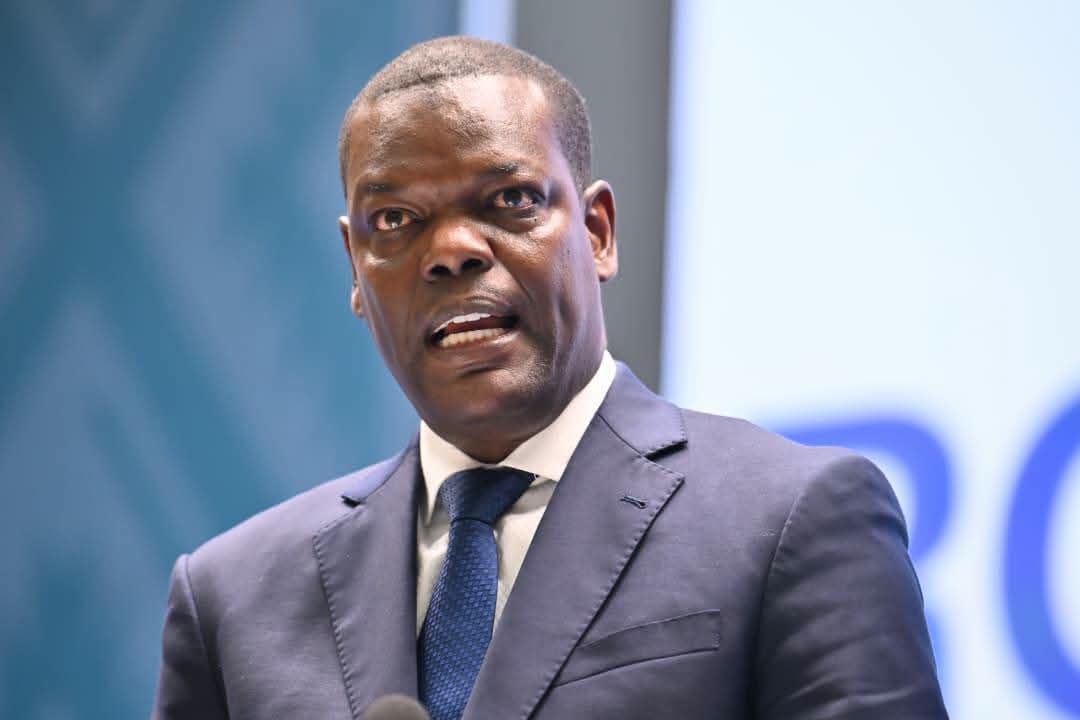

African governments must approach health financing as an investment in economic growth rather than a spending burden, the UN Economic Commission for Africa (ECA) said on Tuesday, as declining external assistance and rising debt servicing put growing pressure on health systems across the continent.
Speaking on behalf of ECA Executive Secretary Claver Gatete at the opening of the 76th session of the WHO Regional Committee for Africa in Addis Ababa, ECA Chief of Staff Aboubakri Diaw urged health and finance ministers to strengthen domestic financing and develop more coordinated approaches to supporting health systems.
Diaw said governments should come to budget discussions with a clear investment case, quantifying both the economic cost of inaction and the returns from preventive healthcare.
“Health is how Africa grows, not what it spends once it has grown,” he stressed.
He also called for nationally owned health-financing compacts bringing together ministries of health, finance and planning, as well as revenue and debt management authorities, insurers, banks, private-sector partners and civil society.
“Putting more money into a fragmented system only finances more fragmentation,” Diaw noted.
The ECA also warned against applying uniform financing solutions across the continent, saying countries face different challenges and should tailor reforms to their individual circumstances.
Some countries may need to strengthen public financial management before introducing new financing mechanisms, while others may require a gradual transition away from external aid or greater use of pooled procurement to support local manufacturing, Diaw explained.
Diaw’s remarks come as Africa faces mounting pressure on health financing. External health assistance has fallen by almost 30%, while debt servicing in the median low-income country now accounts for 7.5% of public expenditure, compared with 6% spent on health.
Out-of-pocket payments account for an average of 35% of health spending across the region, well above the WHO benchmark of 20%, while an estimated 150 million people were pushed into, or further into, poverty by healthcare payments in the latest year for which data is available.
Diaw also highlighted digital transformation as one of the fastest ways to improve efficiency, noting that fewer than one-third of health systems in low-income settings can track health expenditure digitally in real time.
Closing that gap could provide significant efficiency gains for governments and help improve the management of limited resources, he said.
The ECA’s call comes as African governments seek to strengthen progress towards universal health coverage while facing shrinking external support, rising debt burdens and increasing pressure to mobilise domestic resources for essential public services.


