

Sudan’s nearly three-and-a-half-year conflict is taking an increasingly devastating toll on civilians, as drone strikes, shelling and attacks on markets, hospitals and displacement sites become a defining feature of the war, according to United Nations investigators, aid agencies and human rights monitors.
Recent violence in North Kordofan has highlighted the growing threat posed by long-range drone warfare, with civilians in towns and cities far from active front lines increasingly exposed to attacks on essential infrastructure and densely populated areas.
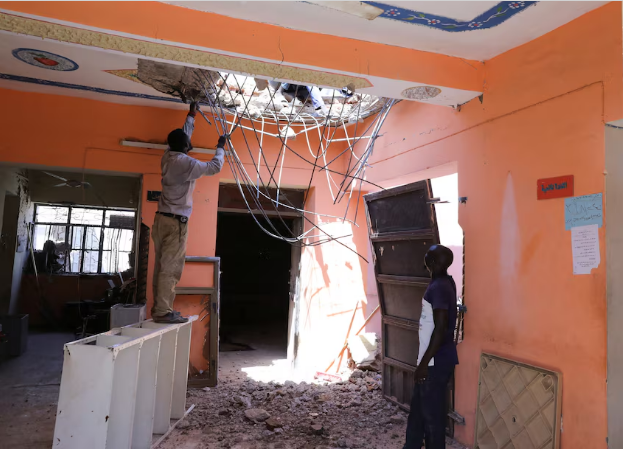
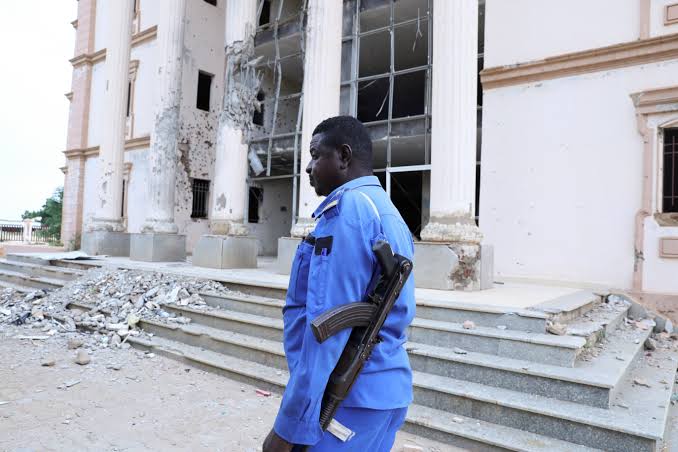
Images published by Reuters this week showed the aftermath of drone attacks in North Kordofan that Sudanese authorities attributed to the paramilitary Rapid Support Forces (RSF), with damaged buildings and disrupted services underscoring the conflict’s impact on civilian life.
Earlier this month, a UN fact-finding mission reported that foreign military support and the growing use of advanced drones by the RSF had expanded the war far beyond traditional battlefields, with evidence pointing to attacks on hospitals, schools, markets and camps sheltering displaced people.
The mission said more than 1,000 people were killed in drone attacks during the first half of 2026 alone. Investigators found that the expanded use of drone technology had enabled strikes deep inside urban centres, damaging civilian infrastructure and disrupting access to water, healthcare, electricity and transportation.
Sudanese journalist Badawi Ali Sayed of the Sudan News Agency (SUNA) told DNE Africa that foreign mercenaries had been deployed in Sudan to provide technical and operational support to the RSF, including operating drones and participating in ground operations.
According to Sayed, Colombian military personnel were brought into Sudan with financial and logistical backing from regional actors, which he said facilitated and supported their deployment.
North Kordofan, particularly the state capital El Obeid, has emerged as one of the regions hardest hit by the escalation. Between May and July, repeated drone attacks attributed by Sudanese authorities to the RSF damaged electricity and fuel facilities in the city, worsening shortages of basic services for hundreds of thousands of residents and displaced people.
In June, Western governments warned that a potential RSF offensive around El Obeid could expose up to 500,000 civilians, including more than 100,000 displaced people, to the risk of mass atrocities. The warning followed reports that a 10-day drone campaign had killed at least 50 civilians and damaged critical infrastructure.
Human rights groups have also documented attacks on villages and transport routes across the Kordofan region. Emergency Lawyers, a Sudanese monitoring group, reported that drone strikes in North Kordofan killed civilians and targeted people attempting to rescue the wounded, describing the incidents as possible violations of international humanitarian law.
The violence extends beyond Kordofan. UN investigators have documented attacks on hospitals in Darfur, while aid agencies have repeatedly warned of strikes on markets, schools and shelters for displaced people across Sudan.
He noted the presence of foreign fighters was not based solely on unverified accounts, adding that groups of foreign combatants had been photographed and their presence documented at locations where fighting was taking place.
Sudan’s war, which erupted in April 2023 following a power struggle between the army and the RSF, has displaced more than 14 million people and triggered what the UN describes as the world’s largest humanitarian crisis.


