

The UN Independent International Fact-Finding Mission for Sudan said foreign involvement had enabled the army and the paramilitary Rapid Support Forces (RSF) to carry out increasingly sophisticated military operations, with civilians bearing the consequences.
Sudan has been at war since April 2023, when fighting erupted between the army and the RSF. The conflict has killed tens of thousands of people and displaced millions.
In its latest report, the mission documented the recruitment, training and deployment of foreign personnel to support the RSF, as well as the role of transnational networks in supplying weapons, ammunition, military technology and logistical support.
It also found reasonable grounds to believe that the Sudanese army used foreign-supplied drones in operations that harmed civilians and civilian infrastructure.
“External support has not brought greater protection for civilians,” said Mohamad Chande Othman, chairman of the fact-finding mission.
“Instead, civilians are paying the price through attacks on homes, hospitals, schools, markets and places of refuge,” he added.
The UN Human Rights Council (UNHRC) established the fact-finding mission in October 2023 to investigate alleged violations and gather evidence related to the conflict. The independent mission does not speak on behalf of the United Nations.
Colombian contractors
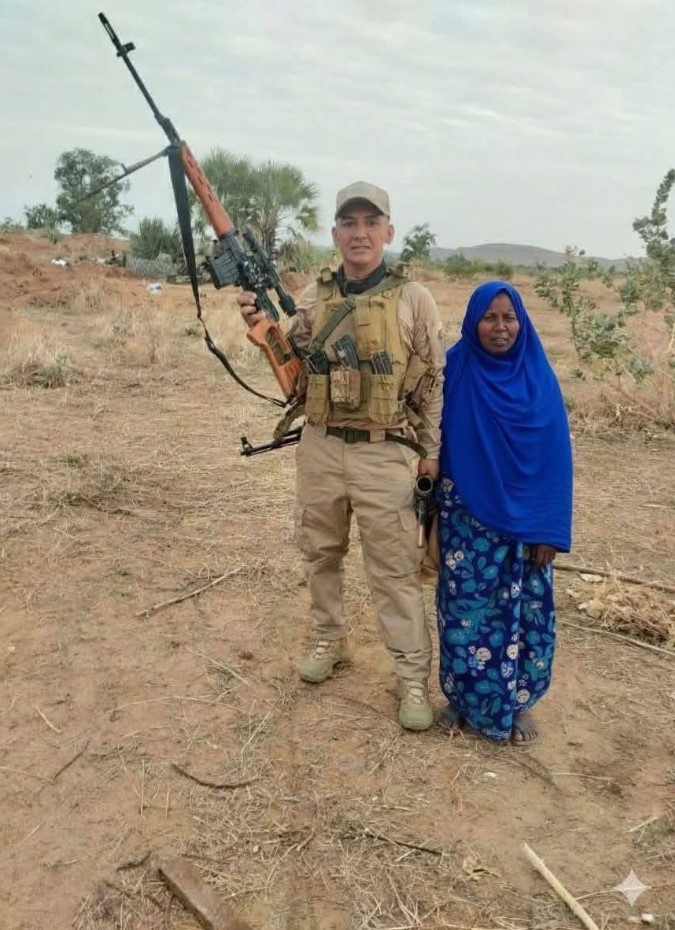
The investigation documented the deployment of up to 2,000 former Colombian military personnel who it said directly operated combat drones, artillery and other advanced weapons alongside RSF units.
Witnesses also reported fighters from South Sudan, Chad and Ethiopia, including women, serving mainly in frontline rather than technical roles. Investigators said some foreign personnel were identified through their language, accents and, in some cases, uniforms.
Private companies, intermediaries and recruiters operating from countries including Colombia used transit points in Chad, Libya and Somalia to facilitate the movement of personnel, weapons, training and logistical support to the RSF, the report noted.
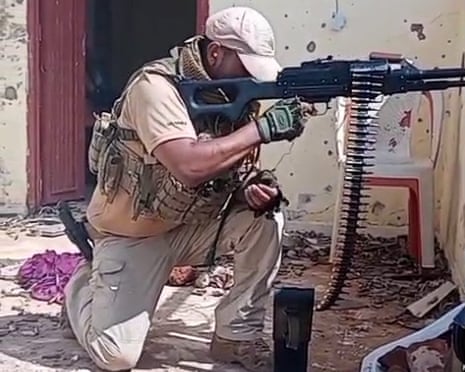
Foreign suppliers had also strengthened the drone capabilities of both the RSF and the army, allowing them to carry out strikes farther from the front lines, according to the mission.
The mission said there were reasonable grounds to believe that attacks by the army and RSF documented during its investigation may amount to war crimes.
The United States last month called on the UN Security Council to extend an existing arms embargo on Darfur to the whole of Sudan. The fact-finding mission has also called for an expanded embargo.
“Protecting Sudan’s civilians requires action not only against those fighting the war, but also against the individuals, entities and networks that enable it to continue,” Chande Othman affirmed.
Sudanese journalist: Foreign fighters providing technical, operational support to RSF
Sudanese journalist Badawi Ali Sayed of the Sudan News Agency (SUNA) told DNE Africa that Colombian mercenaries had been deployed in Sudan to provide technical and operational support to RSF, including the operation of drones and participation in ground operations.
Sayed said the Colombian military personnel were brought into Sudan with financial and logistical backing from regional actors that, he said, facilitated and supported their deployment.
He noted the presence of foreign fighters was not based solely on unverified accounts, adding that groups of foreign combatants had been photographed and their presence documented at locations where fighting was taking place.
Sayed said the findings should be given greater attention by the international community, particularly at the UN Security Council and through international judicial mechanisms.
He argued that the role of foreign fighters and the networks facilitating their deployment should be examined as part of broader efforts to establish accountability for violations committed during Sudan’s conflict.
The journalist also stressed the importance of examining not only the fighters operating on the ground, but also the financial, logistical and political networks that enable their deployment and continued participation in the war.
Such scrutiny, he said, would be important in determining the wider international dimensions of Sudan’s conflict and assessing responsibility for actions affecting civilians.


