
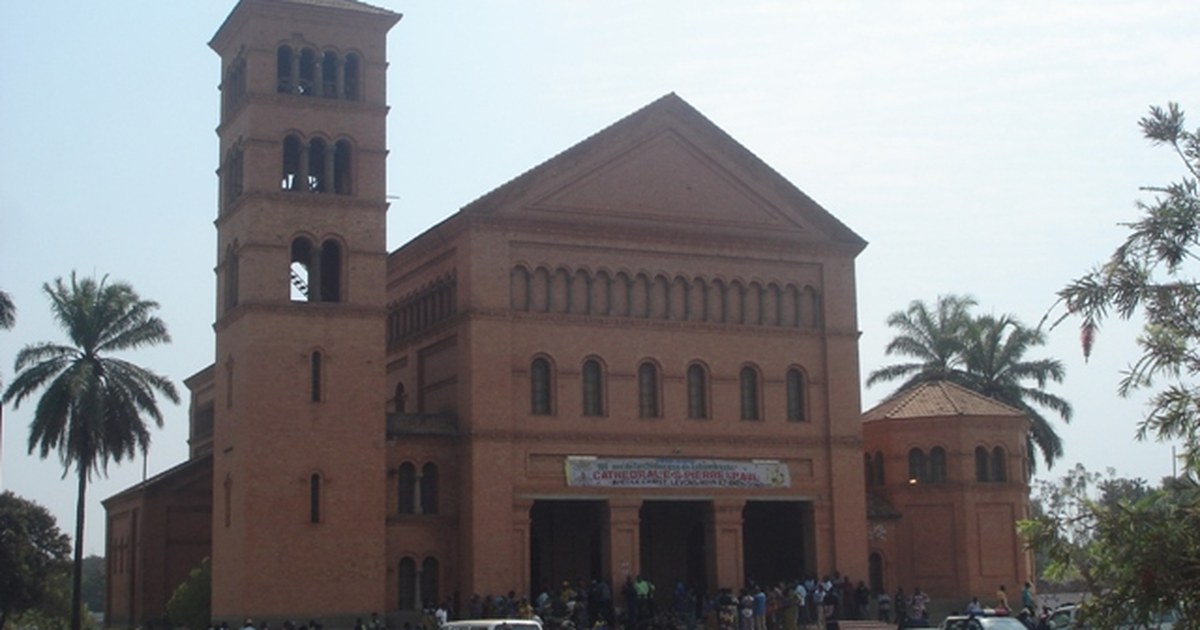

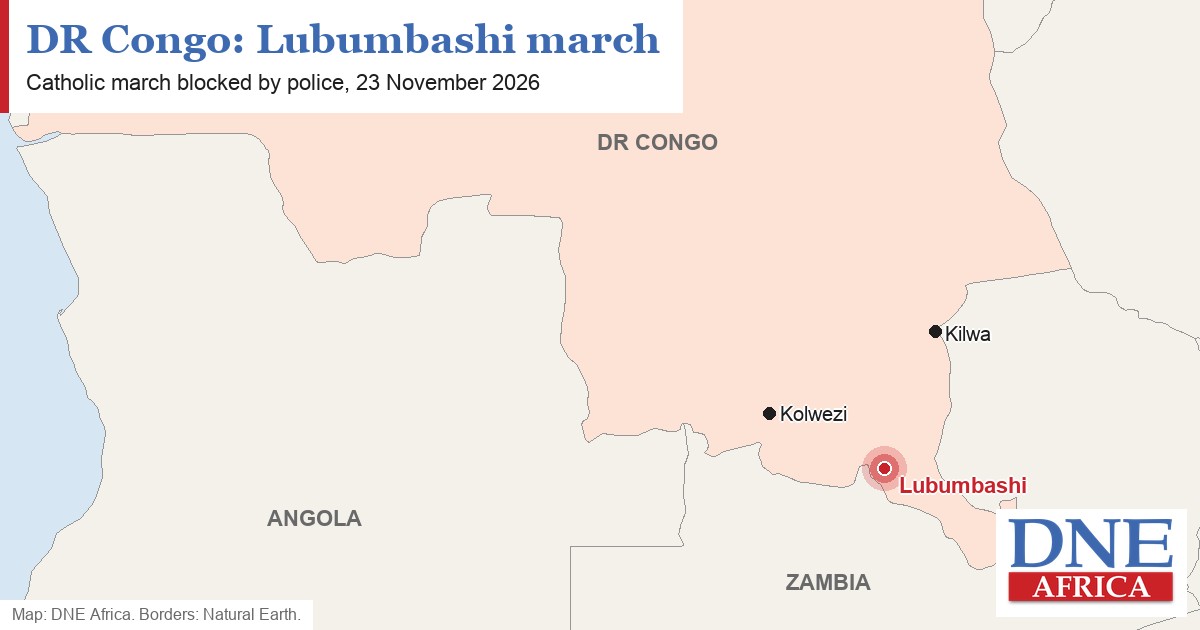
Police in DR Congo fired tear gas and sealed off roads on Monday to stop a Lubumbashi march called by the Catholic Church to demand that a court ruling on land it owns be carried out.
It was the second clash between the authorities and the Catholic hierarchy in two days, after Kinshasa’s city authorities barred Cardinal Fridolin Ambongo’s youth Mass from a stadium on Sunday, and it comes as the bishops oppose any change to the constitution before the 2028 elections.
What happened at the Lubumbashi march?
The Archdiocese of Lubumbashi, in Haut-Katanga province, had called the faithful to gather at the Saints-Pierre-et-Paul cathedral on Monday morning. Police barricaded the avenues leading to it, including Kasa-Vubu, Kapenda and Tabora, from the night before, Radio Okapi, the UN-backed broadcaster, reported (in French). Police vehicles were posted at several parishes to stop groups forming, and the archbishop’s residence was surrounded.
At the entrance to the Saint-Paul major seminary in the Pengapenga district, police used tear gas to disperse the first marchers, and some bishops and worshippers were caught up in it as they tried to leave the compound, Actualite.cd reported. The Lubumbashi march did not take place. No injuries had been reported by Monday afternoon.
Archbishop Fulgence Muteba, who also chairs the National Episcopal Conference of Congo (CENCO), condemned the arrest of some marchers and said the church would keep pressing its case, Radio Okapi said. Bishop Desire Lenge of Kilwa-Kasenga said he had found the roads blocked on his way to the archbishop’s residence. “We wonder what sin we have committed. It was a peaceful march, and that is a right in a democracy,” he said (in French, translated by DNE Africa).
Why did the authorities ban it?
The mayor of Lubumbashi, Joyce Tunda Kazadi, banned the Lubumbashi march in a letter to the bishops of the ecclesiastical province on November 20th, citing an earlier city-wide ban on public demonstrations, according to Radio Okapi.
That ban, communique No. 014 of July 3rd 2026, prohibits marches, rallies, meetings and gatherings of any kind across the city “until further notice”, on grounds of public order and security. The mayor confirmed it on August 31st after a protest by the youth wing of Moise Katumbi’s opposition party, Kivu Morning Post reported, and cited it again in September to refuse a march by opposition groups against changing the constitution. DNE Africa found no statement from the provincial government or the police on Monday’s operation.
What is the land dispute behind the Lubumbashi march?
The church says buildings have been put up without permission on a concession belonging to the inter-diocesan major seminary at Tshamalale, in the Annexe commune. A court ruled in the church’s favour and ordered the structures demolished, but they are still standing, according to Actualite.cd. The archdiocese called the Lubumbashi march to press the authorities to enforce that ruling. The occupants of the site have not commented publicly.
Why does it matter?
The Catholic Church is DR Congo’s most influential civil-society institution, and its bishops have opposed plans to revise the constitution, which limits presidents to two terms. President Felix Tshisekedi, re-elected in 2023, said in May that elections the electoral commission (CENI) has set for December 2028 could not be held if the war in the east is not ended.
The church and the government have clashed before. On Sunday the Kinshasa authorities stopped Cardinal Ambongo’s youth Mass at Stade Tata Raphael without public explanation, the church said. In 2018 security forces broke up church-led marches in Kinshasa and Lubumbashi against delays to that year’s elections.
The next step is for the archdiocese to say whether it will call another Lubumbashi march, and for the provincial authorities to say whether the court ruling will be enforced.
FAQ
What happened to the Lubumbashi march?
Police blocked the roads to the Saints-Pierre-et-Paul cathedral and fired tear gas at the Saint-Paul seminary on November 23rd 2026, so the Catholic march did not take place.
Why was the Lubumbashi march banned?
The mayor, Joyce Tunda Kazadi, cited a city-wide ban on public demonstrations in force since July 3rd 2026 on grounds of public order and security.
What was the march about?
The archdiocese wants a court ruling enforced that ordered the demolition of buildings put up on land owned by its major seminary at Tshamalale.
Who is Archbishop Fulgence Muteba?
He is the Catholic archbishop of Lubumbashi and president of the National Episcopal Conference of Congo (CENCO), the country’s bishops’ conference.


