
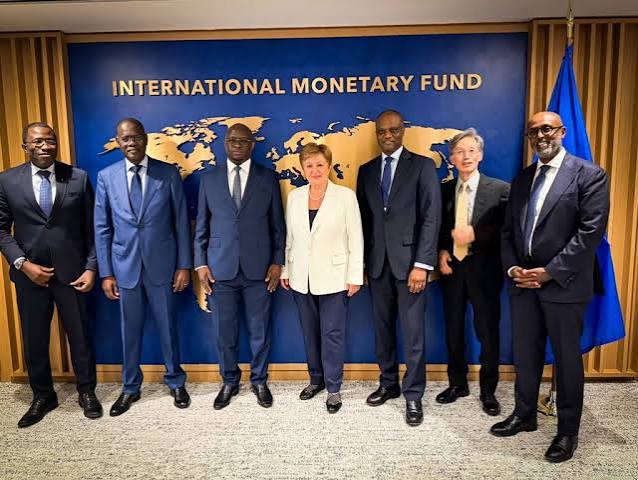

The International Monetary Fund (IMF) has reached a staff-level agreement with Senegal on a new $2.2 billion financing programme aimed at supporting the country’s economic reforms and restoring confidence in its public finances following a debt-reporting scandal that led to the suspension of a previous IMF arrangement.
The proposed 36-month programme will support Senegal’s economic and financial reform agenda for the 2026–2029 period and remains subject to approval by the IMF Executive Board.
In a statement, the IMF said the agreement includes measures to address past fiscal misreporting and requires “decisive corrective measures” to support Senegal’s request for a waiver related to inaccurate debt and budget data reported under the previous administration.
The new programme marks a significant step in Senegal’s efforts to rebuild relations with international lenders after the IMF suspended a $1.8 billion programme approved in 2023. The suspension followed revelations by the government of President Bassirou Diomaye Faye that the administration of former president Macky Sall had understated the country’s fiscal imbalances.
According to the IMF, Senegal’s budget deficit for 2023 reached 12.3% of gross domestic product (GDP), far above the 4.9% previously reported by the former government. The findings raised concerns among investors and development partners and prompted an extensive review of the country’s public finances.
Since taking office in 2024, the Faye administration has sought to improve fiscal transparency and implement reforms aimed at stabilising public finances. Following several IMF assessment missions to Dakar, negotiations on a new financial support package intensified in recent months.
Despite its debt challenges, Senegal has made progress in reducing its fiscal deficit. The IMF said the overall deficit narrowed sharply from 13.4% of GDP in 2024 to 6.4% in 2025, largely due to spending rationalisation measures and tighter fiscal management.
However, Senegal remains one of the most heavily indebted countries in Sub-Saharan Africa. The IMF estimates total public sector debt reached 132% of GDP at the end of 2024, underscoring the scale of the country’s fiscal challenges.
In the absence of IMF disbursements, Senegal has continued to access financing through the regional bond market. However, borrowing costs remain significantly higher than those associated with funding from multilateral institutions and development partners.
The negotiations with the IMF have unfolded against a backdrop of domestic political tensions.
Earlier this year, President Faye dismissed former Prime Minister Ousmane Sonko following disagreements over several policy issues, including relations with the IMF and the management of public debt.
Sonko later secured the position of Speaker of the National Assembly, potentially complicating the government’s efforts to advance reforms linked to the IMF programme. While President Faye has advocated constructive engagement with the lender, Sonko has publicly opposed any form of debt restructuring.
The staff-level agreement comes as international credit rating agencies continue to monitor Senegal’s fiscal outlook. Moody’s recently downgraded the country’s long-term foreign-currency debt rating to Caa2 from Caa1, citing persistent debt vulnerabilities and uncertainty surrounding the IMF negotiations.
Approval of the new IMF programme is expected to unlock concessional financing, strengthen investor confidence and support Senegal’s broader efforts to restore macroeconomic stability while pursuing economic growth and development priorities.


