
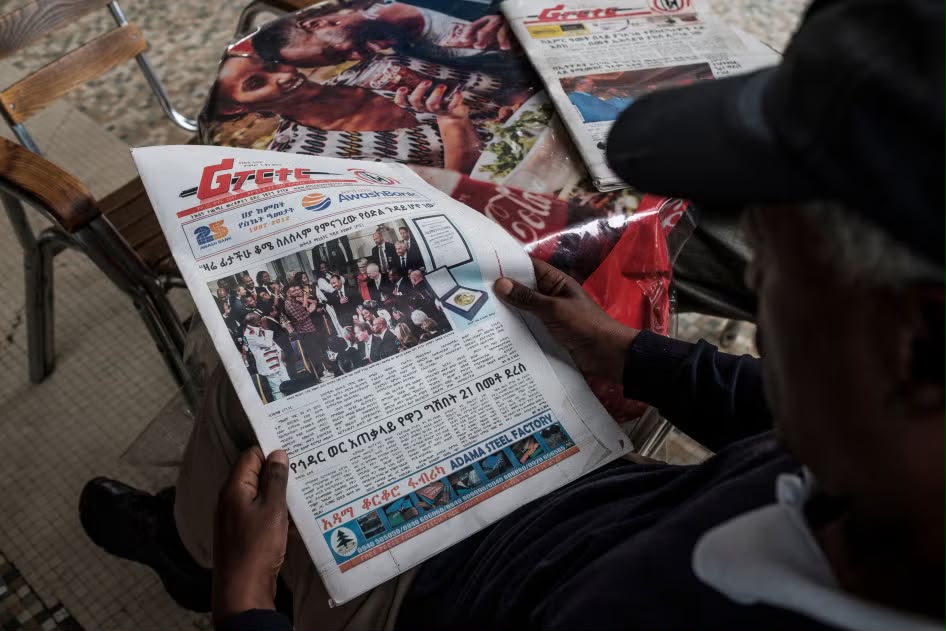

Human Rights Watch (HRW) has called on the Ethiopian government to immediately lift the indefinite suspension of The Reporter, the country’s oldest privately owned Amharic-language newspaper, warning that the decision further threatens press freedom and independent journalism.
In a statement, Laetitia Bader, HRW’s Horn of Africa director, urged the authorities to reverse the Ethiopian Media Authority’s decision to suspend the newspaper’s operating licence and end what the rights group described as mounting pressure on independent media.
The Media Authority accused The Reporter of repeatedly publishing distorted reports that undermine national interests, foreign investment, tourism and diplomatic engagements. It said the newspaper had violated national laws and professional journalistic standards.
HRW said the suspension reflects broader restrictions on independent journalism, warning that vaguely defined national interest concerns are increasingly being used to justify measures against media outlets covering sensitive issues.
The organisation cited a wider pattern of pressure on journalists in Ethiopia, including the expulsion of foreign correspondents, detentions, alleged forced disappearances and raids on media offices.
It also referred to the October detention of journalists Samuel Getachew and Emanuel Gebremedhin, who were reportedly held for eight days by plainclothes police over allegations that their reporting could incite unrest in Addis Ababa.
Days before the suspension, The Reporter’s English-language edition published an editorial warning that Ethiopia’s private media sector was facing one of its most difficult periods. It called for urgent structural reforms to prevent further deterioration across the industry.
HRW urged Ethiopia’s international development partners and diplomatic allies to press the federal government to reverse the suspension and uphold press freedom.
The newspaper’s suspension adds to concerns over the operating environment for independent media in Ethiopia, where journalists and media organisations continue to face regulatory and security-related challenges.


