


Voters went to the polls on Sunday in the Cape Verde election, where President José Maria Neves seeks a second term against Joana Rosa, the first woman to run for the office since independence in 1975.
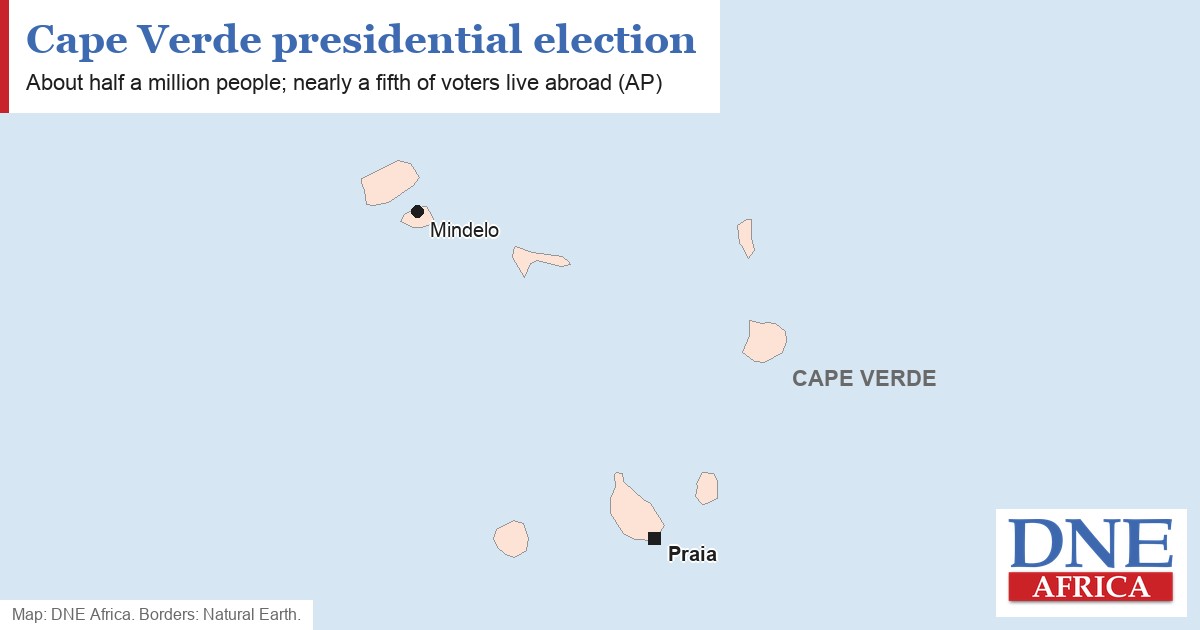
The Cape Verde election matters beyond the archipelago’s half a million people. The country has a record of peaceful transfers of power in a region where that is rare, and a Rosa victory would put the presidency and the government in rival political camps for the first time since May’s parliamentary vote.
Who is standing in the Cape Verde election?
Six candidates are in the running, according to the Associated Press. Mr Neves is backed by the African Party for the Independence of Cape Verde (PAICV), which won a parliamentary majority in May and ended a decade of government by the Movement for Democracy (MpD). Ms Rosa runs with the support of the MpD.
Mr Neves, a former prime minister, won the presidency in 2021 with about 52% of the vote and is regarded as the favourite, Al Jazeera reported. He has pledged to build cross-party support to improve housing, healthcare and education, create jobs and raise wages, AP said.
Ms Rosa has campaigned on a balance of power, arguing that the country needs a counterweight to the PAICV, which controls the government and most municipalities, according to AP.
How does the Cape Verde election work?
A candidate needs more than half of the valid votes to win outright. If nobody passes that mark, the two leading candidates meet in a runoff on 29 November, AP reported. More than 300,000 people are eligible to vote, according to Al Jazeera, and nearly 77,000 of the registered voters live abroad, almost a fifth of the electorate, AP said.
Cape Verde has a parliamentary system in which the prime minister directs government policy. The president’s role is largely symbolic, but the directly elected head of state can veto legislation. The National Elections Commission (CNE) publishes the official results; Al Jazeera said they were expected within days.
What issues dominate the vote?
Emigration and the lack of opportunities for young people framed the Cape Verde election campaign. Roselma Évora, a professor of political science at the University of Cabo Verde, told AP that limited economic prospects have been driving young people abroad and that many voters feel distant from their leaders.
Ms Évora said Mr Neves’s incumbency gave him greater visibility, including among overseas voters, and that Ms Rosa’s candidacy challenges expectations of women’s roles in a society she described as “very patriarchal”. Rosário Luz, a writer based in Cape Verde, told AP that party loyalties mattered more than Ms Rosa’s gender.
Whatever the Cape Verde election result, it will be watched as a test of women’s representation: women have held senior cabinet posts, but the country has never had a female president or prime minister, AP said. The vote comes as other African countries rework their election calendars: South Sudan has postponed its first general election to February 2027, and parties in Burundi are lining up for 2027.
What happens next?
Votes are counted after the polls close, and the CNE will publish the official count. If no candidate wins a majority, the two leading candidates go to a second round on 29 November. DNE Africa will report the result when it is announced.
FAQ
Who are the main candidates in the Cape Verde election?
President José Maria Neves, backed by the PAICV, and former justice minister Joana Rosa, backed by the MpD. AP said six candidates are running.
When is the Cape Verde election runoff?
A runoff would be held on 29 November if no candidate wins more than half of the valid votes, AP reported.
Has Cape Verde had a woman president?
No. Joana Rosa is the first woman to run for president since independence from Portugal in 1975.
What powers does Cape Verde’s president have?
The role is largely symbolic in a parliamentary system, but the president is directly elected and can veto legislation.


