
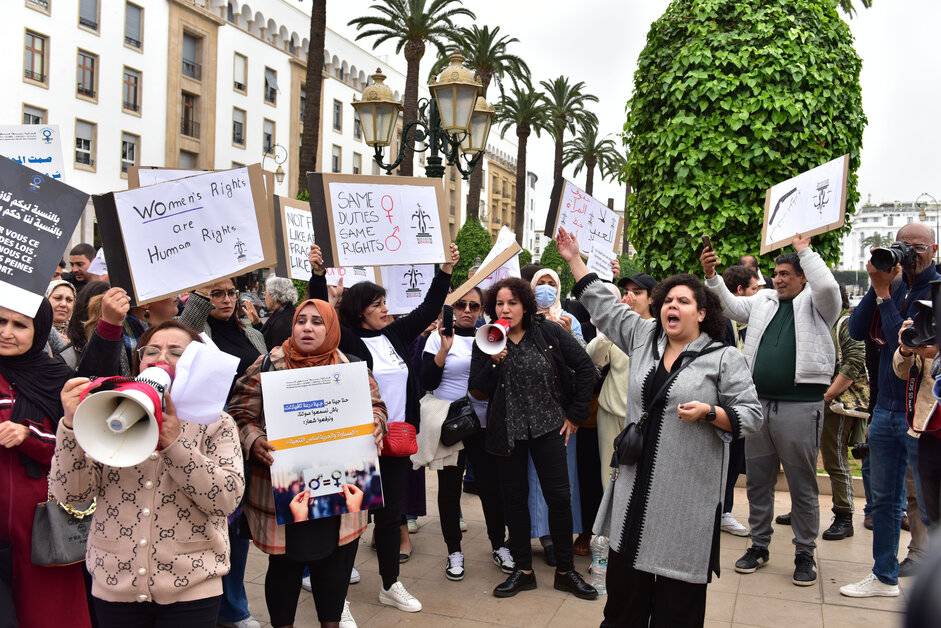

Morocco’s government announced a significant overhaul of its family law on Tuesday, unveiling a comprehensive set of reforms aimed at bolstering women’s rights and modernizing the country’s legal framework on family matters. The reform, which has been in the works for several years, is expected to be a milestone in the ongoing efforts to ensure greater gender equality in Morocco, a country where Islam is the state religion, and which has long navigated the challenge of balancing modern legal norms with traditional cultural and religious values.
Justice Minister Abdellatif Ouahbi and Minister of Islamic Affairs Ahmed Toufiq revealed the long-awaited draft of the new family law code, known as the Mudawana, which includes more than 100 amendments. The revisions mark the first major update to the family code in nearly two decades. These proposed changes come in response to longstanding demands from women’s rights advocates, who have called for a rethinking of the legal rights of women and children, particularly in areas of marriage, divorce, child custody, and polygamy.
The reforms were developed amid increasing calls for gender justice, as Moroccan civil society has become more vocal about the need to close the gender gap in legal rights. Although the country has made strides in improving women’s rights in recent years, activists contend that the family law remained one of the major legal hurdles to full gender equality in Morocco.
Key Features of the Reforms:
Strengthening Custody and Guardianship Rights
One of the most significant provisions in the proposed amendments is the empowerment of women in matters of child custody and guardianship. Under the new family code, women will be given a more substantial role in decision-making regarding the welfare of their children. These provisions aim to ensure that both parents share responsibility equally, fostering a more balanced approach to family life and the upbringing of children.
Polygamy Reforms: Women Gain Veto Power
Perhaps the most attention-grabbing change involves polygamy. Although the practice remains legal under Morocco’s family law in certain circumstances, such as when a man is unable to have children with his first wife, the new amendments impose tighter regulations. Women will now have the right to include a clause in their marriage contracts that grants them veto power over polygamy. This move has been hailed as a major step forward in protecting women’s rights, especially in a society where polygamy is still a sensitive and controversial issue.
Divorce Process Simplified
In a bid to make the divorce process less cumbersome, the government’s new family law reforms aim to streamline legal procedures. The amendments propose simplified divorce protocols, allowing couples to reach settlements more swiftly and without lengthy legal battles. Notably, the reforms also establish joint custody of children, recognizing the need for both parents to remain involved in the lives of their children post-divorce. Furthermore, the new law ensures that the surviving spouse retains the marital home in the event of the death of a partner, offering crucial financial protection, particularly for women.
Divorced Women’s Rights Enhanced
The proposed amendments also bring positive changes for divorced women. Under the current law, women who remarry often lose custody of their children. The new reforms address this concern by allowing divorced women to retain custody of their children even after remarrying, a significant improvement for women’s legal rights.
Legal Marriage Age Set at 18
The reforms also establish the legal age of marriage at 18 years old, which aligns with international human rights standards. However, the new law retains an exception allowing minors aged 17 to marry with judicial approval, a provision that has been a subject of debate among rights activists. While some view this as a necessary compromise in a country where child marriage still occurs in certain regions, others argue that it could undermine the goal of protecting young girls from early marriages.
The King’s Endorsement and the Path Forward
The reform package has received the endorsement of King Mohammed VI, who has long supported efforts to modernize the legal landscape in Morocco while respecting the country’s Islamic identity. In a statement issued alongside the announcement of the reforms, the King emphasized the need to uphold Islamic values while ensuring that the law is aligned with universal principles of justice, equality, and solidarity.
The King called for the revised family code to be passed in a manner that reflects these principles, with an emphasis on ensuring the code’s provisions harmonize with both religious teachings and the rights guaranteed by international law. Once the revisions are finalized, they will be subject to parliamentary approval before being formally enacted.
A Step Toward Gender Equality
The announcement of these reforms is seen as a major victory for women’s rights advocates in Morocco. While the country has made notable progress in recent years, the Mudawana has long been viewed as a significant area in need of reform. The new amendments are expected to help narrow the legal gender gap and contribute to further empowering women in various spheres of Moroccan society.
For decades, Moroccan women have faced significant challenges in their personal and family lives due to the limited rights afforded to them under the Mudawana. The law’s revision reflects a growing recognition of the importance of gender equality in the context of Morocco’s broader development goals. Activists are hopeful that these reforms will help improve women’s access to justice, resources, and opportunities, contributing to a more inclusive and equitable society.
Challenges Ahead
Despite the widespread support for the proposed changes, challenges remain. Traditional views on gender roles and marriage continue to persist in some segments of Moroccan society, particularly in rural areas. Critics of the reforms argue that the changes may face resistance from conservative factions within the country, who may perceive the law as conflicting with religious and cultural norms.
However, supporters of the reforms remain optimistic. They view the changes as a crucial step in the ongoing effort to ensure that Morocco’s legal system better reflects the values of justice and equality, ensuring that the rights of women and children are protected and promoted in all aspects of family life.
As the revised family code moves through the legislative process, its passage will represent a landmark moment in Morocco’s continued journey toward gender equality, paving the way for future reforms that address the needs and rights of women across the country.


