
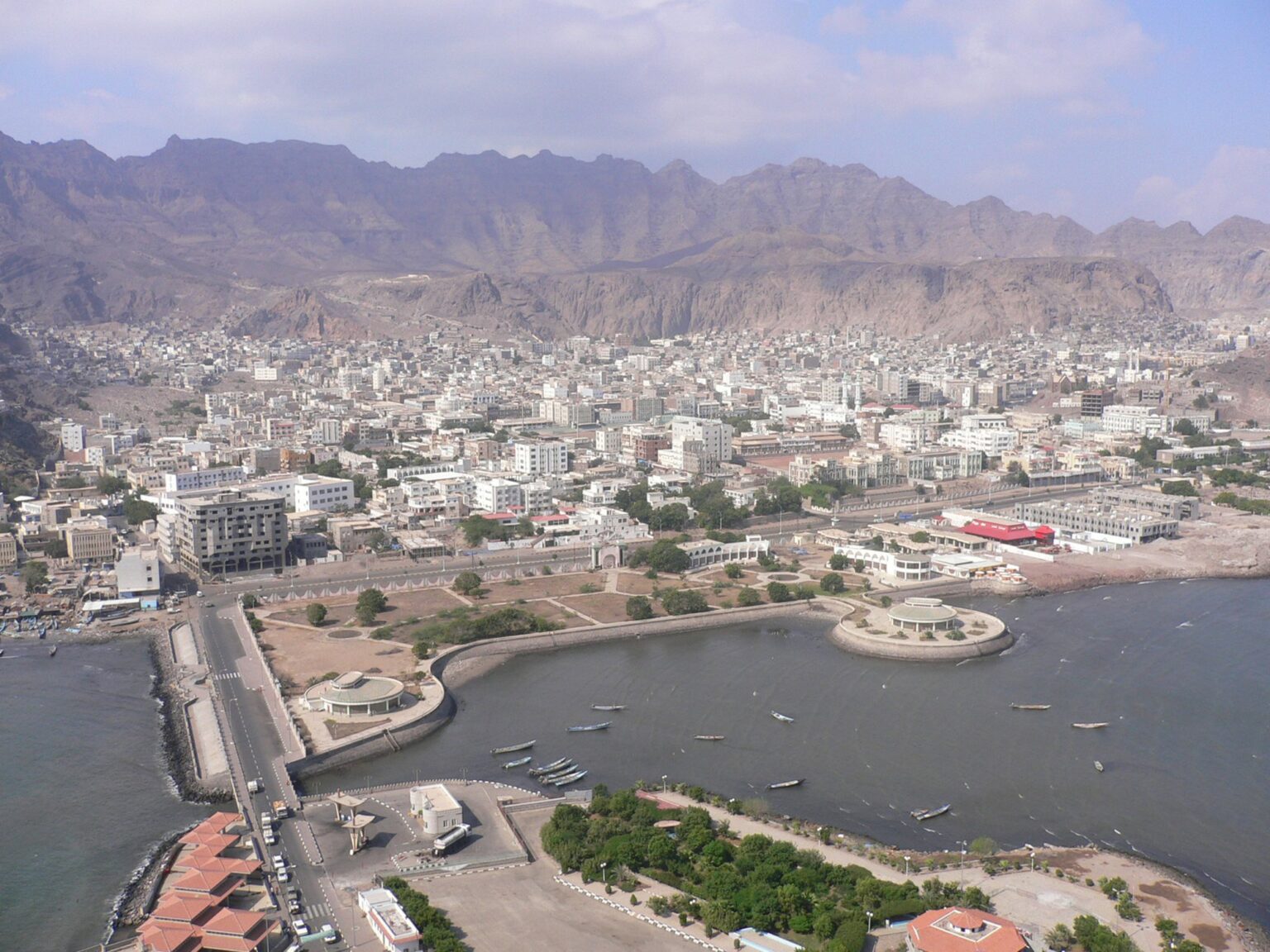

The Yemen war could end “tomorrow” if the Houthis accept a UN-backed roadmap, the Saudi-led coalition’s spokesman said on Sunday, while warning that Aden, seat of Yemen’s internationally recognised government, is a “red line”.
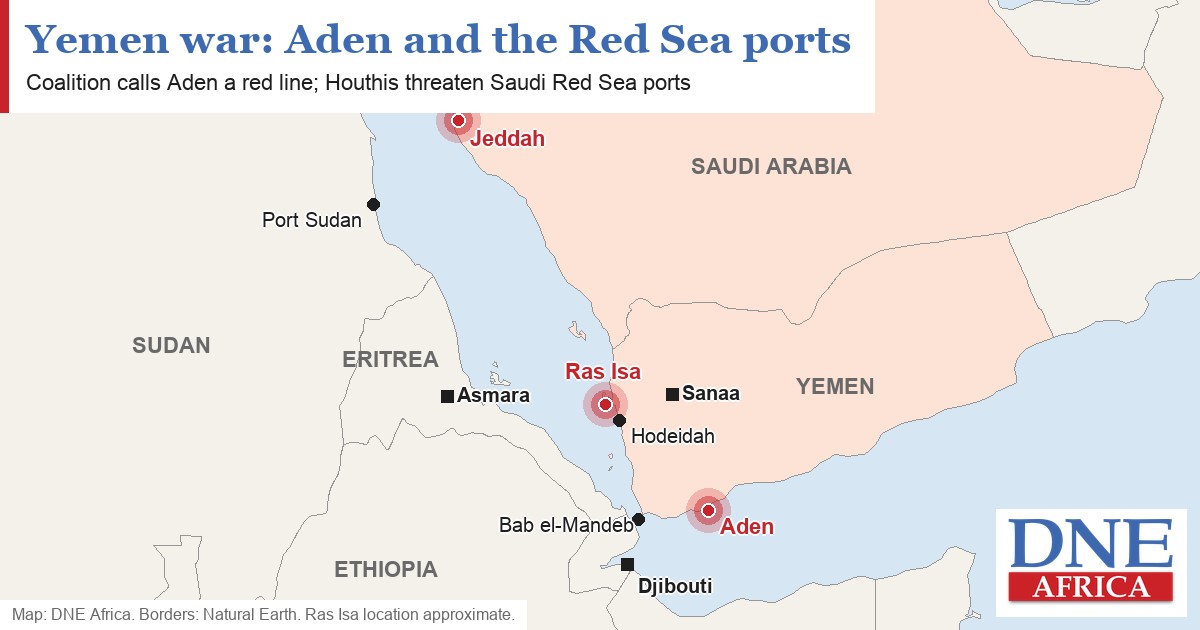
Maj Gen Turki al-Maliki spoke to Reuters hours after the Houthis declared Jeddah and every Saudi port on the Red Sea a target, in reply to a coalition strike on Yemen’s Ras Isa oil port. The exchange puts both sides’ ports, and the shipping lane that feeds Egypt’s Suez Canal, at the centre of the fighting.
What did the coalition say about the Yemen war and Aden?
“If the Houthis decided to go for the roadmap with the Yemeni government, the war can end… tomorrow,” al-Maliki told Reuters. “The best solution is the political solution. But we have to support the Yemeni government to achieve their objective.”
Until then, he said, the coalition would keep up military pressure in the Yemen war, including round-the-clock close air support for government units, while ruling out Saudi ground troops. He acknowledged that “some gaps happened two times in the last three months” in government lines, and said Saudi Arabia was not short of air defence interceptors: “I assure (you) that we have the capability to defend our country.”
The Houthis, formally Ansar Allah, are about 60km from Aden after advancing along the coast near the Bab el-Mandeb strait this year, Reuters reported. Their terms for ending the Yemen war are that Saudi Arabia stop backing the government, lift restrictions on Yemen’s ports and pay compensation.
Why did the Houthis threaten Jeddah and Saudi Red Sea ports?
The coalition spokesman had earlier asked civilians to leave Ras Isa port, north of Hodeidah, saying the coalition was carrying out “a military response to the terrorist Houthi militia’s targeting of civilians and civilian objects”, Arab News reported. Al-Masirah, the Houthis’ television channel, reported a Saudi attack on the port at 09:16 GMT. Damage and casualties could not be independently verified.
A minute later, Houthi military spokesman Yahya Saree said on the group’s Telegram channel that “Jeddah port and all ports of the Saudi enemy on the Red Sea coast” would be targets in response. He told workers to leave them “immediately” and called on shipping companies to move their vessels out. The group said on 25 November it had struck Jeddah port and Jizan; the coalition said then that a drone was downed near Jeddah and a projectile caused minor damage at Jizan.
Abdulmalik al-Houthi, the group’s leader, did not directly address the coalition’s offer to end the Yemen war in a speech on Sunday afternoon marking a religious anniversary, according to excerpts posted by Al-Masirah. He said Yemenis would stand firm against what he called “the Saudi aggression”, and accused Saudi Arabia of striking markets, homes, mosques, schools and hospitals “under American, Zionist and British supervision”. The coalition says its operations comply with international humanitarian law. The Houthis claim 6,124 Saudi strikes since the escalation began, a figure that could not be verified; on Saturday they said they had hit Riyadh’s King Khalid airport.
What is Pakistan’s role?
Pakistan’s military media wing, ISPR, said on Sunday that troops were leaving for Saudi Arabia under existing defence agreements to strengthen the kingdom’s defences. It did not say how many, or where they would be based. The two countries signed a Strategic Mutual Defence Agreement in September 2025, under which an attack on one is treated as an attack on both; Pakistan has said its role is defending the kingdom, not fighting in the Yemen war.
What does the Yemen war mean for Africa and the Suez Canal?
The Saudi ports now named as targets face Sudan, Eritrea and Egypt across the Red Sea, and the fighting near Aden and the Bab el-Mandeb is a short distance from Djibouti. For Egypt, the Yemen war bears directly on the Suez Canal. The Suez Canal Authority said revenue from 1 to 24 November reached $593mn, against $295mn a year earlier, with 1,194 ships transiting, up from 886, as some carriers return. Maersk has told President Abdel Fattah al-Sisi it is resuming Suez sailings, though carriers say the return depends on regional security.
The Institute for Security Studies (ISS Africa) assessed in an October analysis that Egypt is probably the biggest loser from Houthi attacks on shipping, having lost about $3.76bn in canal revenue in 2024, and that Eritrea, Djibouti, Sudan and Somaliland had suffered from lower traffic and higher freight and insurance costs. It noted that Africa imports 98% of its refined oil products, so restricted Red Sea access raises the cost of the continent’s trade.
Egypt’s foreign ministry has repeatedly condemned Houthi attacks on Saudi Arabia this year, saying in September that the national security of the two countries “is interconnected and indivisible”. DNE Africa found no statement on Sunday’s threats from Cairo, the African Union, Djibouti or Eritrea. DNE Africa’s Red Sea shipping explainer sets out how the crisis has affected Egypt and the Horn of Africa.
What happens next in the Yemen war?
The UN said on 24 November that more than 1,600 people had been killed and over 300,000 displaced since the Yemen war escalated in July, after a 2022 truce had largely held. Whether the Houthis act on their threat to Saudi ports, and whether the coalition’s offer leads to talks on the UN roadmap, will shape shipping decisions in the Red Sea.
FAQ
Can the Yemen war end soon?
The Saudi-led coalition’s spokesman said on 29 November that the war “can end… tomorrow” if the Houthis accept the UN-backed roadmap with the Yemeni government. The Houthis have demanded that Saudi Arabia end its support for the government, lift port restrictions and pay compensation.
What did the coalition say about Aden?
Turki al-Maliki, spokesman for the coalition fighting the Houthis in the Yemen war, told Reuters that Riyadh has drawn a “red line” around Aden and will do “whatever it takes” to protect it. The Houthis are about 60km from the city, according to Reuters.
Which ports did the Houthis threaten?
Houthi spokesman Yahya Saree said Jeddah port and all Saudi ports on the Red Sea coast are targets, after a coalition strike on Ras Isa port in Yemen. He told shipping companies to move their vessels out.
How does the Yemen war affect Africa?
It threatens traffic through the Bab el-Mandeb strait and the Suez Canal, which earned Egypt $593mn in the first 24 days of November, the canal authority said. ISS Africa says Eritrea, Djibouti, Sudan and Somaliland have also lost trade from the disruption.


