
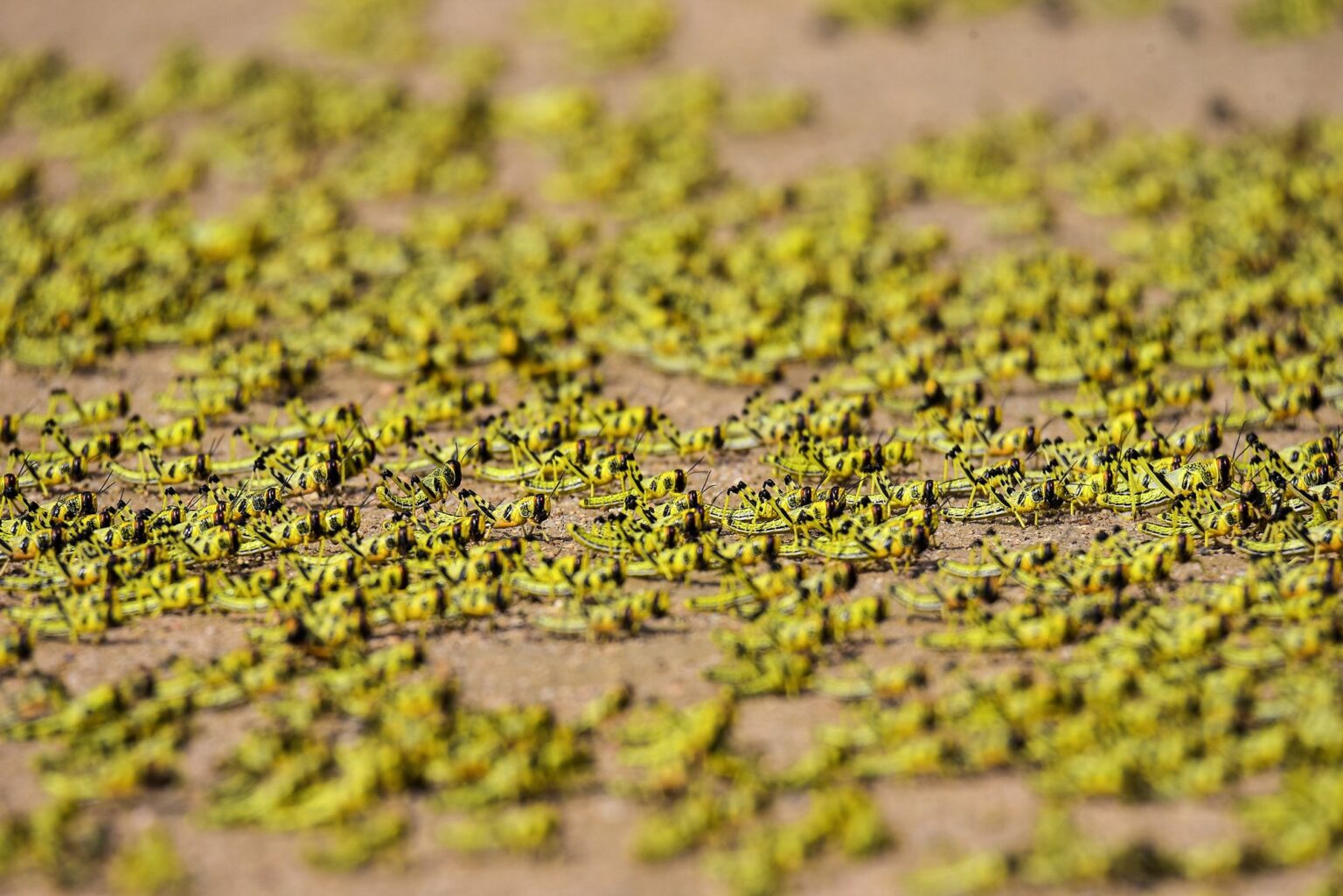

A desert locust outbreak in north-west Mauritania grew in November, with control teams treating 4,373 hectares by 25 November and breeding starting in Western Sahara, the UN Food and Agriculture Organization (FAO) said in its latest update.
The FAO warned that new adult groups could lay eggs from the end of November, producing a fresh generation of hopper bands from late December. If left uncontrolled, it said, the desert locust outbreak could lead to more adult groups and small swarms in the coming months, a risk for crops and pasture across North-West Africa.
The figures come from the FAO’s Desert Locust update of 26 November, issued by its Desert Locust Information Service in Rome from survey and control reports sent by affected countries. This analysis of the desert locust outbreak draws on that update, released on 26 November.
Where is the desert locust outbreak now?
The centre of the desert locust outbreak is the area about 100 km south-east of Akjoujt, in Mauritania’s north-west, where about 40 dense hopper bands of third to fifth instars were found in the first week of November. Young locusts there grew wings between 9 and 23 November, forming groups of immature adults, the FAO said.
Hopper groups were also found between Nouakchott and Aguilal Faye in northern Trarza, and immature adult groups north of Magta Lahjar. Infestations extended over about 200 km. Further north, isolated mature adults were seen near Zouerate and Bir Moghrein, where they were mating on 15 November.
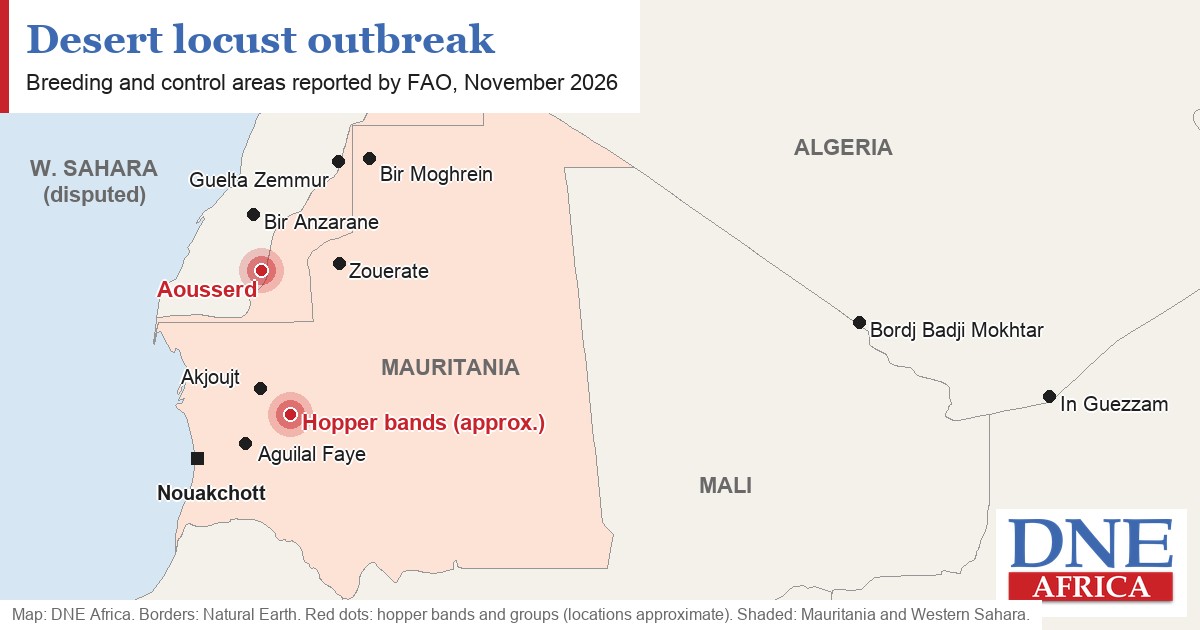
In Western Sahara, groups of mature adults were mating and laying eggs south-west of Guelta Zemmur and around Bir Anzarane from 16 November, and groups of young hoppers appeared west of Aousserd from 18 November. Morocco administers most of the territory and considers it part of its south, while the Polisario Front, backed by Algeria, claims it, and the UN lists it as a non-self-governing territory. DNE Africa reported on the end of the UN mission there this month.
Elsewhere, the FAO reported isolated adults in southern Algeria and in Niger’s Termit Massif. In Egypt, isolated adults were found near Abu Simbel and Shalatyn and on the Red Sea coast between Marsa Alam and Hamata.
How fast has the situation changed?
The speed at which the desert locust outbreak grew stands out. In its monthly bulletin of 6 November, the FAO reported only 80 ha treated in October, all in Mauritania, and no locusts seen in Western Sahara. It rated the Western Region at “caution”, the second of four alert levels, meaning a potential threat to crops.
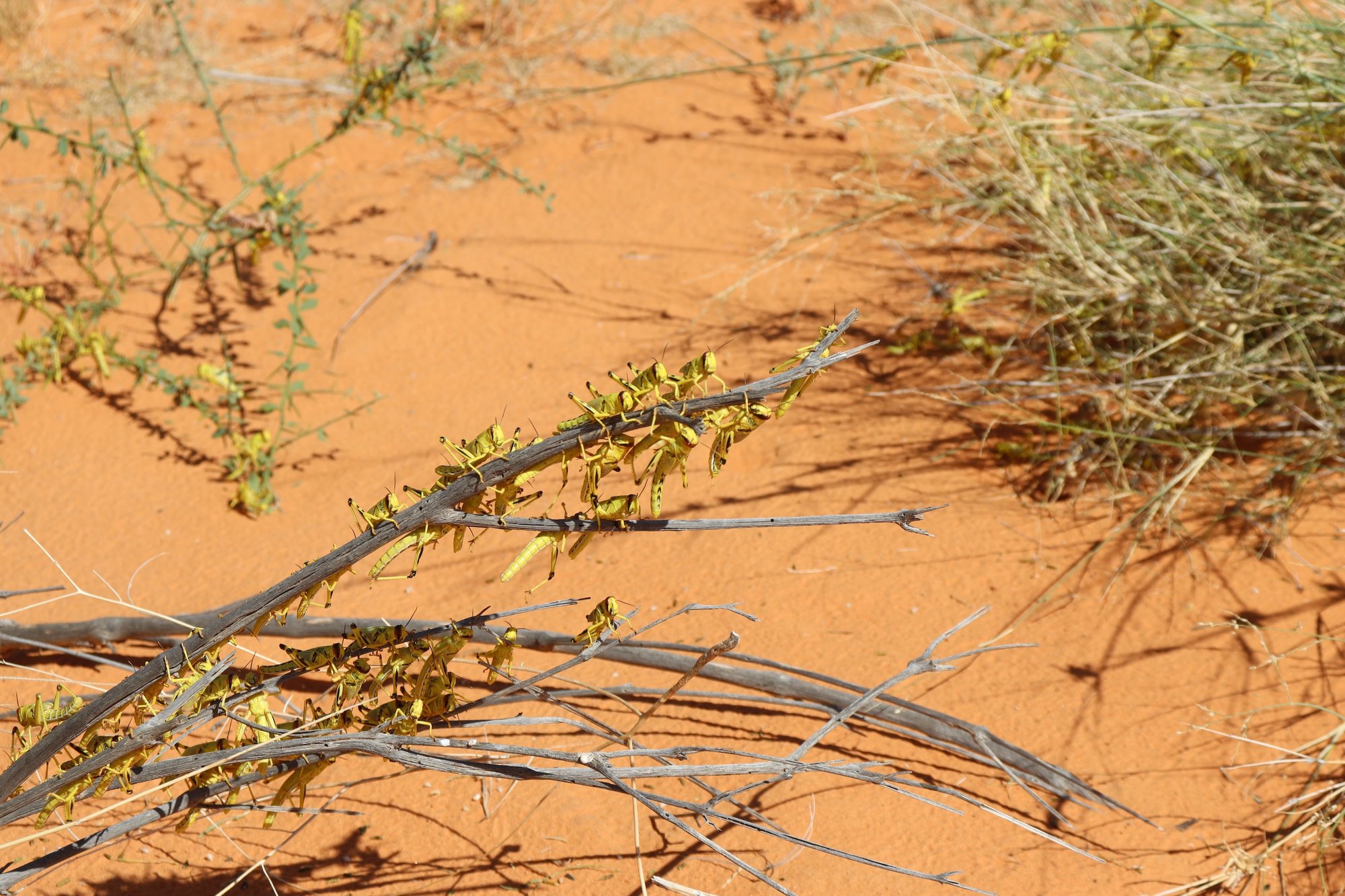
Good rains drove the desert locust outbreak. Moderate to locally heavy rain fell in northern Mauritania and Western Sahara in late October, and light to moderate rain in early November, keeping vegetation green where locusts lay eggs in moist sand. The FAO’s key facts note that locust numbers can rise about 20 times in three months with each generation of breeding.
Is this desert locust outbreak linked to last year’s?
The current desert locust outbreak follows a long run of activity in the region. In December 2025 the FAO warned of a serious outbreak in Mauritania and Western Sahara, with some groups reaching Senegal and one near Tiznit in Morocco. “The situation in Northwestern Africa remains serious and requires sustained surveillance and rapid response,” Shoki Al-Dobai, the FAO’s team leader for locusts, said at the time.
Locusts then moved north. The FAO reported 41,792 ha treated in May 2026 and 88,501 ha in June, as hopper bands and adult groups spread across Morocco, according to its brief of 7 July. Most groups were then expected to move south to Mauritania and the Sahel for summer breeding.
What could the desert locust outbreak mean for food security?
The region has seen the cost of a locust upsurge before. The 2003-05 upsurge in West and North-West Africa led to about 12.9mn ha being sprayed, and the campaign cost about $400mn including food aid, according to a multilateral evaluation presented to the FAO in 2006. More than eight million people in the Sahel lost all or part of their food crops, it said. Most of the control costs were paid by affected countries, especially Algeria, Morocco and Libya.
In 2020-21, an upsurge in the Horn of Africa and Yemen needed treatment of nearly 2.3mn ha, and the FAO said the response averted 4.5mn tonnes of crop losses and secured food for 41.5mn people, according to its emergency programme page. Ethiopia was still rebuilding farm livelihoods years later. The current desert locust outbreak is far smaller, and the FAO has not described it as an upsurge.
Timing matters. North-west Mauritania and Western Sahara are winter breeding areas, from October to January or February, while spring breeding takes place in North-West Africa from February, the FAO bulletin says. Last season, locusts that bred in Mauritania and Western Sahara over the winter moved north into Morocco by the spring, the FAO’s briefs show. The threat adds to existing pressure: a UN report this week listed Africa as home to 10 of 16 hunger hotspots.
What happens next?
The FAO forecast that the desert locust outbreak will continue: maturing adult groups in north-west Mauritania could start laying eggs from the end of November, with new hopper groups and bands from late December. More hopper groups will form in Western Sahara in December, and some adults may move north into Tiris Zemmour, Dakhlet Nouadhibou and Western Sahara.
It said surveys are essential in northern Mauritania, Western Sahara, southern Algeria, northern Mali, Niger and Chad, and that control may be needed in southern Algeria. Small-scale breeding may occur along the Red Sea, including the coasts of Egypt and Sudan, but no significant developments are expected there. The FAO usually issues its monthly bulletin in the first week of the month.
FAQ
Where is the desert locust outbreak?
It is centred in north-west Mauritania, south-east of Akjoujt and in northern Trarza, with breeding since mid-November in Western Sahara, according to the FAO update of 26 November.
How much land has been treated?
Control teams treated 4,373 ha in Mauritania by 25 November and 285 ha in Western Sahara by 24 November, while Algeria treated 30 ha as a preventive measure, the FAO said.
Will the desert locust outbreak reach Morocco and Algeria?
The FAO said some adults may move north into areas of recent rain, and that control could be needed in southern Algeria. It has not forecast swarms reaching northern Morocco or Algeria.
Is there a threat to the Red Sea countries?
The FAO expects only small-scale breeding along the Red Sea and Gulf of Aden coasts, where isolated adults were seen in Egypt, and no significant developments.


