
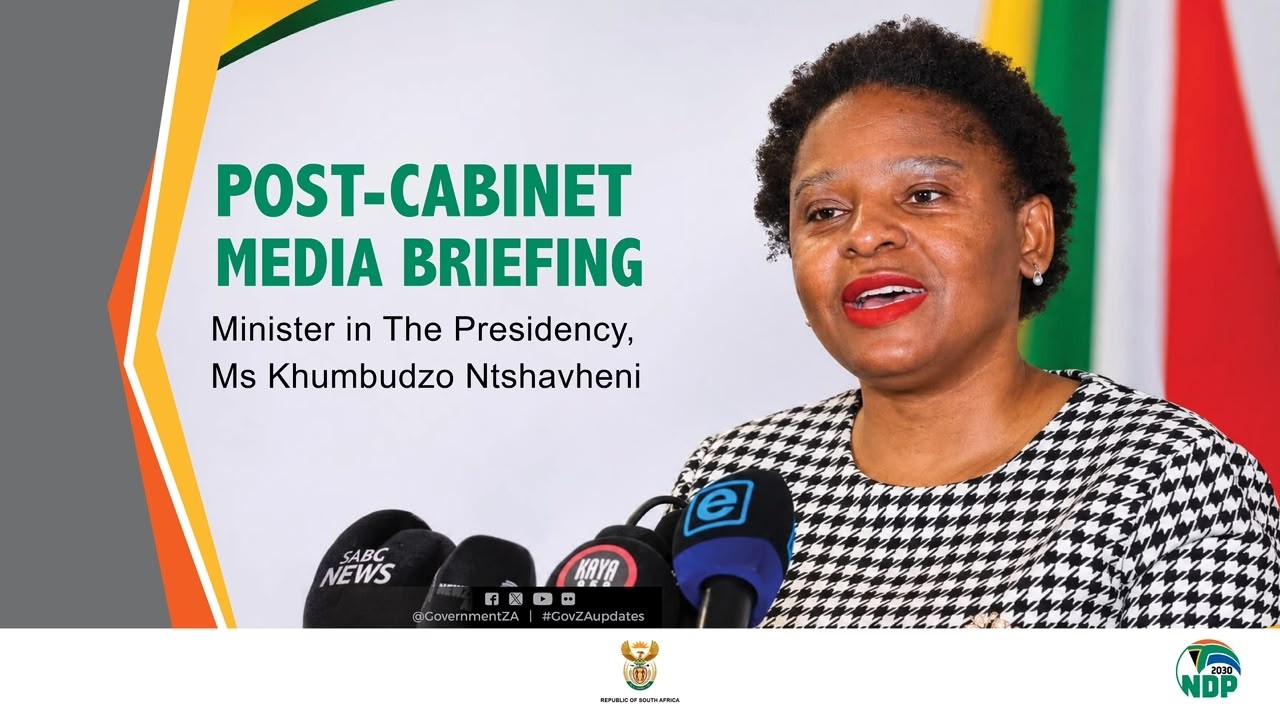

South Africa’s cabinet has approved a 10-year Africa strategy for 2026 to 2036 and set its priorities for its seat on the African Union Peace and Security Council, Khumbudzo Ntshavheni, minister in the Presidency, said on Friday.
The Africa strategy is meant to give Pretoria a single framework for its political, economic and security interests on the continent, as it loses US trade preferences and seeks new markets for exporters.
What is in South Africa’s Africa strategy?
The strategy “provides a long-term strategic framework for advancing South Africa’s political, economic, security and developmental interests on the African continent”, according to the statement on the cabinet meeting of 25 November. The Africa strategy sets out strategic pillars, priority regions and partner countries, with emphasis on economic diplomacy, regional integration, infrastructure, and trade and investment through the African Continental Free Trade Area.
Ms Ntshavheni told the post-cabinet briefing in Pretoria that the strategy presents South Africa’s engagement with the continent as a tool for growth, industrialisation and jobs at home. The Africa strategy document itself has not been published.
What will South Africa do on the AU Peace and Security Council?
South Africa was elected to the 15-member council in February 2026 for the seventh time, for a term to 31 March 2028, and will chair it in September 2027. Its priorities include a stronger African peace and security architecture, a “rules-based” council, closer co-operation with the United Nations and work on conflict hotspots, the cabinet said. It will also prioritise the impact of critical minerals on conflict, as well as disarmament, non-proliferation and arms control.
How does the Africa strategy fit with the AGOA exit?
Cabinet was briefed on Washington’s 60-day notice that South Africa will lose its African Growth and Opportunity Act (AGOA) benefits from 1 January 2027. In 2025 about 89 per cent of South African exports to the US entered under normal WTO terms and about 10 per cent used AGOA preferences, the cabinet said, adding that the government would give sector-specific guidance to affected companies. Ramaphosa had warned of the economic fallout in October.
Answering questions, Ms Ntshavheni said the withdrawal also ended commitments South Africa had made to the US on poultry and pork. She said the trade ministry was still talking to the US about a bilateral preferential arrangement, and that South Africa was opening alternative markets in Canada and China, including work with China on a zero-tariff arrangement for the Southern African Customs Union. She said white farmers, not black farmers, were the main AGOA beneficiaries, and that groups who lobbied for South Africa’s removal had hurt the constituency they claimed to protect. She did not name the groups.
What else did cabinet decide?
Besides the Africa strategy, cabinet approved the Development Indicators 2025 report, which found that of 84 indicators towards the National Development Plan’s 2030 goals, 18 are on track, 42 show promising progress and 24 are unlikely to be met. It confirmed Lieutenant-General Nhlanhla Sibusiso Mkwanazi as national head of the Directorate for Priority Crime Investigation, the Hawks. It also released a progress report on the state capture commission, under which R17.2bn has been recovered, and approved the draft National Rail Bill for public comment.
FAQ
What is South Africa’s Africa strategy?
A framework for 2026 to 2036, approved by cabinet on 25 November 2026, setting priority regions, partners and goals for South Africa’s political, economic and security engagement in Africa.
When does South Africa chair the AU Peace and Security Council?
In September 2027, during a term that runs until 31 March 2028.
When does South Africa lose AGOA benefits?
On 1 January 2027, after the US gave 60 days’ notice in November.
Who is the new head of the Hawks?
Lieutenant-General Nhlanhla Sibusiso Mkwanazi, confirmed by cabinet as national head of the Directorate for Priority Crime Investigation.


