

The Congo Ebola outbreak has reached 12,021 confirmed cases and 5,904 confirmed deaths, Congo’s health ministry said in a situation report covering the period to 24 November.
Daily new infections fell to 66 confirmed cases on 24 November from 109 a week earlier, the ministry said, but transmission continues in four provinces and almost half of the day’s deaths happened outside treatment centres, a sign that many patients still reach care late.
What do the latest Congo Ebola outbreak figures show?
According to situation report number 194, published on 25 November, the overall case fatality rate of the Congo Ebola outbreak stands at 49.1%. The figures are cumulative confirmed cases and deaths since the Bundibugyo outbreak was declared on 15 May. The ministry counts 3,232 people who have recovered and 1,092 patients in isolation or treatment centres.
The virus has reached 69 health zones in eight provinces. Ituri remains the epicentre, with 8,140 cases and 3,843 deaths, or 67.7% of the national total. North Kivu has 3,181 cases and 1,779 deaths, and its fatality rate of 55.9% is above the national average.
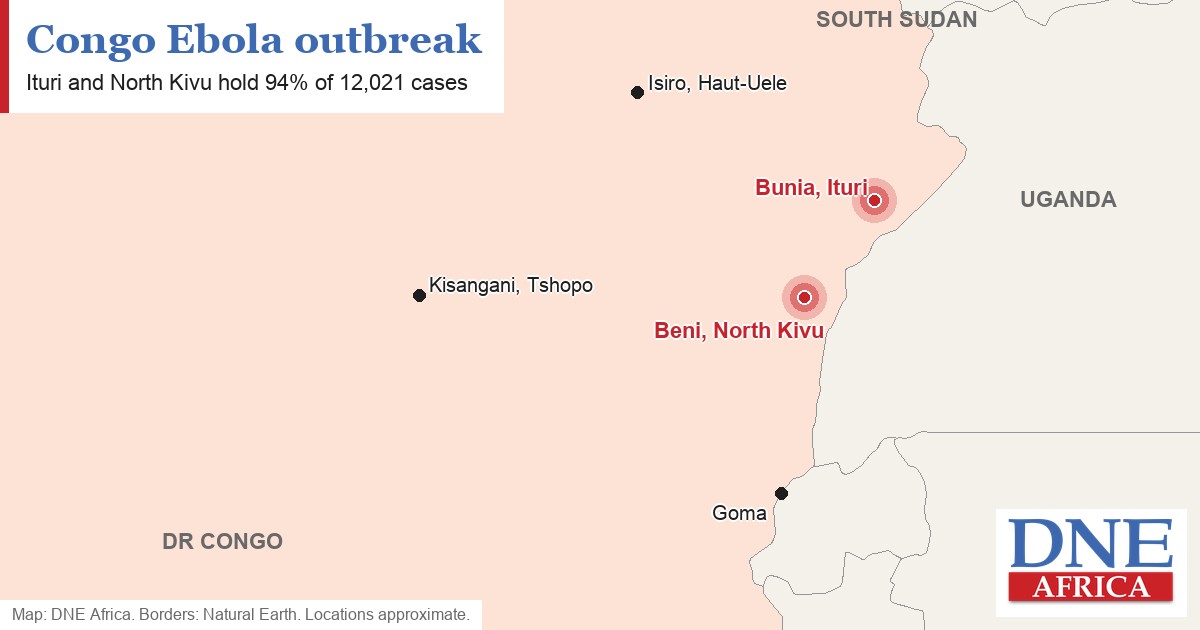
On 24 November North Kivu reported 31 new cases, Ituri 26, Haut-Uele 7 and Tshopo 2. Six health zones, led by Bunia and Beni, accounted for 65.2% of them, and the ministry called for closer investigation in Ariwara, which has started reporting cases again.
Is the Congo Ebola outbreak slowing?
The ministry described the trend in the Congo Ebola outbreak as “encouraging progress”. Confirmed deaths reported on the day fell to 37 from 48 on 17 November, test positivity fell to 12.3% from 16.3%, and 17 health zones have gone at least 42 days without a new confirmed case.
The same report lists gaps. Of the 37 deaths, 18 were community deaths, people who died before reaching a treatment centre. Teams followed up 85.1% of the 35,105 people listed as contacts of patients, below the 95% target, and 5,238 contacts were not seen on the day, 70.4% of them in North Kivu. Only 224 of 307 living suspected cases were transferred to treatment centres.
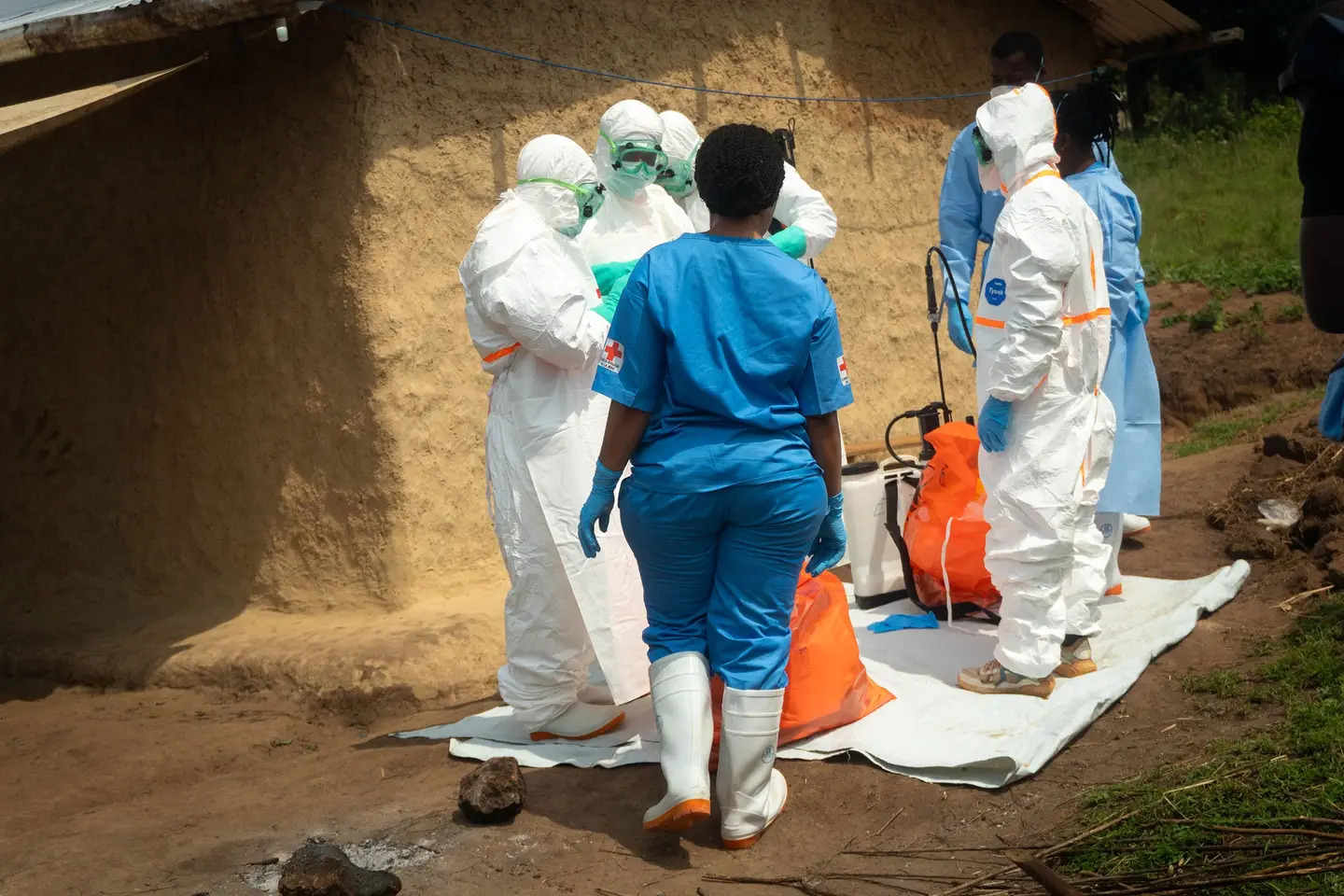
The ministry also reported that 272 frontline health workers have been infected since the start of the outbreak, 180 of them in Ituri. It named shortages of money, vehicles and supplies, late payment of response staff, and insecurity that limits access to some communities, including around the Nizi laboratory in Ituri. DNE Africa reported last week that an Ebola team in Ituri was trapped by fighting.
The ministry said data from Ituri and Tshopo are being reconciled, and 493 deaths in Ituri have yet to be assigned to a health zone, so figures may be revised.
How do the numbers compare?
The World Health Organization reported 11,613 confirmed cases and 5,678 deaths in Congo as of 17 November, and its Director-General maintained the outbreak’s status as a public health emergency of international concern on 18 November. The ministry’s new totals add about 400 cases and more than 220 deaths in a week, close to the pace of the Congo Ebola outbreak at six months. Only the 2014-16 epidemic in West Africa, with about 28,600 cases and 11,325 deaths according to the WHO, has been larger.
What is being done on vaccines?
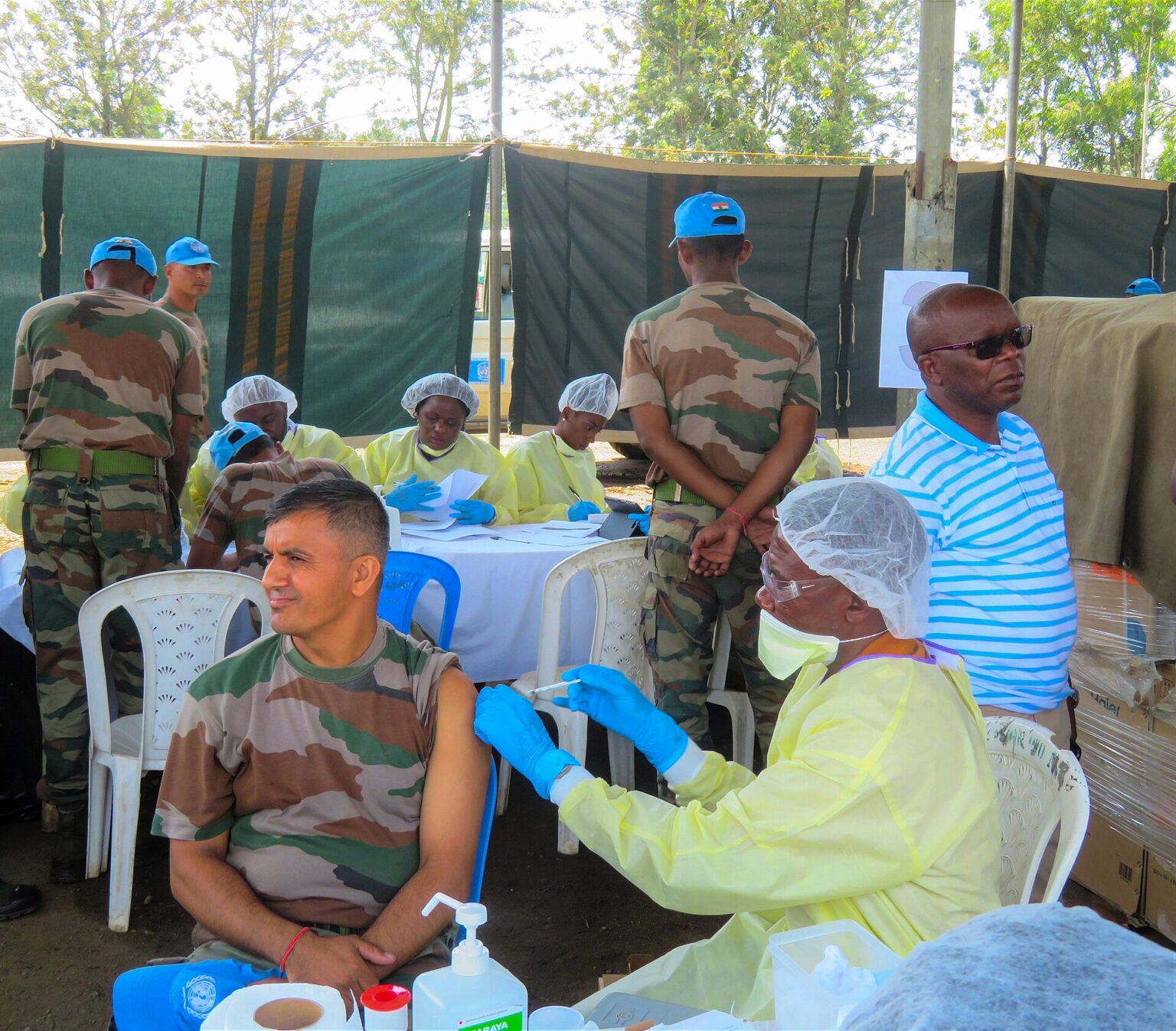
No licensed vaccine or treatment exists for the Bundibugyo species. The ministry said Ervebo, a vaccine licensed against the Zaire species, is being given to high-risk groups in Ituri and Haut-Uele, while research with MSF continues on how well it protects against Bundibugyo. Targeted vaccination has reached 4,740 people in Haut-Uele, 15,228 frontline workers and other high-risk people in Tshopo and 5,342 people in North Kivu, where it runs partly within a study, the report said, and patients in Tshopo receive experimental treatments, including MBP134 and remdesivir.
On 24 November Gavi, the Vaccine Alliance, said it had signed an advance purchase commitment with the Serum Institute of India for up to 1.5mn doses of ChAdOx1 BDBV, a candidate Bundibugyo vaccine developed with the University of Oxford. Supply depends on successful trials, regulatory approval and WHO recommendations, Gavi said; it has also funded 70,000 Ervebo doses from the global stockpile. DNE Africa has also reported on research into supportive care for Ebola patients.
What happens next?
The ministry said it is preparing a round table to raise money for a revised plan against the Congo Ebola outbreak, and is pressing partners for infection-control supplies, vaccines and logistics. It publishes situation reports daily.
FAQ
How many cases has the Congo Ebola outbreak caused?
The health ministry reported 12,021 confirmed cases and 5,904 deaths as of 24 November.
Which provinces are most affected?
Ituri (8,140 cases) and North Kivu (3,181) hold 94.2% of the total, the ministry said.
Are new Ebola cases in Congo falling?
The ministry reported 66 new confirmed cases on 24 November, down from 109 on 17 November, but said transmission continues in four provinces.
Is there a vaccine for the Congo Ebola outbreak?
No vaccine is licensed for the Bundibugyo species. Ervebo is being used under research protocols, and Gavi has agreed to buy up to 1.5mn doses of a candidate vaccine if trials succeed.


