
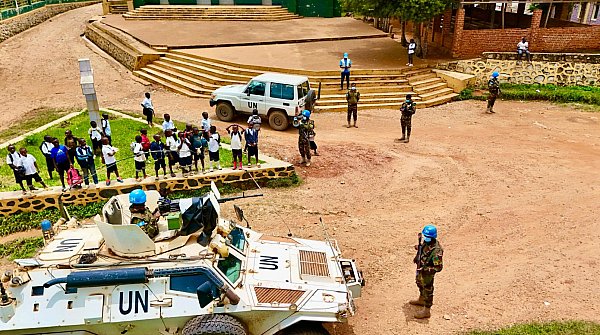

Renewed Djugu violence in Ituri province led Bangladeshi peacekeepers of the UN mission in DR Congo, MONUSCO, to deploy a mobile operating base near Mongbwalu on 22 November, the mission said.
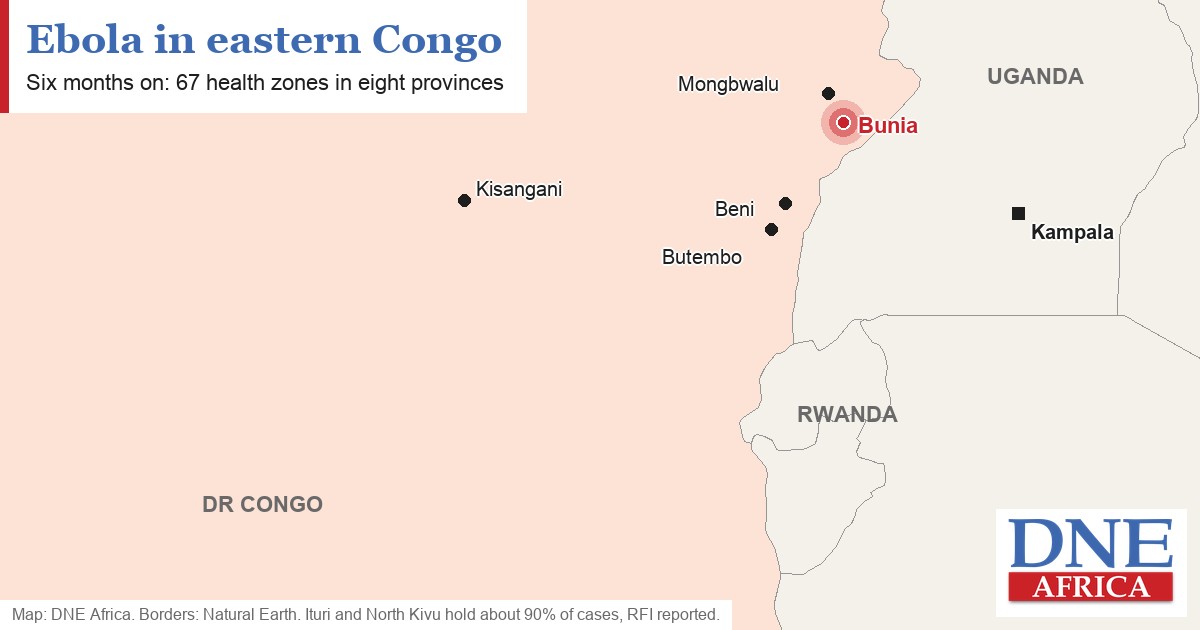
The base, set up to protect civilians in Akwe, Damas and Mbidjo, helped peacekeepers reach ten health workers on 24 November and escort them out for evacuation to Bunia, according to a MONUSCO statement. The workers are part of the response to the Ebola outbreak centred on the area.
What has MONUSCO done in Djugu?
The mission said the Djugu violence, fighting between the Armed Forces of the Democratic Republic of the Congo (FARDC) and the armed group Convention for the Popular Revolution (CRP), has worsened security in Fataki, Bule and Gina for several days. It said heavy fighting was reported on 18 November around Bule and the Savo Plain displacement site, which it said hosts about 70,000 people.
Twenty-four civilians, among them 13 women and three children, sought refuge with peacekeepers at Bayoo, the statement said. On 20 November, Bangladeshi and Nepalese peacekeepers escorted 380 civilians who had fled to Fataki back to the Savo Plain site, the mission said in an earlier statement.
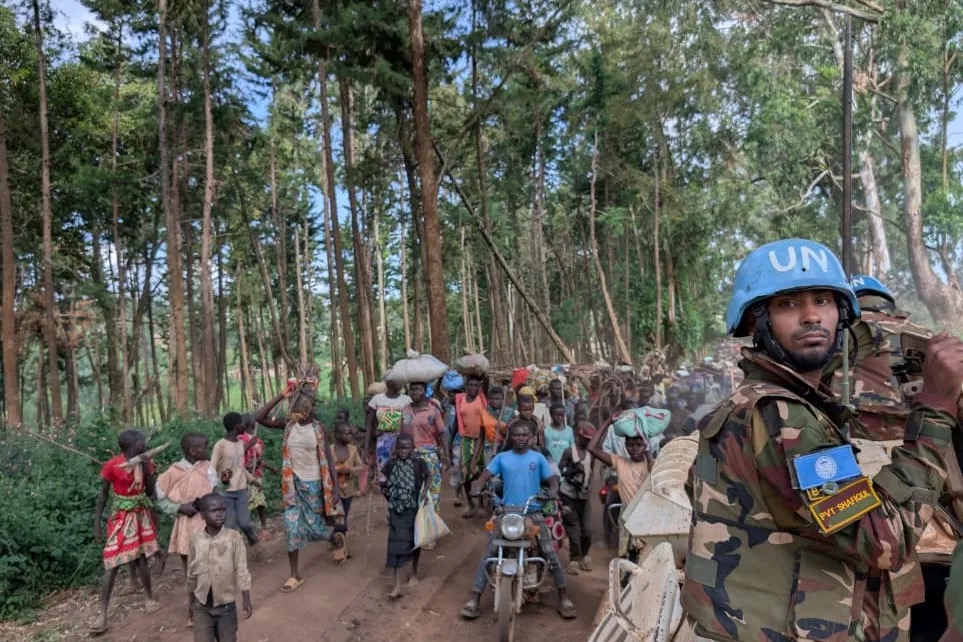
The route to the health workers was hard, the mission said: poor roads, difficult terrain and a fragile wooden bridge forced the Bangladeshi Rapid Deployment Battalion to find another way in. The team, including a doctor and nurses from Akwe General Referral Hospital, was taken to Mongbwalu Hospital and then to a helicopter landing site for an air transfer to Bunia.
What do independent reports say about the Djugu violence?
Local reporting suggests the Djugu violence has spread north. Actualite.cd reported on 24 November new clashes on 21 and 22 November in Lopa, Lindji and Iga-Barriere, north of Bunia, and said thousands of residents had fled to Bunia since 23 November, according to local sources. No verified count of the displaced or of casualties has been published.
The site said neither the FARDC spokesman in Ituri nor the military administration in Djugu had issued a detailed statement on the fighting, and that the UN had temporarily restricted staff movements on the Iga-Barriere, Lopa and Fataki roads. Olivier Bavi Karba, coordinator of a displaced people’s association, called on the authorities to protect civilians, it reported.
The CRP, led by Thomas Lubanga, said in a statement on 24 November that it was suspending its advance on Bunia and pulling back from areas taken in recent days, citing commitments made in talks hosted by Uganda’s President Yoweri Museveni, The Eastleigh Voice reported. The Congolese government had not publicly responded to that statement. Lubanga was convicted by the International Criminal Court in 2012 for recruiting child soldiers and was released in 2020.
Why does the Djugu violence matter for the Ebola response?
Mongbwalu has been at the centre of the Ebola outbreak declared in May, and Bangladeshi peacekeepers have been stationed there since June to protect health operations, according to MONUSCO. The World Health Organization has warned that insecurity is among the biggest obstacles to containing the virus, and a medical team was trapped by fighting in Ituri last week.
Ituri has faced repeated attacks by armed groups, including ADF attacks that killed 44 people this month, while the army is also fighting the M23 further south (see our M23 conflict explainer). MONUSCO said it had stepped up patrols to protect civilians from the Djugu violence.
FAQ
What caused the latest Djugu violence?
MONUSCO and local media report clashes between the Congolese army (FARDC) and the CRP armed group in Fataki, Bule, Gina and areas north of Bunia since 18 November.
What did MONUSCO do in response to the Djugu violence?
It deployed a mobile operating base near Mongbwalu on 22 November, escorted ten Ebola health workers to safety on 24 November and helped 380 civilians return to the Savo Plain site.
How many people have been displaced?
No verified total has been published. Local sources told Actualite.cd that thousands had fled to Bunia since 23 November.
What has the CRP said?
The group said on 24 November that it was halting its advance on Bunia and withdrawing from recently captured areas, citing talks hosted by Uganda.


