
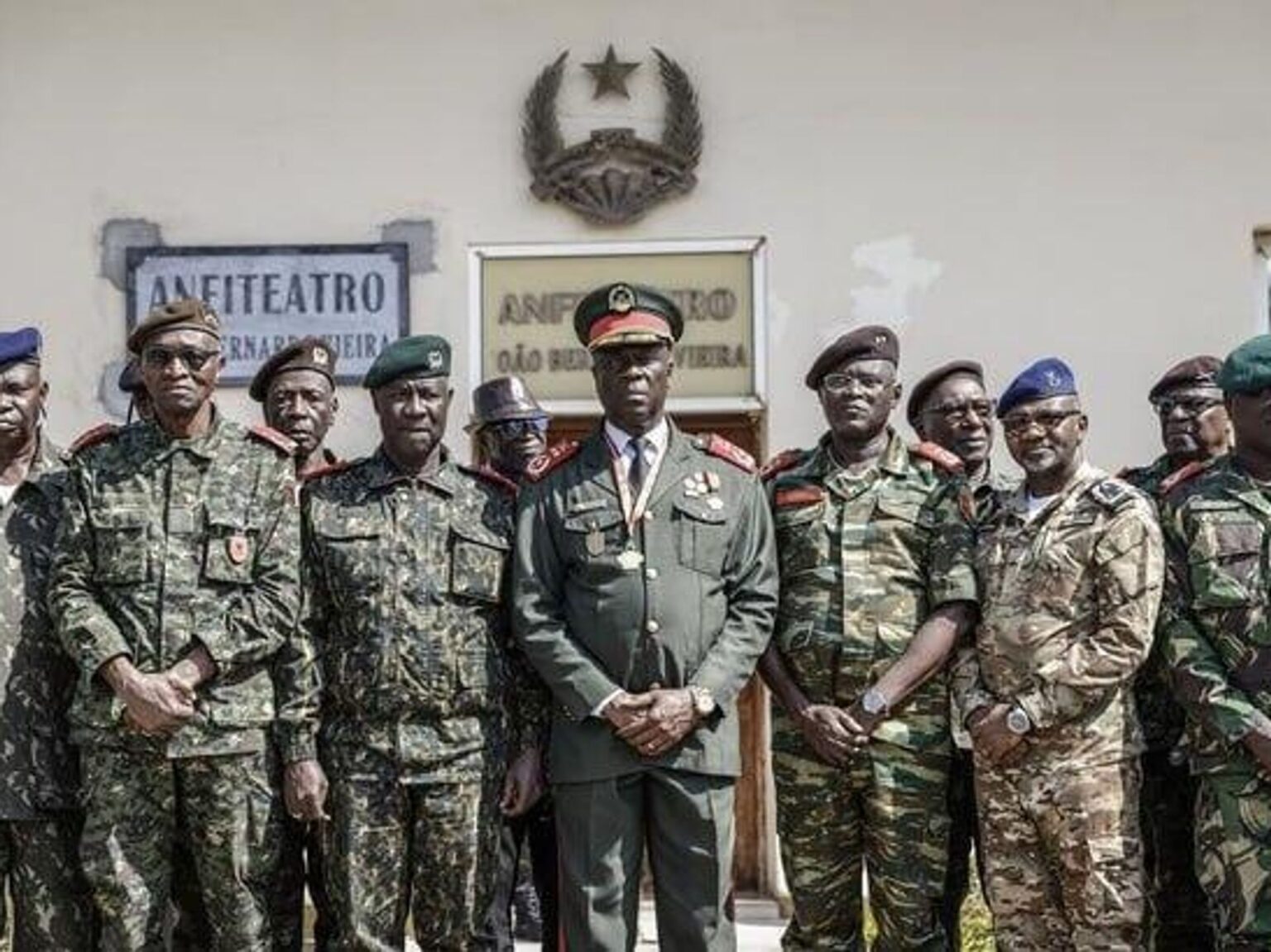

Guinea-Bissau’s military-led government on Thursday postponed the Guinea-Bissau elections, presidential and legislative votes due on 6 December, to 26 November 2028, extending a transition that was meant to last one year by about two years.
The decree, issued on the first anniversary of the army’s seizure of power, delays the return to civilian rule in a country of about 2mn people with a long record of coups, and puts the transitional authorities at odds with the timetable regional leaders have pressed for.
Why were the Guinea-Bissau elections postponed?
Transitional President General Horta Inta-A set the new date in a decree published by the presidency on Thursday, the Associated Press and AFP reported. The decree said the “technical, material and financial conditions” needed to hold credible elections were not in place, and that a vote held without meeting legal and operational requirements could undermine its transparency, inclusiveness and credibility.
Before the Guinea-Bissau elections, the decree also cited the need to hold the country’s first municipal elections, in 2027, “to institutionalise local government”, according to AFP. Prime Minister Ilídio Vieira Té said last month that conditions were not in place for a December vote, but gave no other date.
How did the transition begin?
The army took power on 26 November 2025, three days after general elections and on the eve of the planned publication of provisional results, removing President Umaro Sissoco Embaló and suspending the count. Embaló and opposition candidate Fernando Dias had both claimed victory.
In August 2026 the authorities held a constitutional referendum that moved the country to a strong presidential system, expanded presidential powers and reduced the size of parliament. The PAIGC, the party that led the country to independence from Portugal in 1974, criticised the vote, citing restrictions on public freedoms. Embaló, who lives in Morocco and had said he would stand in December, was barred last month from returning, with the authorities citing security and public order.
Guinea-Bissau had four coups and many attempted coups between independence and 2025. It is also a transit point for cocaine trafficking from Latin America to Europe, according to the UN Office on Drugs and Crime.
What have regional bodies said about the Guinea-Bissau elections?
The Economic Community of West African States (ECOWAS) suspended Guinea-Bissau from its decision-making bodies after the takeover and in December 2025 rejected the transition programme announced by the authorities, calling for an inclusive process, Anadolu Agency reported. In October 2026 Senegal’s foreign minister led an ECOWAS-mandated mediation mission to Bissau to meet political parties, civil society and the transitional authorities.
ECOWAS, the African Union and the main opposition parties had not commented on the new date for the Guinea-Bissau elections by Thursday evening. The bloc is also preparing a regional counter-terrorism force as it deals with military-led governments elsewhere in the region, three of which, Mali, Burkina Faso and Niger, have left it.
A two-year delay would put Guinea-Bissau among the West African states whose transitions have run well beyond their first timetables. DNE Africa’s African elections calendar follows upcoming votes across the continent.
What happens next?
Under the decree, presidential and legislative votes will be held on 26 November 2028, with municipal elections in 2027. Reactions from ECOWAS heads of state, who meet regularly on the region’s transitions, and from the PAIGC and Embaló’s camp are expected in the coming days.
FAQ
When are the Guinea-Bissau elections now due?
Presidential and legislative elections are set for 26 November 2028 under a decree issued on 26 November 2026. They had been due on 6 December 2026.
Why did the authorities postpone the Guinea-Bissau elections?
The decree said the technical, material and financial conditions for credible elections were not in place, and cited plans for first municipal elections in 2027.
Who leads Guinea-Bissau?
Transitional President General Horta Inta-A, who took power when the army removed President Umaro Sissoco Embaló on 26 November 2025.
Is Guinea-Bissau suspended from ECOWAS?
Yes. The regional bloc suspended it from its decision-making bodies after the 2025 takeover.


