
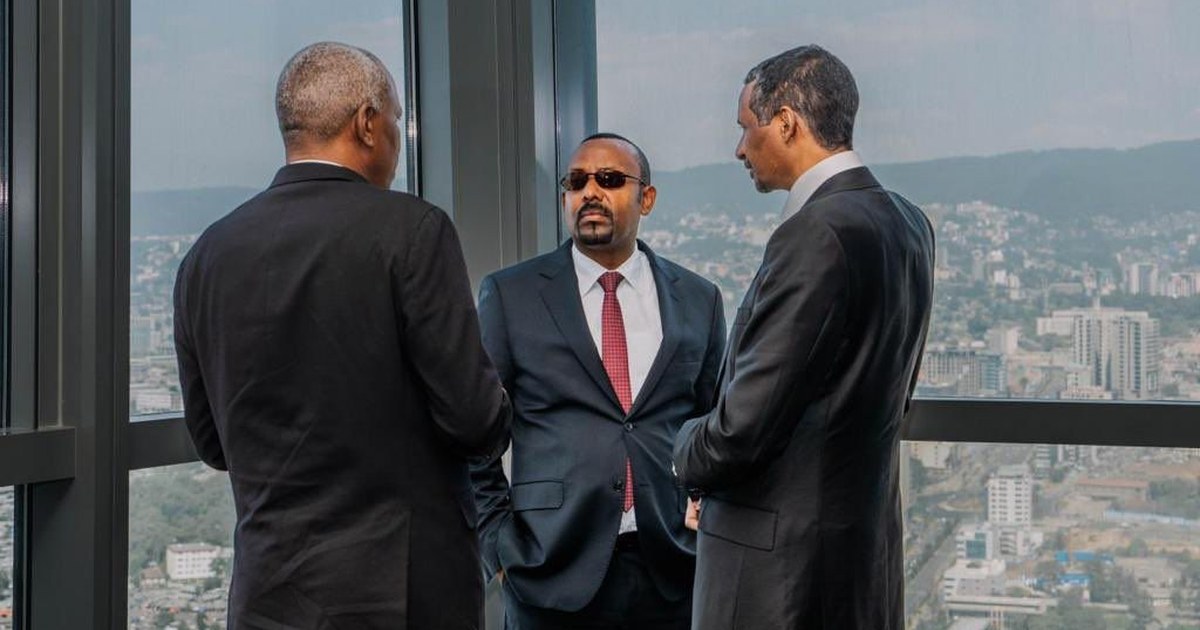

Ethiopia’s Prime Minister Abiy Ahmed has invited Sudan’s military, political and civilian parties to an inclusive Sudanese dialogue hosted by Ethiopia, in a statement dated 23 November, as Sudan’s war with the RSF militia enters its fourth year.
The offer comes as relations between the two neighbours are at a low point: Sudan’s government accuses Ethiopia of letting its territory be used against it, and Ethiopia is itself fighting armed groups in its north.
What did Abiy offer in the Sudanese dialogue invitation?
In the three-page statement in Arabic, titled “An open invitation to all Sudanese parties to sit at the dialogue table”, Mr Abiy said Ethiopia would host and sponsor “a comprehensive and open Sudanese dialogue” to stop the war, end “the state of fighting and division” and reach a national consensus for lasting peace (translated from Arabic).
Ethiopia said it was ready to stand “at an equal distance from all parties” in a Sudanese dialogue, and hoped for a ceasefire, an inclusive national process, “a national unity government that enjoys broad acceptance”, restored state institutions and reconstruction.
“Imposed solutions cannot lay the foundations for lasting peace,” the statement said, adding that Sudan’s future “is for the Sudanese alone to decide” and that the goal was “not the victory of one side over another, but the victory of Sudan”.
The statement gave no date or format for the Sudanese dialogue.
How have Sudanese groups responded?
Two coalitions welcomed the invitation on 24 November, Sudan Tribune reported in Arabic. The civilian Sumoud alliance, led by former prime minister Abdalla Hamdok, said the statement reflected Ethiopia’s commitment to Sudan’s unity and stability, and called for regional and international efforts to be co-ordinated behind a Sudanese-led peace process.
The self-declared “Government of Peace” set up by the RSF-led Tasis alliance also welcomed it. Its spokesman, Khalid Ahmed Danaa, said Tasis was ready to “engage positively” with the initiative to help end the war and address its root causes. Sudan’s government and army had not publicly responded by early on 25 November.
What is Ethiopia’s record in Sudan’s war?
Abiy’s statement recalls that in 2019 Ethiopia mediated between Sudan’s Transitional Military Council and the civilian Forces of Freedom and Change, leading to a power-sharing deal.
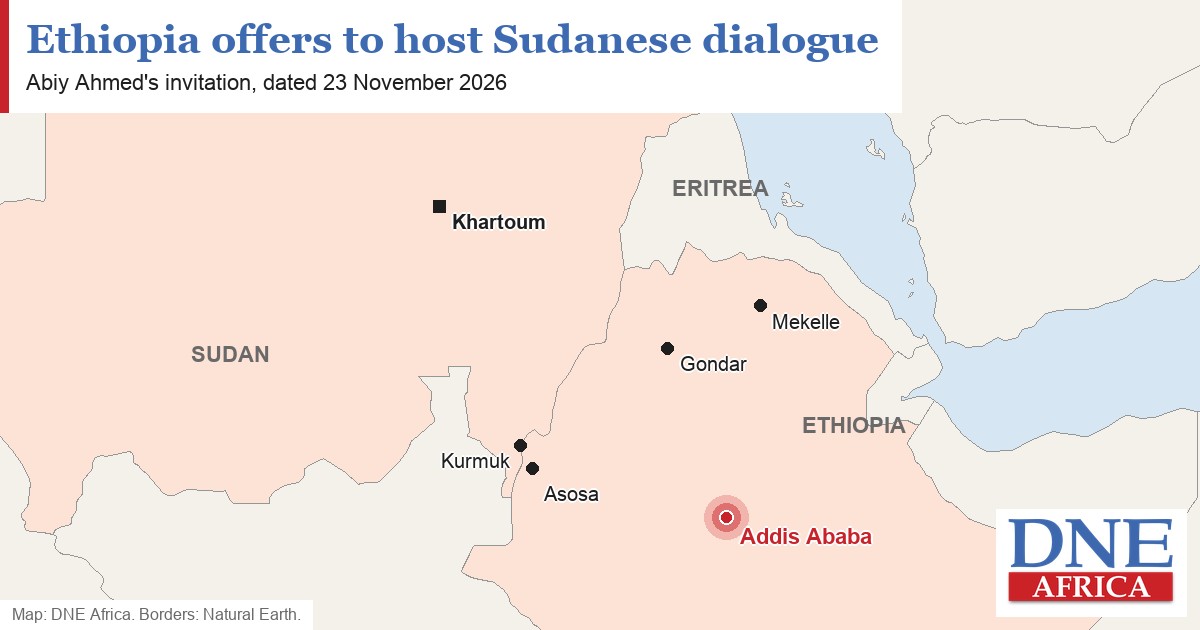
In December 2023 Mr Abiy received Mohamed Hamdan Dagalo, known as Hemedti, the commander of the RSF militia, in Addis Ababa during a regional tour. Since then relations have soured. Sudan’s army says drones that struck targets inside Sudan, including in Blue Nile state, crossed from Ethiopia, and Sudan’s government says it has complained to the UN Security Council and the African Union’s Peace and Security Council. It also accuses Ethiopia of giving logistical support to the RSF militia. Ethiopia denies the accusations and has accused Sudan’s army of backing rebels linked to the Tigray People’s Liberation Front (TPLF), which Sudan rejects.
African Narratives, an African think tank, assessed in September with high confidence that Ethiopian territory, including an army base at Asosa, had served as a rear base for RSF operations in Blue Nile. An Amhara Fano armed group alleged on 23 November that weapons for the RSF militia were passing through Gondar, a claim that could not be verified. Ethiopia has rejected such allegations.
On 24 November Sudan and Egypt also called Ethiopia’s Nile dam a continuing threat in a joint statement in Cairo; Ethiopia says it causes no significant harm.
Can Ethiopia mediate while fighting at home?
Ethiopia faces armed conflict on several fronts. Fighting between the federal army and its allies and the TPLF and its allies, including Amhara Fano forces, resumed on 21 September across southern Tigray, western Afar and parts of Amhara. Amnesty International said on 23 November that the army’s shelling of Alamata in September should be investigated as possible war crimes; the army had not responded.
In September the TPLF, Fano factions and other groups formed an alliance that says it aims to replace Abiy’s government. The Sudanese dialogue statement does not mention Ethiopia’s internal conflicts, and the government has made no comparable offer to the groups fighting it in the north.
Where does the Sudanese dialogue fit among other peace efforts?
The war, fought since April 2023, has displaced about 8.59mn people inside Sudan, according to the International Organization for Migration. The Quad of the US, Saudi Arabia, the UAE and Egypt has proposed a truce followed by a ceasefire; Sudan’s army leader, Gen Abdel Fattah al-Burhan, rejected an earlier version (see our Sudan war explainer).
Any Sudanese dialogue in Addis Ababa would need Sudan’s government to accept a host it accuses of siding with the RSF militia.
FAQ
What is Ethiopia’s Sudanese dialogue initiative?
An invitation from Prime Minister Abiy Ahmed, dated 23 November, for Sudan’s military, political and civilian parties to hold an inclusive Sudanese dialogue hosted and sponsored by Ethiopia.
What does the Sudanese dialogue aim to achieve?
A ceasefire, an inclusive national process and, according to the statement, a national unity government with broad acceptance, followed by reconstruction.
Has Sudan accepted the offer?
Sudan’s government and army had not publicly responded by early on 25 November. The Sumoud civilian alliance and the RSF-led Tasis alliance welcomed it.
Why are Sudan and Ethiopia at odds?
Sudan’s army accuses Ethiopia of allowing drone attacks from its territory and supporting the RSF militia, which Ethiopia denies. The two also disagree over the Nile dam.


