
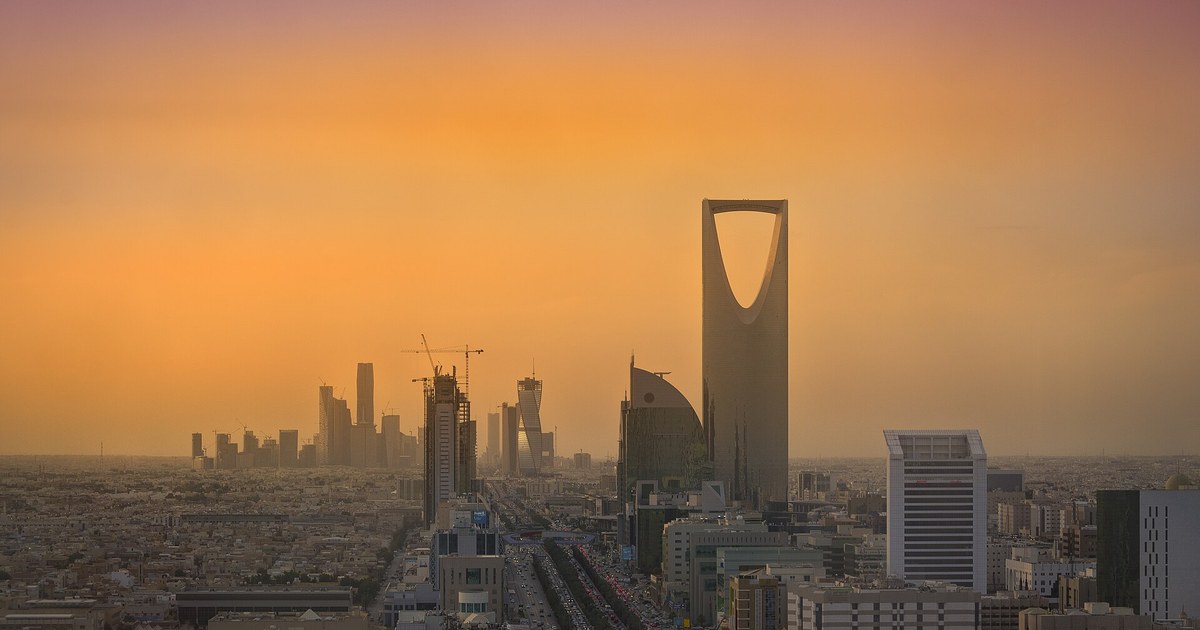

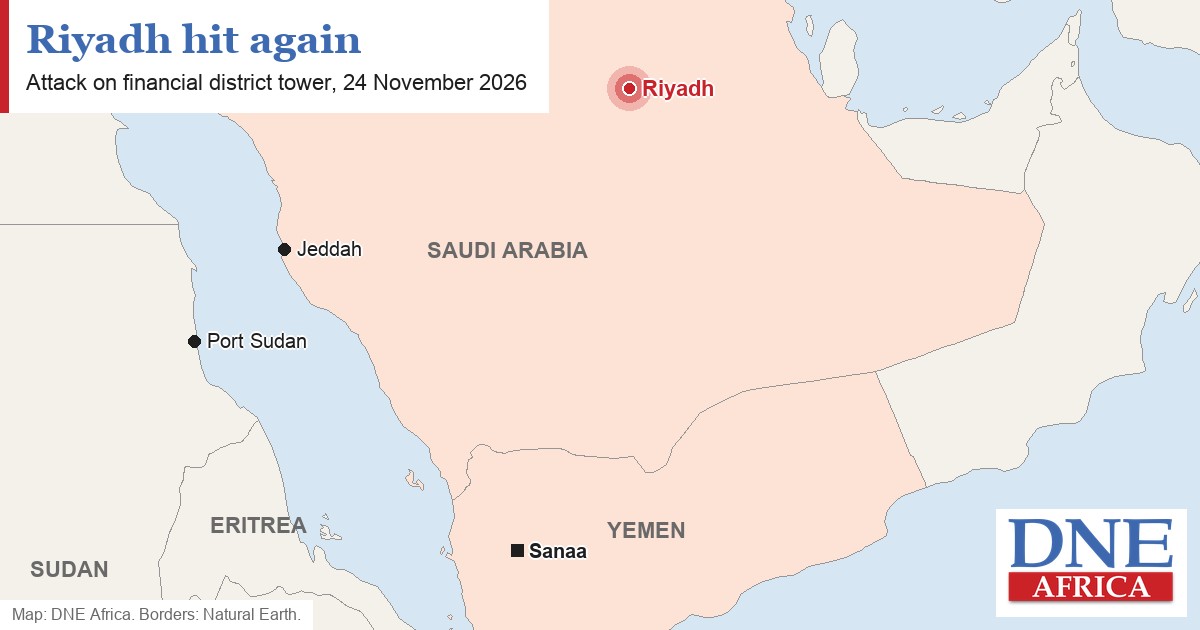
A Riyadh attack on a tower in the Saudi capital’s financial district injured 11 people, including four Egyptians, on Tuesday 24 November, Saudi Arabia’s Civil Defense said, the second strike on the area in less than a week.
Saudi authorities blamed Yemen’s Houthis. The same day the UK government imposed sanctions on the group and four of its officials, citing attacks on Saudi Arabia and the disruption of shipping through the Bab el-Mandeb Strait, the route to the Suez Canal.
What happened in the Riyadh attack?
Maj Gen Turki al-Malki, spokesman for the Saudi-led coalition in Yemen, said on X that one of the towers of the financial district had been subjected to a “cowardly terrorist attack” and that the authorities were responding at the site, Arab News reported.
The Civil Defense later said 11 people were hurt: two Saudi citizens, two Indian residents, three Nepalese residents and four Egyptian residents. It did not say how serious the injuries were. It described the Riyadh attack as a Houthi “terrorist attack”.
Three witnesses told AFP that the building hit was the city’s tallest skyscraper, an 80-storey tower of about 385 metres that houses the headquarters of the Public Investment Fund, Saudi Arabia’s sovereign wealth fund, BBC Arabic reported. The same tower was hit last Thursday, 19 November, in an attack the Houthis claimed.
By 16:00 GMT the Houthis had not claimed Tuesday’s attack on their military spokesman’s Telegram channel or on their Al-Masirah television’s channel. The Saudi account could not be independently verified.
What sanctions did the UK impose on the Houthis?
The UK Foreign Office said the Houthis were now subject to an asset freeze, and four officials to asset freezes, travel bans and director disqualification. They include Abdulkarim al-Houthi, interior minister of the Houthi authorities in Sanaa, and Abdulhakim al-Khaiwani, head of the group’s security and intelligence service, as well as a judge and a senior prosecutor, according to BBC Arabic.
Ed Miliband, the foreign secretary, said the Houthis’ “renewed aggression targeting our partners and innocent civilians is unacceptable”. The Foreign Office said the group had increased attacks on Saudi civilian infrastructure, “resulting in a number of fatalities”, and that the package also targeted those involved in the “cruel, inhuman and degrading treatment of prisoners in Yemen”.
What does the Riyadh attack mean for Africa?
Four of the injured were Egyptian residents of Riyadh. Egypt’s foreign ministry condemned last week’s strike on the same district and has in earlier attacks told its consular staff and embassy in Riyadh to follow the condition of injured Egyptians. It had not commented on Tuesday’s attack by the time of publication.
The wider danger is at sea. The UK’s statement linked the Houthis to continued disruption in the Bab el-Mandeb, the strait at the southern end of the Red Sea through which ships reach the Suez Canal, a main source of foreign currency for Egypt. Egypt and Sudan said on Tuesday that only coastal states should govern the Red Sea, in a joint statement in Cairo. Shipping and fuel costs also feed into import bills across East Africa and the Horn.
What happens next?
Saudi Arabia has not said how it will respond. The coalition has carried out repeated air strikes in Houthi-held areas in recent days, according to the Houthis’ own media. Our earlier coverage of the wider Iran and Gulf crisis sets out the background.
FAQ
How many people were hurt in the Riyadh attack?
Saudi Arabia’s Civil Defense said 11 people were injured: two Saudis, two Indians, three Nepalese and four Egyptians.
Who was behind the Riyadh attack?
Saudi authorities blamed the Houthis. The group had not claimed the attack by 16:00 GMT on 24 November; it claimed an attack on the same tower on 19 November.
What building was hit?
Witnesses told AFP it was the financial district’s tallest tower, which houses the Public Investment Fund’s headquarters.
What did the UK announce?
Sanctions on the Houthis and four of their officials, including asset freezes and travel bans, announced on 24 November.


