
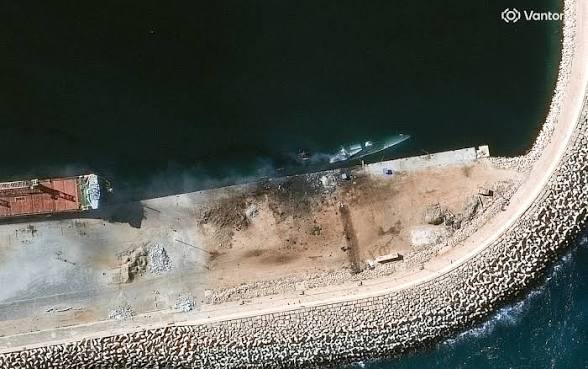

The Russia-Ukraine war has extended into North Africa after Kyiv claimed responsibility for a maritime drone attack that sank a Russian warship at the Libyan port of Benghazi, prompting Moscow to threaten Ukraine with “very painful consequences.”
The incident marks a significant expansion of the conflict beyond its main battlefields, raising concerns over Libya’s exposure to the growing confrontation between Russia and Ukraine and the potential implications for security in the Mediterranean.
Ukrainian President Volodymyr Zelensky announced the operation on Telegram, saying Ukrainian forces had used seven Sea Baby naval drones to sink a Russian corvette in Benghazi. He described the mission as a successful operation against Russian military assets operating outside the immediate war zone.
Zelensky also claimed that the attack destroyed a Russian Ka-27 military helicopter aboard the vessel and targeted the Russian cargo ship MV Angara, which Kyiv accused of transporting weapons.
The Ukrainian president said Kyiv would continue its operations in designated waters, signalling its determination to pursue Russian military and logistical assets beyond the front lines.
According to British newspaper The Independent, the targeted warship was valued at approximately £150 million.
Moscow threatens retaliation
Russia warned Ukraine of severe consequences following Kyiv’s announcement.
Kremlin spokesman Dmitry Peskov said on Monday that the operation would have “very painful consequences for the Kyiv regime”, adding that Russia’s Defence Ministry would provide a more comprehensive response.
Peskov also referred to previous statements by Russian President Vladimir Putin reaffirming Moscow’s military position in the conflict.
The warning came amid growing concerns over the geographical expansion of hostilities, particularly as Ukrainian forces increasingly seek to disrupt Russian military operations and supply networks beyond Ukraine’s borders.
Libya rejects becoming an arena for foreign confrontation
The eastern-based Libyan government said the targeted Russian warship, identified as the Merkury, had been docked at Benghazi’s naval base on Sunday for refuelling and supplies while returning to Russia under a cooperation agreement.
Libyan authorities warned against turning the country’s territory into an arena for settling international disputes, expressing concern over the security implications of military operations involving foreign forces within Libyan territory.
The incident also comes amid reports of attacks on other vessels in and around Benghazi, raising broader concerns about maritime security and the safety of shipping in Libyan waters.
The United Nations Support Mission in Libya (UNSMIL) condemned attacks targeting vessels at Benghazi port and off the city’s coast, expressing grave concern and calling for an immediate, independent and transparent investigation to establish the facts and hold those responsible accountable.
The mission stressed that Libya’s sovereignty and the security of its citizens must be respected.
Mediterranean security under pressure
The reported attack highlights the growing strategic significance of the Mediterranean in the Russia-Ukraine conflict, particularly as both sides seek to weaken the other’s military capabilities and logistical networks beyond the main theatre of operations.
For Libya, the incident presents an additional security challenge as the country continues to grapple with political divisions and the presence of competing foreign interests.
The possibility of further military incidents involving Russian and Ukrainian interests in Libyan territory could complicate efforts to maintain stability, protect maritime routes and prevent the country from becoming further entangled in international rivalries.
The developments also raise questions about the security of foreign military assets and commercial shipping in the Mediterranean, a strategically important corridor for energy supplies and international trade.


