

Mali, Burkina Faso, and Niger have announced the creation of a visa-free zone for citizens of the Economic Community of West African States (ECOWAS), marking a significant policy shift ahead of the regional bloc’s summit.
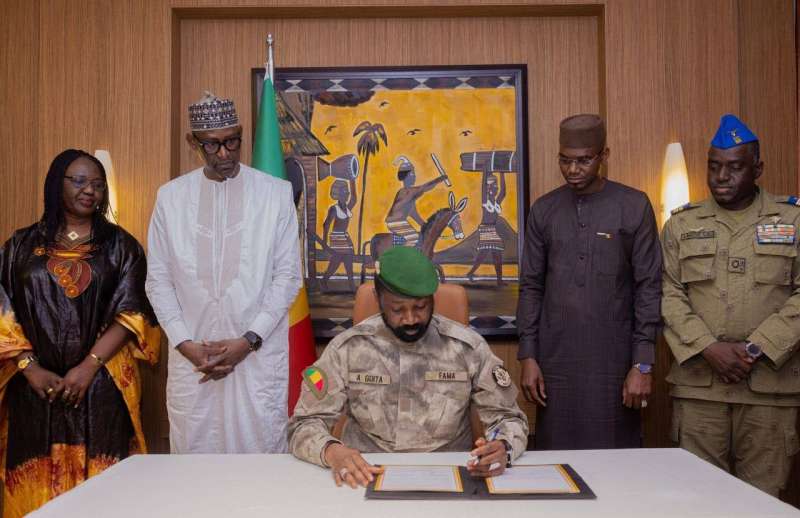
In a televised statement on Saturday, Mali’s Minister of Foreign Affairs, Abdoulaye Diop, declared: “The Sahel Confederation is now a visa-free area for all ECOWAS member states.” The announcement, signed by Mali’s President and Sahel Confederation leader, General Assimi Goïta, ensures citizens of ECOWAS member nations the right to enter, move, reside, and settle freely within the confederation’s member countries in accordance with national laws.
A Bold Step Amid ECOWAS Withdrawal
The visa-free announcement comes just a day after the three nations reaffirmed their irrevocable decision to withdraw from ECOWAS, ahead of a crucial ECOWAS summit scheduled in Abuja on Sunday. The Sahel Confederation, composed of Mali, Burkina Faso, and Niger, reiterated that their decision to leave ECOWAS is “final and irreversible.”
Following a ministerial meeting in Niger’s capital, Niamey, on Friday, the three countries issued a statement underscoring their intent to negotiate the modalities of withdrawal in the best interest of their populations. This marks the latest chapter in the tense relationship between these nations, governed by military regimes opposing French influence, and ECOWAS, which they accuse of serving as a tool of the former colonial power.
ECOWAS Summit Faces Regional Challenges
As ECOWAS convenes its summit in Abuja, no delegation from the Sahel Confederation is expected to participate, raising doubts about potential reconciliation. The withdrawal process for Mali, Burkina Faso, and Niger, announced in January, is set to take effect next month. If finalized, the departure will have substantial economic and political implications for West Africa.
The Sahel Confederation represents a vast, landlocked region with a combined population of 72 million. The three nations’ exit could disrupt trade, security coordination, and regional integration, challenging ECOWAS’s role in maintaining stability in West Africa.
Wider Implications
Observers fear the move could embolden anti-ECOWAS sentiments in other member states, while deepening the Sahel region’s isolation. As the bloc debates its next steps in Abuja, the announcement of visa-free travel within the Sahel Confederation sends a clear signal of these nations’ intent to establish an independent framework for regional cooperation outside ECOWAS.
The coming weeks will determine whether ECOWAS can navigate this unprecedented situation and address the concerns of its departing members, while safeguarding the stability of the West African region.


