
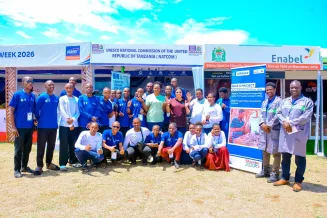

UNESCO and Tanzania’s National Commission for UNESCO are backing efforts to equip young people with practical skills and promote innovation, supporting the 2026 WorldSkills Tanzania National Skills Competition as part of the country’s wider push to strengthen technical and vocational education.
The event was organized by Tanzania’s Ministry of Education, Science and Technology in collaboration with the National Council for Technical and Vocational Education and Training (NACTVET) and other stakeholders involved in education and skills development.
The National Education, Skills and Innovation Week concluded on August 24 with a closing ceremony attended by Tanzanian Prime Minister Mwigulu Lameck Nchemba at Usagara Secondary School in Tanga.
Nchemba affirmed the need to translate skills, research and innovations showcased at national events into practical solutions and economic opportunities.
“We must move beyond exhibitions into real life,” the prime minister said, calling for stronger mechanisms to ensure promising innovations can move into production, wider use and commercialization.
UNESCO said its participation formed part of its continued support for Tanzania’s efforts to improve the quality, relevance and attractiveness of technical and vocational education and training (TVET).
Through its Better Education for Africa’s Rise (BEAR II) project, UNESCO provided financial and technical assistance for the national skills competition and related activities during the week.
The support was implemented through cooperation between the UNESCO Dar es Salaam Office, the Tanzania National Commission for UNESCO and NACTVET, helping strengthen public awareness of TVET and providing young people with a platform to demonstrate their skills and creativity.
The partnership also sought to promote technical and vocational education as a pathway to employment, entrepreneurship and sustainable development, while encouraging stronger participation from education and skills-development stakeholders.
The initiative comes as UNESCO continues to support Tanzania in modernizing its TVET system and equipping young people with skills suited to an increasingly digital and rapidly changing labour market. A separate UNESCO project running through 2027 focuses on youth innovation, digital competencies, entrepreneurship and employability through TVET.
UNESCO’s latest engagement also reinforces its broader cooperation with Tanzania across education, science, culture and communication, with the Tanzania National Commission serving as a key institutional partner in connecting UNESCO programmes with national priorities.


