
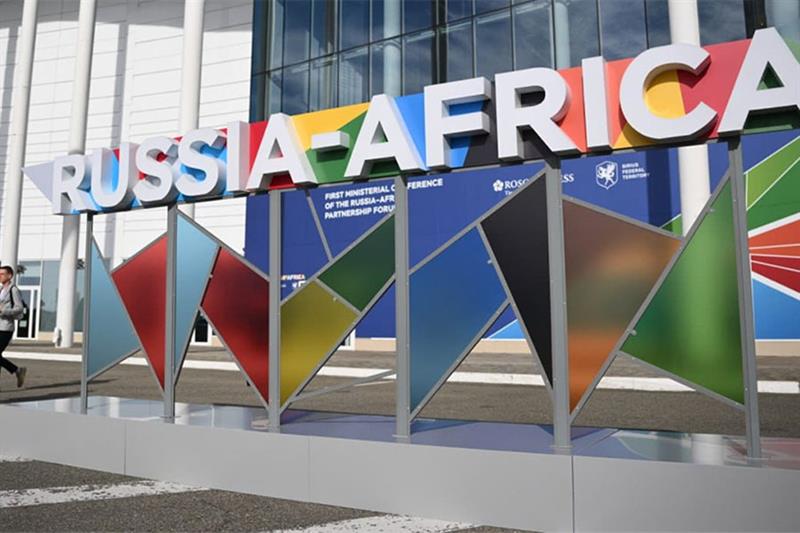

Russia-Africa bilateral trade reached a record $27.7 billion in 2025, as Moscow expands maritime, logistics and industrial links with African markets, according to a report by Russia’s Pivot to Asia.
Russian agricultural exports to Africa rose sharply in the first half of 2026 to $2.9 billion, with wheat accounting for more than 90% of volumes and Egypt taking the largest share, the publication reported.
Russia’s overall exports to Africa reached about $10.7 billion, compared with around $2.2 billion in imports, highlighting Moscow’s efforts to expand trade with the continent and diversify its export markets.
The report said Russia’s FESCO Transport Group has expanded regular maritime container services from Russian ports to Durban, South Africa, and Dar es Salaam, Tanzania, through Indian hubs such as Nhava Sheva.
The Tanzania route already carries Russian plastics and industrial spare parts and is expected to facilitate the return shipment of African tea, coffee and agricultural products to Russia. Transit to Tanzania takes about 45 days, it noted.
Moscow is also exploring an African extension of the International North-South Transport Corridor (INSTC), with Russian Railways studying potential railway projects in Burkina Faso, Ghana and South Africa, as well as a possible project in Libya.
The planned expansion would seek to connect Russian and Eurasian supply chains with African rail, road and port networks through Iran, the Persian Gulf and the Indian Ocean.
Russia has provided about 1.2 billion rubles, equivalent to $14 million, in logistics subsidies for priority shipments to African and Latin American markets, including Senegal, South Africa and Tanzania. The publication said the support is expected to broaden.
Alongside transport initiatives, Russia is developing industrial and logistics hubs aimed at strengthening long-term commercial ties with Africa.
In Egypt, plans for a Russian industrial zone in the Suez Canal Economic Zone (SCZone) are expected to combine maritime routes, rail corridors, logistics support and industrial investment. The project is scheduled to begin construction next year and is expected to be ready for occupancy by mid-2030, the report said.
The zone is expected to give Russian manufacturers a base from which to export component parts, integrate them with African-sourced components and sell finished products in CIS markets or across Africa.
The developments reflect a broader push by Moscow to expand beyond commodity exports and establish transport, manufacturing and logistics networks supporting longer-term trade with African economies.


