
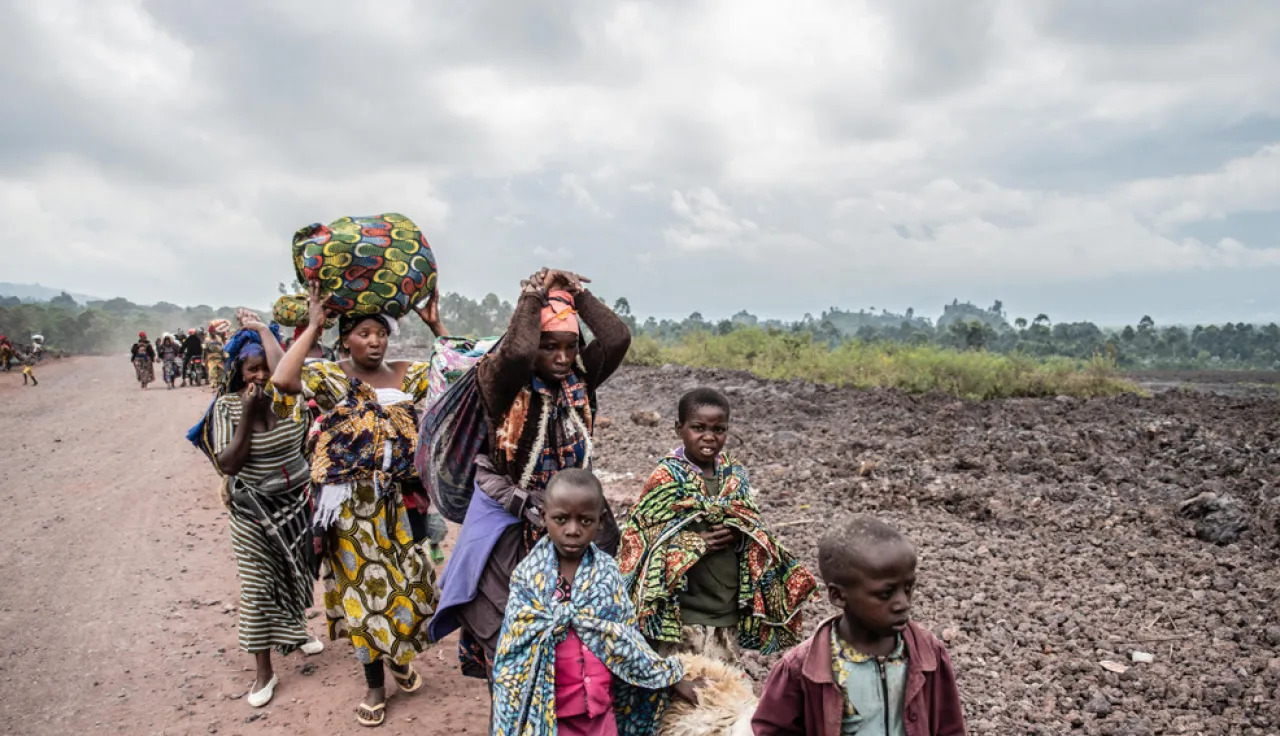

Persistent conflict and insecurity are driving a deepening displacement crisis in eastern Democratic Republic of Congo, with new internal displacement continuing to outpace returns in several affected areas.
More than 16,400 Congolese have fled to neighbouring countries since January, adding pressure on host communities and already overstretched services, according to a humanitarian update.
The crisis has been compounded by an Ebola outbreak, exposing the overlap between insecurity, displacement and weak basic services. More than 5,600 confirmed cases and over 2,700 deaths have been recorded, more than three months after the outbreak was declared a public health emergency of international concern.
Uganda declared itself Ebola-free on July 28, but cross-border preparedness remains critical, particularly in areas affected by continued population movements.
The U.N. refugee agency (UNHCR) said it was continuing to support the government-led Ebola response in displacement settings despite significant funding constraints.
Despite the volatile security situation, voluntary returns have continued, supported by health screening, water and sanitation measures and cross-border coordination.
By July 31, about 51,000 Congolese refugees had returned to the DRC from Burundi on their own, while 14,200 others had returned under programmes facilitated by the government and UNHCR since the start of the year.
The continued movement of people in both directions underscores the scale and complexity of the crisis, as conflict, disease and weak public services continue to drive displacement across eastern Congo and the wider Great Lakes region.


