
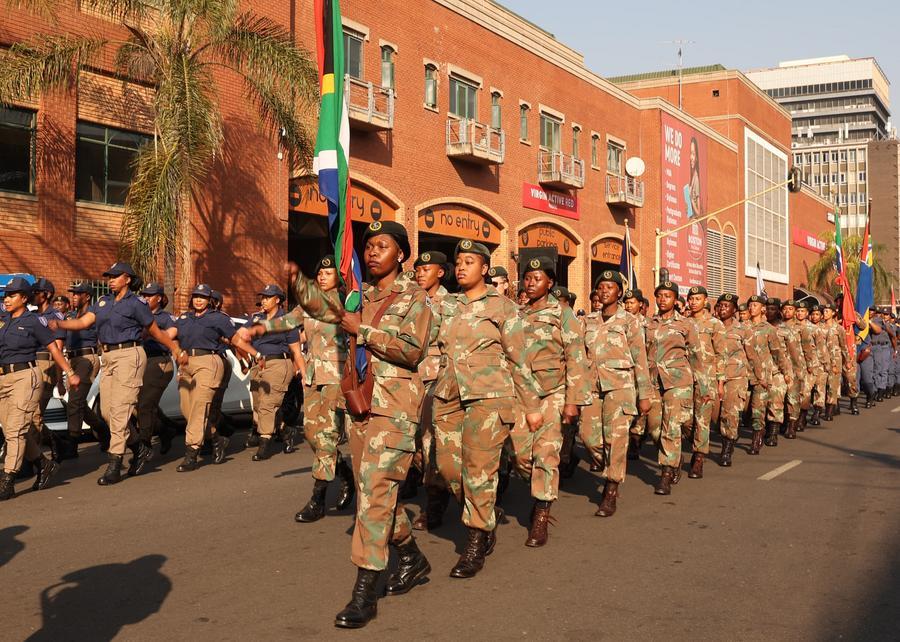

On Sunday, South Africa marked the 70th anniversary of the historic 1956 Women’s March, commemorating about 20,000 women who marched to the Union Buildings in Pretoria to protest apartheid-era pass laws.
In his address at the National Women’s Day commemoration at the Union Buildings, President Cyril Ramaphosa, paid tribute to the women who led the 1956 protest and highlighted their contribution to the country’s struggle against apartheid and for gender equality.
“The women of 1956 were protesting against passes, but their message reached far beyond the pass laws. They challenged the idea that women should be confined to the home, silent in public affairs, and subordinate to men,” Ramaphosa said.
The Aug. 9, 1956, march was led by Lilian Ngoyi, Helen Joseph, Rahima Moosa and Sophia Williams-de Bruyn, who presented a petition against the apartheid government’s decision to extend pass laws to Black women.
Ramaphosa affirmed that the march changed the course and character of South Africa’s struggle for freedom and justice, demonstrating that women were not merely supporters of the anti-apartheid movement but also its leaders and organizers.
He further said that South Africa had made significant progress since the end of apartheid in 1994, with women gaining the right to vote, hold public office, own and inherit property and land, and occupy senior positions across public institutions.
However, the president noted the country still faced challenges in achieving full gender equality, underscoring the need to build on the legacy of the women of 1956.


