
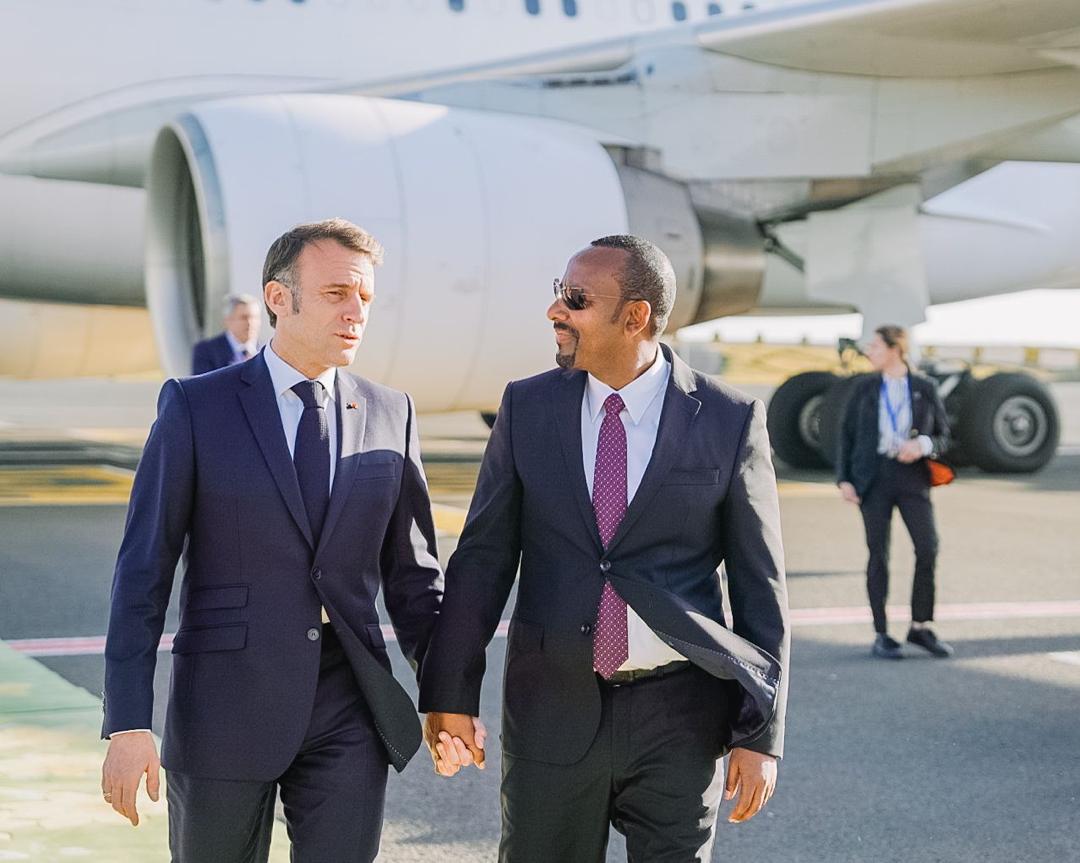

French President Emmanuel Macron begins a four-nation tour of Africa from 20 to 24 November 2025, in what analysts describe as one of Paris’s most urgent attempts in years to stem the rapid erosion of its influence on the continent. The trip—covering Mauritius, South Africa, Gabon, and Angola—comes amid unprecedented diplomatic, military, and economic setbacks for France across regions long considered core to its post-colonial sphere.
According to Africa Report, the tour aims to reposition France as a reliable partner at a time when African governments are increasingly turning toward rival powers including Russia, China, Turkey, and Gulf states.
A Tour Framed by Crisis
Macron’s visit begins in Mauritius on 20–21 November before he travels to Johannesburg to attend the first G20 summit held in Africa. He then heads to Gabon on 23 November and concludes in Angola a day later—two countries central to France’s new push into non-Francophone Africa.
The tour comes as Paris faces unprecedented public hostility across the Sahel, the loss of multiple military bases, and reduced diplomatic leverage even in long-standing allied states.
Promises of Renewal, Reality of Decline
Macron’s 2017 Ouagadougou speech—where he vowed to reset relations with Africa and acknowledged the crimes of colonialism—helped craft his image as a reformist. He announced initiatives to return looted artworks, open colonial archives, and expand academic ties.
But the momentum faltered. A series of controversial remarks, including jokes about Burkina Faso’s president and migrant boats from the Comoros, were widely viewed as disrespectful. The incidents reinforced accusations that France’s tone toward Africa remained paternalistic despite rhetorical change.
Symbolic steps on historical memory—such as acknowledging France’s role in Rwanda’s genocide and repatriating Algerian remains—did little to alter the perception.
Sahel Withdrawals Underscore a Strategic Retreat
France’s military retreat from Mali, Burkina Faso, and Niger marked the most dramatic rollback of French power in the Sahel in decades. Popular protests in these countries, combined with military juntas eager to redefine alliances, forced French troops out entirely.
Even traditional allies shifted away. Chad sought to renegotiate its military partnership, while Senegal and Côte d’Ivoire signaled interest in reducing France’s military footprint. Macron further damaged relations in January 2025 when he publicly suggested African leaders had “forgotten to thank France,” prompting strong reactions from Senegal and Chad.
Pivot to Non-Francophone Africa
In response, Paris has invested heavily in new partnerships with Nigeria, Kenya, Ghana, Rwanda, and Angola. Nigeria has now become France’s top trading partner in sub-Saharan Africa, and bilateral trade with Angola has surged by more than 200%.
French energy giant TotalEnergies has committed to investing $1 billion annually in Nigeria, while several Nigerian banks have opened branches in Paris—signaling a shift in economic gravity.
Yet the broader picture shows decline: despite an increase in total trade, France’s share of Africa’s global trade has fallen from 5.5% in 2017 to just 3.2% in 2024.
A Tour Meant to Reclaim Relevance
With competitors rapidly filling the void left by France, Macron’s four-day tour seeks to reinforce alliances, secure economic partnerships, and reshape Paris’s contested image across Africa. But experts warn that symbolic visits will not be enough to reverse a decade-long downturn in trust, visibility, and influence.
For Macron, the tour represents more than routine diplomacy—it is a strategic test of whether France can still reinvent its role in a continent that is steadily moving beyond its orbit.


