
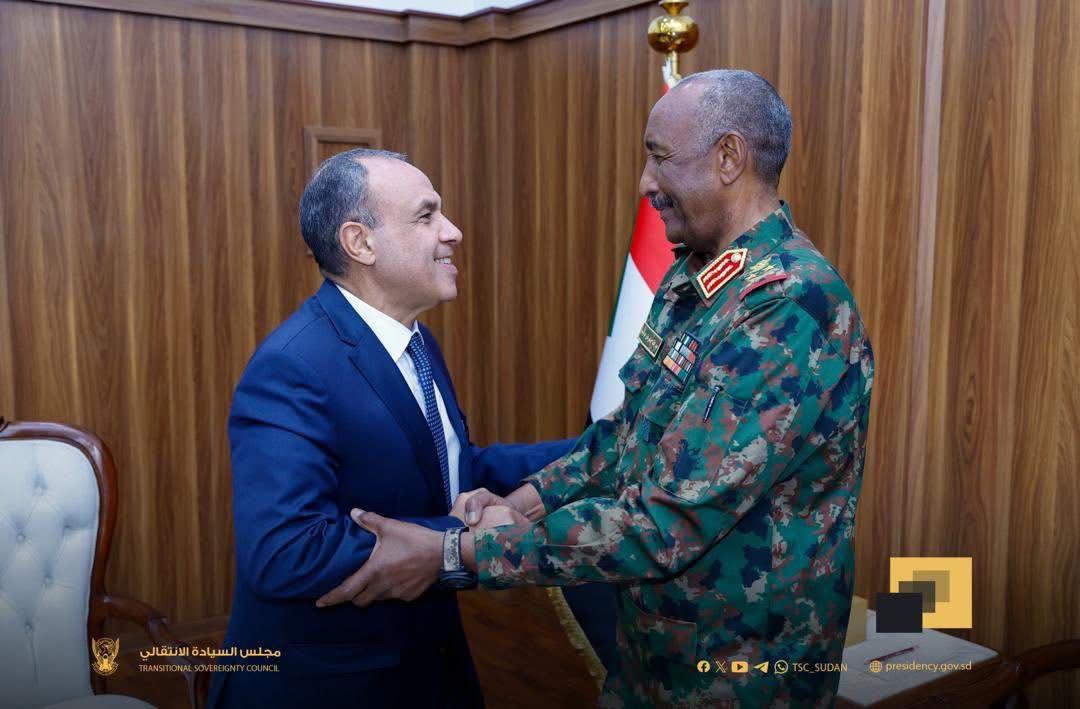

Egypt’s Foreign Minister Badr Abdelatty met Sudan’s Sovereign Council leader Abdel Fattah al-Burhan in Port Sudan on Tuesday, reaffirming Cairo’s full support for Sudan’s stability, unity, and territorial integrity amid the ongoing conflict.
According to a statement from Egypt’s Foreign Ministry, Abdelatty conveyed President Abdel Fattah al-Sisi’s message of solidarity with the Sudanese people and their armed forces, stressing Cairo’s backing for efforts to restore peace and preserve Sudan’s national institutions.
The two leaders discussed recent developments in the Sudanese conflict, including the humanitarian situation in the Darfur region, where the Rapid Support Forces (RSF) have been accused by the United Nations of committing atrocities in El Fasher. Abdelatty reiterated Egypt’s condemnation of all violations targeting civilians.
“Egypt remains committed to working with regional and international partners to achieve a comprehensive ceasefire and end the suffering of the Sudanese people,” the statement said, referring to Cairo’s participation in the international and regional mediation tracks, including the “Quartet” initiative.
The talks also addressed cooperation on trade, investment, and infrastructure, with both sides agreeing to expand joint projects in electricity, water, health, and education. Abdelatty expressed Egypt’s readiness to help rebuild Sudan’s infrastructure once stability is restored.
On water security, the statement noted that both sides reaffirmed their unified position as downstream Nile Basin countries, emphasizing adherence to international law governing transboundary rivers and rejecting unilateral measures on the Nile.
Abdelatty’s visit came as part of Egypt’s broader diplomatic push to strengthen coordination with Khartoum and support a political settlement to the conflict. Cairo has repeatedly stressed that Sudan’s stability is integral to regional peace and security.
Earlier, Abdelatty met Sudan’s Foreign Minister Muhi al-Din Salem in Cairo, where they reviewed the humanitarian conditions in El Fasher and discussed mechanisms for facilitating aid delivery to affected civilians.


