
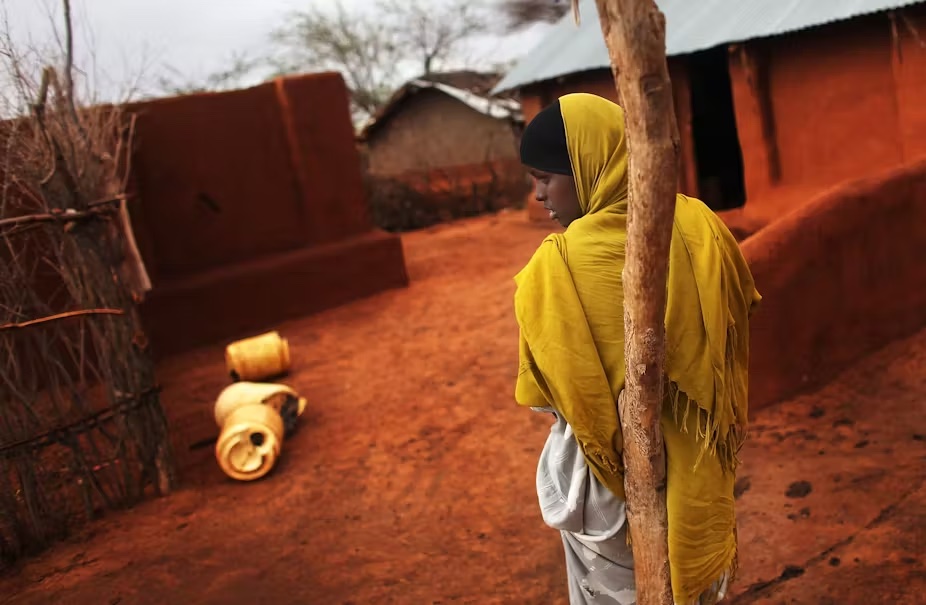

By the end of 2023, more than 100 million people globally had been forced to flee their homes due to war, violence, fear of persecution, and human rights violations.
The majority are hosted in low- and middle-income countries, where many live in overcrowded camps or urban settlements, with limited access to food, employment and essential services. Many endure traumatic experiences not only before their displacement but also during and after it. They face armed conflict, marginalisation and poverty at every stage of their journey.
These experiences may increase the likelihood of developing mental health disorders, which can persist years after displacement. This makes it harder for refugees to earn a living and integrate into society.
As World Health Organization (WHO) director-general Tedros Adhanom Ghebreyesus said at the 2019 Global Refugee Forum:
It’s a hidden epidemic and a silent killer. News reports show us the devastation of war. They show us refugees on the move, refugees in cities and refugees in large camps. But they don’t show us inside the minds of the people and how it affects their lives … Wounds heal. Homes are rebuilt. News cycles move on. But the psychosocial scars often go unnoticed and untreated for years.
Despite this recognition, there are gaps in what’s known about the mental health of refugees.
Most studies focus on refugees hosted in high-income countries, even though 75% of refugees live in low- and middle-income countries.
We conducted a multi-country survey of 16,000 refugees and host community members in cities and camps across Kenya, Uganda and Ethiopia. At the time of our research (between 2016 and 2018), these three countries hosted around 40% of Africa’s refugees – about 1.8 million people. The survey included Congolese and Somali refugees across most sites, as well as South Sudanese refugees in the Kenyan camps.
Our study found that refugees in east Africa experienced higher rates of depression (31%) and functional impairment (62%) compared to the host population (10% and 25%, respectively).
Prevalence was even higher among those exposed to violence and extended periods of displacement. They also faced greater economic hardship, such as higher unemployment, lower wages and poor diets.
Our findings highlight the profound impact of mental health on refugees’ ability to rebuild their lives. It highlights the urgent need for targeted screening and evidence-based treatments to prevent a vicious cycle of mental disorders, economic hardship and poor social integration.
What we studied
Our study had three main goals.
First, we wanted to see how common depression was among different refugee groups and how it compared to the local host communities. We measured depressive symptoms using a questionnaire that could evaluate moderate to severe depression. We also measured how well people were able to carry out daily activities, such as moving around, completing tasks and participating in community life – abilities that are often affected by depression.
Second, we wanted to understand how past experiences of violence – before refugees fled their home countries – affected their mental health. This used event data which tracked violent events in refugees’ home districts during the three years before they fled and a subjective, self-reported measure of violence experiences. This allowed us to study the correlation between exposure to violence and depressive symptoms.
And third, we explored the hidden toll depression takes across different life domains, including employment, health and overall well-being.
High levels of depression
The study found that 31% of refugees were depressed, compared to 10% of people in nearby host communities.
A staggering 62% of refugees reported difficulties in functioning, compared to 25% of host community members. For example, many refugees reported moderate to severe difficulties in walking (35%), doing household chores (31%), concentrating (22%), or joining community activities (24%).
Women, older refugees, and those who had been in exile longer were particularly vulnerable to worse mental health.
More than half of the refugees in the survey reported experiencing or witnessing violence, either in their home countries or while fleeing. Refugees who experienced violence were about 17 percentage points more likely to experience depression, and 18 percentage points more likely to report functional impairment.
We also found a “dose-response” relationship between violence and depression. This means the more severe the violence refugees experienced, the worse their mental health became over time.
The impact of violence and depression extended far beyond mental health. Refugees with higher levels of depression and those exposed to violence also faced significant economic challenges. They were more likely to be unemployed, earn lower wages, have poorer diets, and report lower life satisfaction.
This shows that depression directly affects individuals by limiting their ability to function. It also indirectly hinders their chances of rebuilding a stable, fulfilling life.
Mental health interventions
Our results highlight that refugees – particularly those exposed to violence and prolonged exile – are disproportionately affected by depression. It’s harder for them to achieve economic stability and integrate into their host communities.
We also found that mental health issues get worse the longer refugees remain in exile, underscoring the need for early screening for mental illness.
Based on our findings, we hypothesise that effective treatment of depression could potentially create a virtuous cycle, improving both refugees’ mental health and other broader economic outcomes. This makes a strong case for investing in refugees’ mental health in low- and middle-income countries.
Olivier Sterck, Associate professor, University of Oxford; Julia R Pozuelo, Postdoctoral Research Fellow, Harvard University; Maria Flinder Stierna, PhD candidate, Norwegian University of Life Sciences, and Raphael Bradenbrink, PhD candidate, University of Oxford
This article is republished from The Conversation under a Creative Commons license. Read the original article.


