
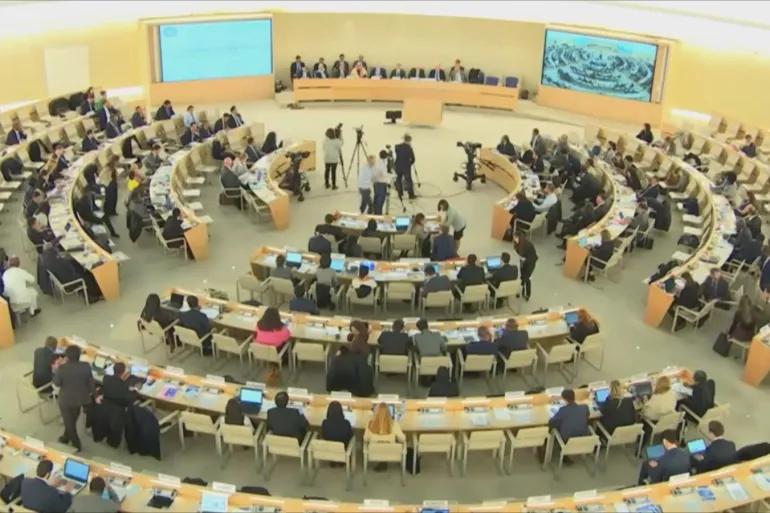

In a decisive vote seen as a key moment for international accountability, the United Nations Human Rights Council on Friday rejected an attempt by Eritrea to terminate the mandate of the UN-appointed special rapporteur investigating alleged human rights violations in the country.
The Eritrean proposal, widely viewed by diplomats and observers as an alarming precedent, was defeated with only 4 votes in favor, 25 against, and 18 abstentions. The move would have effectively halted the work of the Council’s independent expert—currently Sudanese lawyer Mohamed Abdelsalam Babiker—who has consistently raised concerns over arbitrary detentions, indefinite military conscription, and the worsening humanitarian conditions in the Horn of Africa nation.
Instead, the Council adopted a counter-resolution put forward by the European Union, extending the special rapporteur’s mandate for another year. The outcome was welcomed by international human rights organizations and Western diplomats as a reaffirmation of the Council’s commitment to monitoring abuses and ensuring accountability.
A Rare and Troubling Move
The Eritrean delegation’s effort marked a rare instance of a country under active human rights scrutiny attempting to unilaterally shut down that process. Analysts feared that had the motion succeeded, it might have emboldened other states under investigation to follow suit—potentially undermining the integrity of the Council’s mechanisms.
The African human rights group “DefendDefenders” praised the renewal of the mandate, stating that the rapporteur plays a “vital role not only for victims of Eritrean abuses but also for the broader diaspora who continue to face threats and repression.”
Eritrea’s representative in Geneva, Habtom Zerai Germay, condemned the extension as an act of “neo-colonial savior complex,” calling the mandate “an insult to reason and justice.” He also accused the European Union of bias and political interference.
Divided Global Response
While the majority of Council members rejected Eritrea’s request, a handful of states—Iran, Sudan, Russia, and China—expressed varying degrees of support. Notably, all four are currently under some form of UN human rights scrutiny themselves.
China argued that such mandates represent “a waste of resources” and questioned the fairness and effectiveness of country-specific investigations. Iran and Sudan refrained from issuing public statements but voted in favor of Eritrea’s motion.
The EU representative countered by warning that ending the mandate would have “fueled impunity and allowed repression to deepen in silence,” emphasizing that international attention remains essential for the protection of basic freedoms in Eritrea.
Mounting Concerns Over Rights Violations
In his most recent report, Babiker described the human rights situation in Eritrea as “critical,” citing widespread arbitrary arrests, forced disappearances, and the continued use of compulsory and indefinite national service, which he said is a key driver of mass migration from the country.
The report also noted Eritrea’s failure to cooperate with the UN mechanism or grant access to international monitors. Despite longstanding calls for reform, the government in Asmara has continued to reject external criticism and dismiss reports of violations as politically motivated.
Broader Implications
The outcome of Friday’s vote was closely watched by diplomats and rights groups who feared the erosion of international monitoring mechanisms in an increasingly polarized global landscape.
With Eritrea’s bid defeated, the special rapporteur will continue to report on conditions inside the country and engage with the diaspora and civil society actors. The decision, observers said, not only upholds the Council’s mandate but sends a clear message: international scrutiny cannot be wished away.


