
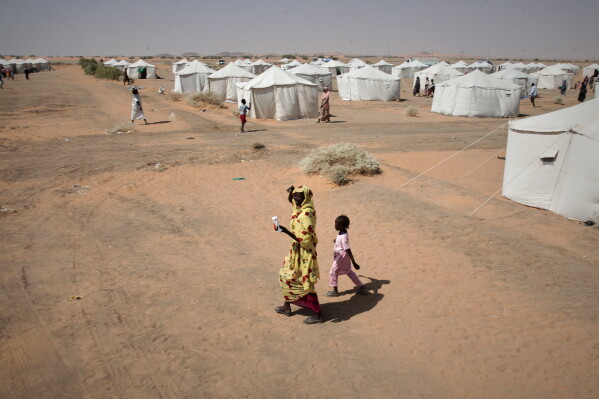

More than 5,500 children are among the 11,000 people newly displaced in the wake of escalating violence in and around the city of El Obeid in North Kordofan, Sudan, with thousands more at risk, Save the Children said.
The latest displacement in over three years of war comes amid intensified hostilities around the city. The UN warned that up to 500,000 civilians are at risk of being targeted in large-scale atrocities and could be displaced if the situation escalates.
This warning follows increased drone strikes that have killed civilians and destroyed civilian infrastructure, resulting in severe fuel and water shortages. Siege-like conditions in the city have left thousands of people trapped and cut off from basic services. Humanitarian access to El Obeid, a critical commercial and humanitarian hub for the region, is becoming increasingly constrained, with several major access routes into the city disrupted or closed, Save the Children said.
At the same time, the onset of the rainy season and an ongoing cholera outbreak in Kordofan with over 300 cases, confirmed by the State Ministry of Health, is creating further risks for children who are unable to access healthcare. New displacement into already overcrowded camps is increasing the likelihood of the outbreak worsening.
As families arrive in displacement sites and into local communities, they face increasingly difficult living conditions. Many are struggling to access adequate shelter, clean water, healthcare, and education services, while overcrowding is placing additional pressure on already limited resources.
Emad*, who lives with his children, wife, and members of his extended family in El Obeid, witnessed the latest drone attacks.
“Throughout June, the situation in El Obeid was extremely challenging, drones rained heavily in and around the city. About 11 fuel stations were hit, along with fuel tankers coming to El Obeid. Additionally, tankers sitting idle inside the city were also hit including water tankers,” he told Save the Children. “There seems to be a systemized targeting that directly affected the economic situation, causing price hikes and water shortages, where two jerrycans now go for almost 6,000 Sudanese pounds ($10).”
Save the Children is particularly concerned about the growing psychological toll on children, many of whom have witnessed violence, lost loved ones, or been forced to flee multiple times in the past three years. Sudan is home to the world’s largest displacement crisis with about 14 million people, or a quarter of the population, forced to flee their homes. Across Sudan, children continue to bear the brunt of the conflict. Children under 18 make up about 55 per cent of the country’s displaced population, highlighting the disproportionate impact of violence and displacement on children’s safety, wellbeing, and future.
“For children, displacement is far more than the loss of a home. It often means losing access to school, healthcare, clean water and the support networks that help them feel safe and protected,” Francesco Lanino, Deputy Country Director for Save the Children in Sudan, said. “Many have already been displaced multiple times, and without urgent action to protect civilians, maintain humanitarian access and prevent further violence, thousands of children could be forced to flee while facing increasing risks to their safety, health and wellbeing.”
Save the Children continues to operate in and around El Obeid, providing health, nutrition, water, sanitation, education, and child protection services despite growing access challenges. The organisation is calling for the protection of civilians, safe and sustained humanitarian access, and increased support for displaced children and families in North Kordofan and across Sudan. Without urgent action, needs are expected to increase significantly in the coming weeks, placing thousands more at risk.
The data was compiled by Save the Children teams in El Obeid, and the statement was distributed by the APO Group on behalf of the organisation. Save the Children has worked in Sudan since 1983 and provides programming for children and families affected by conflict, displacement, extreme poverty, and hunger.
*Name changed to protect identities.


